en
enVotre panier est vide.


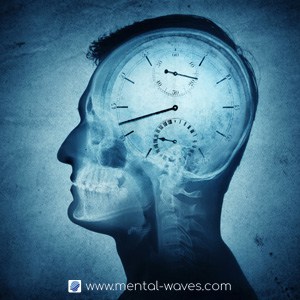
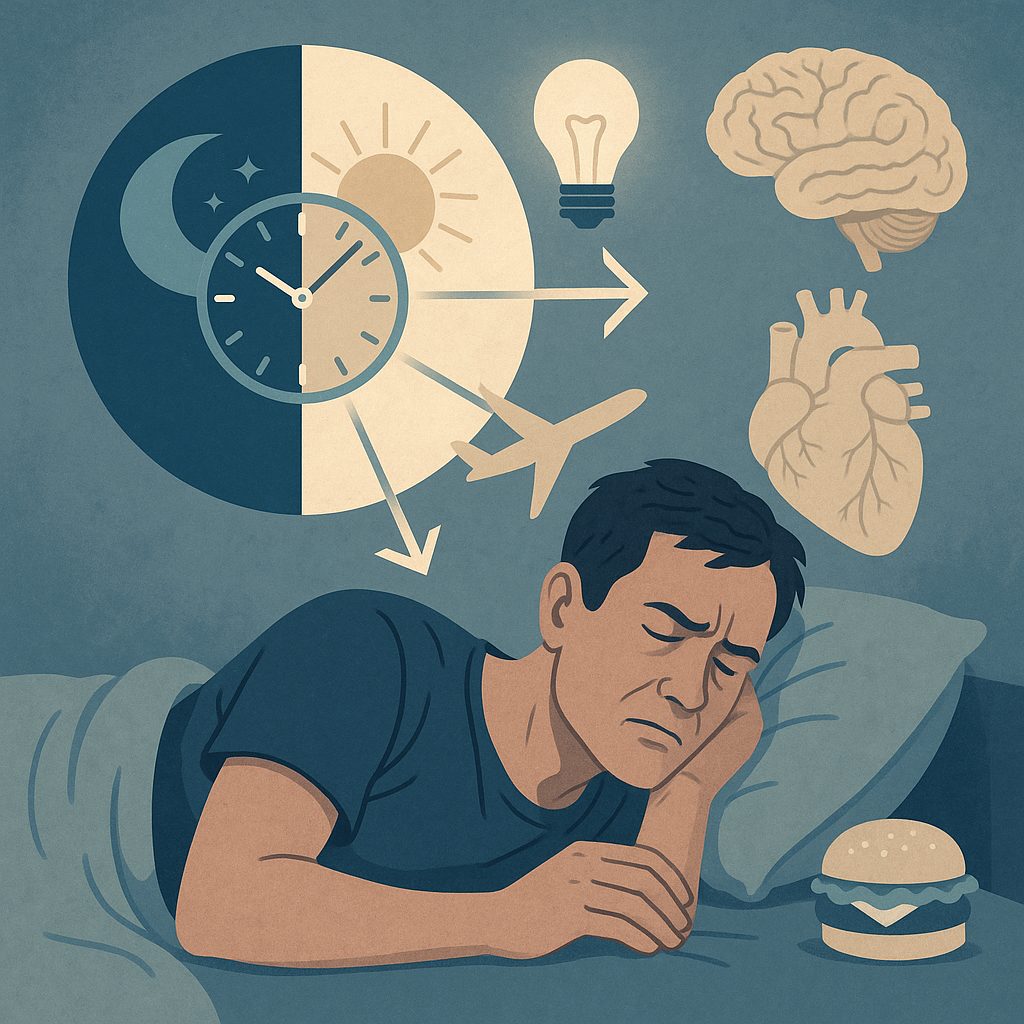
This article is not about clocks in the ordinary sense, but about the internal timing systems that organise living beings around the roughly 24-hour cycle of day and night. In chronobiology, these are known as circadian rhythms — a term introduced by Franz Halberg, one of the founders of modern chronobiology, to describe biological cycles that last “about a day”. Humans are far from unique in this respect: like most animals, and even many plants whose leaves, petals or flowers shift with the light, we live according to rhythms that shape when we wake, sleep and function.
What makes this subject so compelling is that the circadian clock is not a simple metaphor. It is tied to behaviour, physiology and biology, and remains closely linked to light exposure and the Earth’s rotation. Research has suggested that this internal regulation influences far more than sleep, from circulation and cellular metabolism to hormonal activity and immune responses, and that it may begin to take shape from around two months of age.
It also appears that the body does not rely on a single master clock alone, but on several interacting mechanisms — a subtle system that can be disturbed by jet lag, artificial light, night work or other modern pressures, with consequences that are now being studied with growing seriousness in medicine.
In short: what are circadian rhythms?
Circadian rhythms are internal biological cycles that run on an approximately 24-hour pattern. They help coordinate sleep, alertness, hormones, temperature, metabolism, immunity and many other daily functions.
- Light is one of the strongest timing signals for the body clock.
- Sleep is central, but circadian rhythms affect much more than sleep.
- Night work, jet lag, late screens and irregular routines can create misalignment.
- Small daily cues can help the body return to a steadier rhythm.
For related sleep architecture, continue with Sigma Spindles and K-complex.
How the Body’s Internal Clock Shapes Daily Life
What a circadian rhythm really is
This subject has nothing to do with historical timekeeping devices such as stellar, solar, hydraulic, sand, fire, pneumatic or mechanical clocks. Here, the focus is on the circadian rhythm: the set of biological processes that follow a cycle of roughly 24 hours. The term itself, meaning literally “about a day”, was coined by Franz Halberg, the Romanian biologist widely regarded as one of the founders of modern chronobiology. More broadly, chronobiology studies the biological rhythms that align with the natural alternation of day and night.
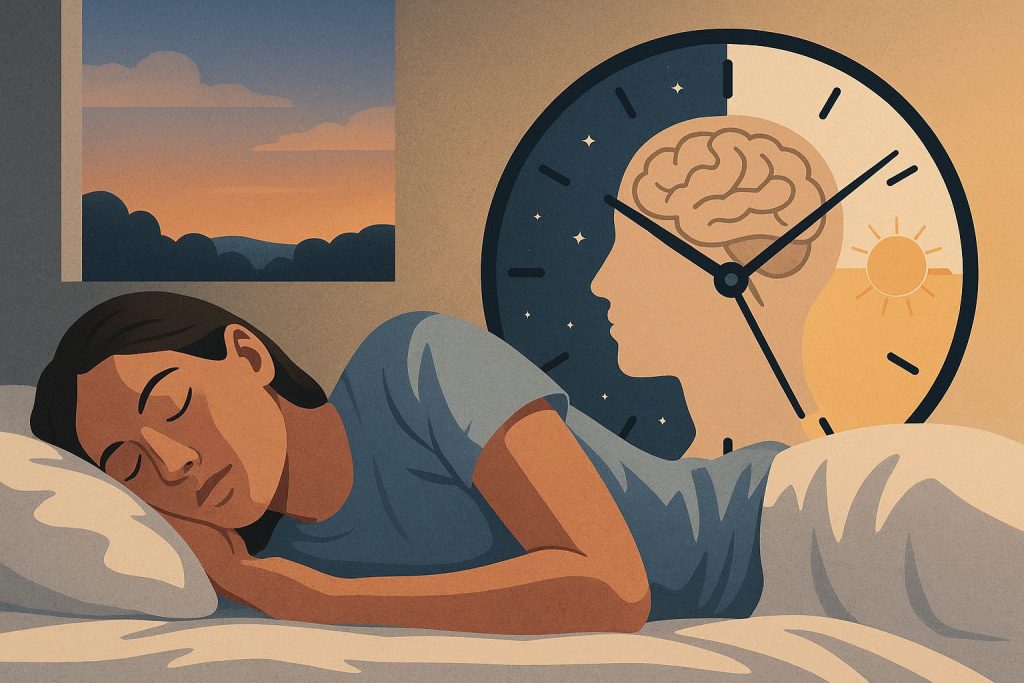
Humans, like most animals including invertebrates, live according to a wake–sleep rhythm. Similar patterns can also be observed in plants, through the position of leaves, petals and flowers; the sunflower is a familiar example, changing its orientation and posture over the course of the day. In humans, the circadian clock depends on a combination of behavioural, physiological and biological mechanisms, especially changes in light exposure, while also remaining linked to the Earth’s rotation. One striking observation illustrates this sensitivity: if people are exposed to 10 hours of light followed by 10 hours of darkness, their cycle tends to adjust towards 20 hours rather than the natural 24.
From urine production to hair growth, from blood circulation to cellular metabolism, an internal timing system appears to organise many bodily functions. This rhythmicity begins to emerge from around two months of age, when newborns start to establish the first outlines of a circadian pattern. Research by R. A. Wever in The Circadian System of Man (Springer, Berlin, 1979), particularly in relation to sleep, also suggested that the body may not rely on just one circadian clock, but on several interacting mechanisms that help maintain our regularity.
That distinction matters because a circadian rhythm is not merely a habit or a preference. It reflects a form of biological timing that continues even when external cues are reduced, although it usually needs regular signals from the environment to remain properly aligned. In practice, this means that daily experience — alertness in the morning, dips in concentration, evening sleepiness, fluctuations in appetite or body temperature — may be shaped by an internal programme as much as by willpower or routine.
For the brain and cognition, this is especially relevant. Attention, reaction time, mental flexibility and subjective vigilance often vary across the day, and these changes are not always random. They may reflect the interaction between sleep pressure, prior rest, light exposure and circadian phase. This helps explain why the same task can feel effortless at one hour and disproportionately demanding at another, even when motivation has not changed very much.
- Wake and sleep timing
- Hormonal and metabolic regulation
- Cardiovascular and cellular activity
Why light, timing and biology are so closely linked
Several factors can disturb this internal organisation, including jet lag, artificial light, night work and even a diet that is too high in fat. This matters because circadian regulation is closely tied to health. Researchers increasingly study these rhythms not only because they structure daily functioning, but also because their disruption may contribute to disease, including certain cancers, Parkinson’s disease, inflammatory disorders and metabolic disturbances. The timing of symptoms and events can also matter.
Professor Pierre Boutouyrie, cardiologist at HEGP in Paris and Inserm, noted that there are around three times more myocardial infarctions in the early morning than at other times, because their occurrence is linked to blood pressure changes that rise towards the end of the night.
Daylight appears to be the main synchronising signal. Through the retina, light stimulates a small region deep in the brain known as the suprachiasmatic nucleus, often described as the metronome of our internal clock, and closely involved in the night-time production of melatonin. Circadian timing also seems to shape immune activity. Hélène Duez, researcher at Inserm and the Institut Pasteur de Lille, points out that the immune system responds according to a circadian rhythm: the number of lymphocytes and macrophages fluctuates across the day, as does their ability to infiltrate tissues or produce antibacterial molecules.
In other words, our internal clock does not simply influence sleepiness or alertness; it may help regulate a much wider landscape of bodily functions, from cardiovascular balance to immune defence.
The relationship between light and the brain is more specific than it may first appear. Specialised retinal cells respond particularly to environmental brightness and send timing information to the suprachiasmatic nucleus, which then helps coordinate downstream rhythms in hormones, temperature, feeding behaviour and sleep propensity. This is why morning daylight can be so powerful as a stabilising cue, whereas bright light late in the evening may delay the body’s sense of night.
Importantly, the circadian system is not isolated from lived experience. Social schedules, meal timing, work demands, screen exposure and travel can all compete with biological timing. When these signals repeatedly conflict, people may notice not only poorer sleep, but also changes in mood regulation, concentration and perceived mental clarity. The science does not suggest that every fluctuation is caused by the clock alone, but it does indicate that timing can be a meaningful layer in how physiology and subjective experience meet.
When Circadian Rhythms Fall Out of Sync
Why disruption matters for health
Circadian rhythms can be disturbed by very concrete factors: jet lag, artificial light, night work, and even a diet that is too high in fat. This matters because the circadian system is not simply a background timer; it helps regulate internal balance in ways that may influence health over time. Researchers are therefore paying increasing attention to what happens when these rhythms become misaligned. A disrupted body clock has been associated with a higher risk of certain conditions, including some cancers and neurodegenerative disorders such as Parkinson’s disease.
Professor Pierre Boutouyrie, cardiologist at HEGP in Paris and Inserm, has also pointed out that myocardial infarction is seen three times more often at the beginning of the morning than at other times of day, because its occurrence is linked to blood pressure variations that rise towards the end of the night.
Related offer
Sleep induction
Set against a natural backdrop, this session guides your brain into a state of sleep...
View productLight appears to be the main synchronising signal. Through the retina, daylight stimulates a small region deep in the brain, the suprachiasmatic nucleus, often described as the metronome of our internal clock and closely linked to the nocturnal production of melatonin. Yet this regulation does not stop at sleep. Hélène DUEZ, researcher at Inserm and the Institut Pasteur de Lille, notes that the immune system itself follows a circadian rhythm: the number of lymphocytes and macrophages fluctuates across the day, as does their ability to enter tissues or produce antibacterial molecules. In other words, some disorders may depend not only on what is happening in the body, but also on when it is happening.
Misalignment can take several forms. Sometimes the internal clock is delayed or advanced relative to social obligations; in other cases, different systems within the body may drift out of step with one another. A person may be awake and functioning outwardly while hormonal, metabolic or thermal rhythms are still signalling a different biological time. This helps explain why shift work can feel more taxing than simple tiredness would suggest: the challenge is not only reduced sleep, but a broader loss of synchrony across multiple regulatory systems.
From a mental and emotional perspective, this desynchronisation may also matter. Disturbed circadian timing has been associated with changes in mood, irritability, reduced attentional stability and a sense of cognitive fog. These experiences are common enough to feel ordinary, yet they may reflect a deeper mismatch between environmental demands and internal regulation. Such observations should be interpreted carefully, but they reinforce the idea that biological time is relevant not only to disease risk, but also to day-to-day psychological functioning.
- Jet lag and irregular schedules
- Artificial light and night work
- High-fat diets
- Misalignment between biological time and daily routine
Can the internal clock be reset?
This naturally raises a practical question: can a disturbed internal clock be “repaired”, rather like a watch taken to a jeweller? Current research suggests that some approaches may help reduce the effects of circadian desynchronisation. Light therapy is often presented as one possible tool, and chronotherapy — still in its early stages, particularly in oncology — has produced encouraging results. Even so, the first and most important step remains respecting the body’s natural timing as far as possible. According to Hélène DUEZ, chronic disruption may increase the risk of obesity, type 2 diabetes, cardiovascular events, sleep disorders, mood disturbances such as depression, and certain cancers.
Some professions, especially those involving night shifts or highly irregular hours, may therefore contribute to inflammatory problems and metabolic disruption.
Professor Francis LEVI, from the cancer chronotherapy unit at the University of Warwick, has described the immense body of research that has brought the biological clock into the foundations of precision medicine. At the Institut Pasteur de Lille, researchers have also shown that the clock is involved in immune responses: when its functioning is modified using a chemical molecule that directly targets it, the macrophage response changes, and in their study this affected survival rates in fulminant hepatitis. This growing understanding also has implications for medication timing. For example, aspirin is often considered preferable in the evening for stomach relief, whereas tolerance to corticosteroids appears greater in the morning.
New avenues are being explored for asthma and diabetes as well. More exploratory work is also looking at meditation and Traditional Chinese Medicine alongside conventional circadian research. The field is still evolving, but one point is already clear: timing is not a minor detail in health.
In practical terms, supporting circadian alignment often begins with simple but consistent cues: regular wake times, exposure to natural light early in the day, reduced bright light late in the evening, and meal timing that does not constantly shift. None of these measures is a universal remedy, and individual chronotypes differ, but they may help strengthen the signals by which the body distinguishes day from night. For many people, the aim is not perfection but a more stable rhythm that the nervous system can reliably anticipate.
Chronotherapy deserves particular attention because it reflects a broader medical insight: the effect of an intervention may depend partly on when it is delivered. Drug absorption, tolerance, efficacy and side effects can vary according to circadian phase. This does not mean that every treatment should be timed with extreme precision, but it does suggest that biological timing may become an increasingly useful variable in personalised care. The same principle may eventually extend beyond pharmacology to rehabilitation, behavioural interventions and the management of sleep–wake disorders.
- Light therapy may help resynchronise rhythms
- Chronotherapy is being explored in cancer care
- Medication timing can influence tolerance and effect
The Mental Waves Body Clock Alignment Framework
The Mental Waves frame is practical: instead of trying to force sleep or energy, give the body clearer timing cues. The body clock responds best when the day has repeated anchors.
- Morning light: expose the eyes to natural light when possible.
- Rhythmic meals: keep eating times reasonably consistent.
- Input boundaries: lower stimulating screens and work signals before rest.
- Transition ritual: use a short sound or breath cue to mark the shift from effort to recovery.
For that transition cue, the free Mental Reset Session can act as a simple boundary between active time and quieter time.
How to Give the Body Clock Clearer Daily Signals
The simplest circadian work is often environmental. Morning light, movement, social contact, meals and focused work all tell the body that the day has begun. Evening dimness, lower stimulation, quieter sound and repeated wind-down cues tell the body that the day is closing. None of this needs to be perfect, but the repetition matters.
Related offer
Mental and Physical Recovery
This session uses waves with extremely precise frequencies that target healing and recovery. Guidance...
View productWhen a rhythm is already disrupted, it can be tempting to fix everything at once: sleep time, wake time, diet, screens, work, exercise and stress. A gentler approach is usually easier to keep. Choose one morning anchor and one evening anchor for a week. That might mean opening the curtains within ten minutes of waking, then using a short reset ritual before bed to mark the end of active input.
For a sound-based boundary around that evening transition, the Mental Reset sound rituals can help turn rhythm into a repeatable practice rather than a vague intention.
Editorial note from Mental Waves
Circadian rhythm support is not a substitute for medical evaluation. Persistent insomnia, extreme fatigue, shift-work health concerns or suspected sleep disorders should be discussed with a qualified professional.
Conclusion
Chronobiology reminds us that the body does not simply function; it keeps time. Sleep and wakefulness are only the most visible expression of a wider internal organisation shaped by light, behaviour, physiology and multiple interacting biological clocks. What emerges from this research is not a simplistic mechanism, but a finely regulated system in which the brain, hormones, metabolism and immune activity appear to follow temporal patterns that matter for everyday health.
That is why circadian disruption deserves to be taken seriously without turning it into a slogan. Jet lag, night work, artificial light or poorly timed habits may all contribute to a loss of synchrony, and that desynchronisation is increasingly associated with broader physical and mental strain. At the same time, approaches such as light-based interventions and chronotherapy suggest that timing itself may become a meaningful part of care, even if the science is still evolving in some areas.
In the end, respecting the body’s rhythms is less about perfection than about coherence. Sometimes, health begins with learning to live a little more in step with the clock within.
Seen in this light, chronobiology offers something both scientifically rigorous and deeply practical. It invites us to consider that when we sleep, eat, work, recover and seek treatment may influence how effectively the body regulates itself. The promise of the field lies not in deterministic claims, but in a more refined understanding of timing as one dimension of health — one that may support prevention, improve care and illuminate the subtle relationship between biological rhythms and lived experience.
Frequently Asked Questions About Circadian Rhythms
What are circadian rhythms?
Circadian rhythms are internal biological cycles that follow an approximately 24-hour pattern and help organise sleep, alertness, hormones, metabolism and other functions.
What does chronobiology study?
Chronobiology studies biological rhythms, including the daily cycles that align living organisms with light, darkness and time.
Why is light so important for the body clock?
Light is a strong synchronising signal. It helps the brain understand when it is daytime and influences the timing of alertness, melatonin and sleep.
Do circadian rhythms affect more than sleep?
Yes. They are linked with body temperature, hormones, digestion, metabolism, immune activity, attention and daily energy patterns.
What can disrupt circadian rhythms?
Jet lag, night work, irregular sleep times, late artificial light, screens, inconsistent meals and chronic stress can all disturb timing cues.
Can the body clock be reset?
It can often be supported gradually with consistent wake times, morning light, evening boundaries and regular routines. Severe disruption may need professional guidance.
Why do I feel different across the day?
Alertness and performance change as sleep pressure and circadian phase interact. The same task can feel easier or harder depending on timing.
Is melatonin the whole body clock?
No. Melatonin is one important signal, especially around darkness and sleep timing, but the circadian system includes many interacting biological processes.
What is the main takeaway?
Circadian rhythms shape daily life more than most people realise. Clear light, rest and routine cues can help the body clock work with you instead of against you.