en
enVotre panier est vide.


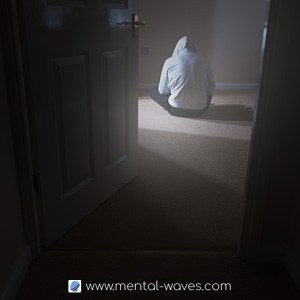
Hikikomori is not a cultural curiosity, a lifestyle trend or some imported fascination from Japan. The word, drawn from Japanese and often understood as a form of withdrawal into oneself, refers to a deeply troubling pattern of social retreat: adolescents and young adults, most often male, shutting themselves away at home — usually in a bedroom — for months or even years, with only the barest contact with the outside world. First identified on a large scale in Japan, where the numbers recorded over the years have been striking, the phenomenon is no longer confined to one country.
Cases have now been noted in Europe, including France, where clinicians have begun to encounter young people whose social lives have narrowed to an alarming degree.
What makes hikikomori so unsettling is that it resists easy explanation. It does not point to one single cause, but to a tangle of pressures: family wounds, school or workplace rejection, shame, fear of failure, social expectations, fragile self-worth, and the exhaustion of feeling unable to meet the standards imposed by others. Some psychologists see clear overlaps with what the West would call social phobia, while other specialists describe a broader and more uneven clinical picture. Behind the silence and the closed door, there is rarely a simple wish to be left alone; more often, there is distress, avoidance and a life gradually shrinking around anxiety, screens and solitude.
In short: what is hikikomori?
Hikikomori is a severe pattern of social withdrawal in which a person stays isolated at home for months or years, often with major distress and very limited contact with the outside world. It is not simple shyness, laziness or a lifestyle choice.
- It was first described at scale in Japan but is now observed in other countries.
- It often involves shame, fear of failure, anxiety, family strain or social pressure.
- Digital life can maintain isolation, even when it is not the root cause.
- Recovery usually depends on patient, respectful human connection and appropriate support.
For gentle emotional regulation context, read How to Relax Before an Important Event and the Mental Waves guide to making peace with emotions.
How Social Withdrawal Took Hold Beyond Japan
What hikikomori really means
Hikikomori is a term that surfaces more and more often, yet it is still widely misunderstood. It is not a musical trend, a martial art or some refined Japanese cultural practice linked to serenity or Zen. The word is Japanese in origin: hiku suggests withdrawing or stepping back, while komoru means going inside. Taken together, it points to a form of withdrawal into oneself. In practice, hikikomori refers to a pathological form of social withdrawal. It is generally described as a non-psychotic state in which a person, most often a young man, shuts himself away at home, usually in his bedroom, and remains there for months or even years, sometimes leaving only for the most basic physical needs.
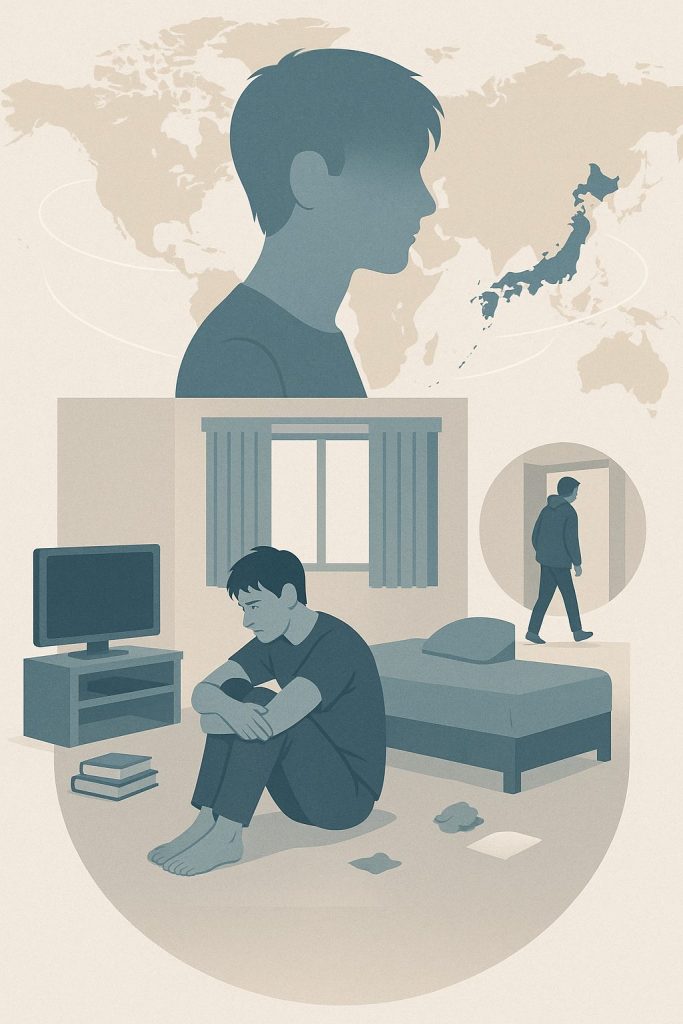
The scale of the phenomenon first drew attention in Japan. In the 1990s, more than 260,000 adolescents and young adults were thought to be affected, around 80% of them male. In the 2000s, 460,000 people were identified as being at risk. Then, in 2016, the Japanese government reportedly counted 540,000 hikikomori aged 15 to 39 who had been shut away for at least six months. If older age groups are included, the figure is said to exceed one million, with 35% having lived in isolation for at least seven years.
What was once seen as a specifically Japanese reality has since been identified elsewhere too: in Spain, Italy and France, but also in the United States, Australia, South Korea and Oman. In France, Dr Marie-Jeanne Guedj-Bourdiau, head of the psychiatric reception and orientation centre at Saint-Anne Hospital in Paris, reported around thirty cases over fifteen months, involving teenagers from the age of 16 as well as young adults aged 25 to 30 whose social lives had become extremely limited after difficulties completing higher education.
That spread matters because it changes the way the condition is viewed. Once a phenomenon appears across very different societies, it becomes harder to dismiss it as a purely local oddity. Something in contemporary life — pressure, disconnection, fear of failure, the strain of constant comparison — seems capable of feeding the same retreat in very different cultural settings. Japan gave the condition its name, but not necessarily its only meaning.
- Withdrawal lasting for months or years
- Most often centred on the bedroom or family home
- Mainly affects adolescent boys and young men
A complex condition with many possible triggers
There is no single profile of a hikikomori. Some live like true recluses, almost monastic in their confinement, remaining alone in a restricted space for years. Others leave the house briefly and discreetly to fetch food or water, only to return immediately to isolation. That variety is one reason the condition continues to interest neuroscientists and mental health professionals. Why does someone retreat so completely? Why does isolation become, for some, both a refuge and a source of shame?
The answers appear to lie in a web of experiences rather than one clear cause: family trauma, school difficulties, repeated frustrations, social pressure, rejection at school or work, distress about one’s appearance, refusal of the standards imposed by society, guilt, shame, low self-confidence, fear, panic and the painful sense of not being good enough or unable to reach one’s life goals.
Psychologists often note that the symptoms of hikikomori closely resemble what, in the West, would be described as social phobia. The triggers can be psychological, physical or material. For some, the outside world becomes unbearable under the weight of judgement, performance and indifference. From that overwhelming anxiety can grow a deep loss of interest in ordinary life, followed by prolonged isolation, voluntary avoidance of social contact and fear of other people. The original text also points to a darker possibility: under intense negative stress, anger can build, and in some cases a lack of moral bearings may lead to violent or even criminal behaviour.
That will not apply to everyone, of course, but it underlines a central point: hikikomori is not simple shyness, laziness or a passing wish to be left alone. It is a serious and deeply human form of withdrawal that deserves to be recognised as such.
It is also worth saying that withdrawal rarely begins all at once. More often, it gathers quietly. A missed class becomes repeated absence. Embarrassment turns into avoidance. The phone stops being answered. Sleep shifts later and later. Meals are taken alone. The room becomes not just a place of retreat, but the last place where the person still feels vaguely safe. By the time family members realise how far things have gone, the outside world may already feel intolerably exposed to the person inside.
- Family and school trauma
- Shame, guilt and low self-worth
- Pressure to conform socially
- Fear of failure and judgement
Inside the Daily Life and Recovery of a Hikikomori
What life looks like behind the bedroom door
When withdrawal becomes extreme, daily life can shrink to a single room. A hikikomori avoids contact with the outside world as much as possible, sometimes leaving only for basic physical needs before retreating again into isolation. Days are then organised around sleeping, browsing the internet, playing video games, chatting on forums, reading manga, watching television or spending long hours on a computer. These activities become their main points of reference, replacing ordinary social rhythms and gradually deepening the distance from real-world relationships.
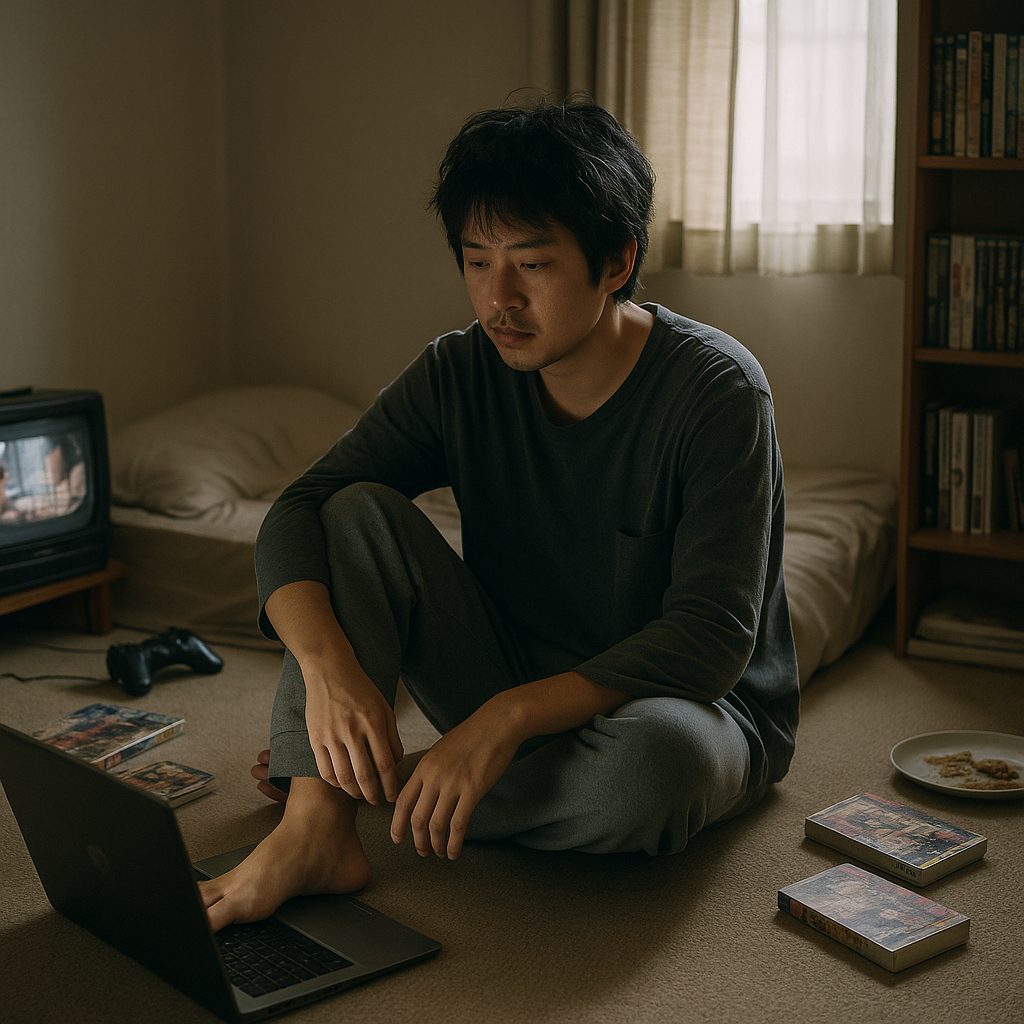
The distress behind that retreat should not be underestimated. The original triggers may be psychological, physical or material, but once the isolation takes hold it can harden into fear of others, shame, anger and a profound loss of bearings. The text even notes that, in some cases, accumulated stress may spill over into violent or criminal behaviour, with some hikikomoris struggling to distinguish right from wrong. According to Thierry Guthmann, professor of legal, human and economic sciences at the University of Mie Prefecture in Japan, boys may be especially affected because many Japanese fathers struggle to communicate with their sons.

Related offer
Anxiety reducer
This session uses Alpha and Beta wave stimulation to relax, alleviate...
View productHe argues that this can create a serious problem of identity formation: fathers may be harsher and more authoritarian with boys, while girls are often more closely aligned with their mothers. Yet the picture is not that simple, since some young people raised almost as child-kings also become hikikomoris. In other words, neither excessive severity nor excessive indulgence seems to help; balance matters.
From the outside, such a life can look empty or passive. From the inside, it is often anything but. Time may be filled, but not inhabited. Hours disappear into scrolling, gaming, watching, sleeping and waking at odd times, yet beneath that routine there is frequently a constant undertow of dread: dread of being seen, of being asked questions, of disappointing others again, of stepping back into a world that feels as though it has already judged you. That is one reason simplistic moral language — laziness, selfishness, weakness — misses the reality so badly.
- Sleeping for long stretches
- Living online through games, forums and screens
- Avoiding almost all face-to-face contact
- Leaving the room only for essential needs, if at all
Why recovery depends on human connection
There is no single remedy, because many factors can feed this kind of withdrawal. Experts often point first to difficult experiences during school or working life, as well as the rigidity of Japanese society and its education system. The French psychiatrist and psychoanalyst Serge Tisseron offers a nuanced reading: in adolescence, hikikomori may function as an inward retreat that unconsciously helps a young person manage emotions, conflict and anxiety about the future, while avoiding a more severe psychiatric collapse such as deep depression or the development of a phobia. That does not mean the situation is harmless.
It does, however, suggest that the withdrawal may begin as a desperate form of self-protection rather than a simple refusal of society.
It is also worth looking at the wider environment: youth unemployment, unspoken dependence on the internet, social media, virtual worlds, video games, mobile phones and tablets all shape the conditions in which withdrawal can flourish. In a culture where appearing so often seems to matter more than being, some young people choose silence and solitude simply to escape judgement and constant evaluation. The response, then, cannot be purely medical or punitive. It also involves rebuilding what gives life texture and meaning: family bonds, parental values, exchange, shared presence and activities that reconnect a person to themselves and to others — music, martial arts, meditation, reading, painting, sculpture, gardening and similar practices.
The source text speaks of a growing circle of people trying to pass on these essentials through meditative music, tai chi chuan, qigong, neuro-education, traditional martial arts, permaculture, ecology, yoga and respect for biodiversity and peoples. Whatever form that support takes, the principle is the same: it is better to light a candle than curse the darkness. As Dr Marie-Jeanne Guedj-Bourdiau puts it, once treated, these hikikomoris often thank those who reached out to them in the midst of their suffering and helped bring them out of hell.
In practice, help is often slow, delicate and relational. It may begin with something very modest: a parent no longer forcing confrontation, a clinician willing to work patiently at the pace of the young person, a trusted adult who keeps showing up without humiliation or pressure. Recovery is rarely a dramatic return to normal life. More often it comes in small movements — opening the door, accepting conversation, stepping outside briefly, tolerating a shared meal, imagining a future again. Those steps can look minor to others, but for someone who has lived in retreat for months or years, they are immense.
What seems to matter most is not grand theory but the quality of contact. People emerge more easily from isolation when they are met without ridicule, without panic and without being reduced to a problem to solve. That does not remove the need for proper psychiatric or psychological care where necessary. It simply reminds us that treatment works best when it restores dignity as well as function.
The Mental Waves Withdrawal-to-Connection Framework
The Mental Waves frame is careful: severe withdrawal is not solved by pressure, shame or motivational slogans. The first step is often to make connection feel less threatening.
- Reduce shame: describe the pattern without turning it into an identity.
- Respect the nervous system: withdrawal may feel protective even when it becomes harmful.
- Build tiny bridges: messages, meals, routines and low-pressure contact can matter.
- Use regulation before demand: calm must often come before conversation or action.
- Seek support: prolonged isolation deserves patient professional and family guidance.
A short sound cue such as the free Mental Reset Session can be used as a gentle transition ritual, but not as a substitute for care. For broader reset practices, see Mental Reset sound rituals.

Related offer
Mental Dynamism and Good Mood
The action of our audio recording affects the limbic system, where our emotional keyboard is located. The...
View productEarly Signs That Withdrawal Is Becoming More Serious
Social withdrawal becomes more concerning when it stops being a temporary need for solitude and begins to shrink the whole life. Warning signs can include reversed sleep rhythms, repeated school or work avoidance, meals taken alone, refusal of ordinary contact, loss of outside activities and growing distress when connection is suggested.
Families often feel torn between two impulses: pushing the person out of the room or avoiding the subject completely. Neither extreme is usually enough. Pressure can increase shame, while silence can allow isolation to deepen. A more useful first step is often steady, low-pressure contact: a meal left without accusation, a short message, a predictable check-in, or one practical task that does not demand a full social performance.
Emotionally, this is where the work overlaps with making peace with emotions. Fear, shame and avoidance need to be recognised before they can soften. The person does not need to be forced into instant confidence; they need enough safety to risk one small connection again.
Editorial note from Mental Waves
This article is educational and should be read with care. Severe isolation, depression, anxiety, suicidal thoughts, family crisis or loss of daily functioning require qualified professional support and, when urgent, immediate local emergency help.
Conclusion
Hikikomori should not be reduced to a stereotype, a cultural curiosity or a simple refusal of society. What emerges instead is a far more fragile reality: a prolonged withdrawal shaped by shame, fear, pressure, fractured relationships and, at times, the quiet exhaustion of trying to meet expectations that feel impossible to bear. That nuance matters, because the person who retreats is not always rejecting the world so much as struggling to remain in it.
Seen in that light, the question is not only why someone shuts the door, but what kind of family, school, work and social environment leaves so little room to fail, pause or ask for help. Screens and virtual worlds may become part of the refuge, but they are rarely the whole story. Recovery, when it happens, seems to begin in a more ordinary and demanding place: patient support, human presence, and relationships that do not judge too quickly. Sometimes the most decisive act is simply to keep a hand extended.
Perhaps that is the most sobering part of the whole phenomenon. Hikikomori does not only tell us something about the individuals who withdraw; it also tells us something about the worlds they are withdrawing from. When belonging feels conditional, when worth is measured too narrowly, and when vulnerability is met with impatience, retreat can begin to feel like the only tolerable answer. The task, then, is not merely to bring people back out, but to help create forms of life they can bear to return to.
Frequently Asked Questions About Hikikomori
What is hikikomori?
Hikikomori is a severe pattern of prolonged social withdrawal, often involving months or years of isolation at home with very limited contact outside the household.
Is hikikomori only a Japanese phenomenon?
No. Japan gave the phenomenon its name and first major public visibility, but similar patterns have been reported in several other countries.
Is hikikomori just shyness?
No. Shyness is a personality tendency or social discomfort. Hikikomori is more severe and involves prolonged withdrawal that can disrupt education, work, relationships and daily life.
What can lead someone into hikikomori?
Possible factors include shame, rejection, bullying, school or work pressure, family conflict, fear of failure, anxiety, depression and a sense of not being able to meet expectations.
Does the internet cause hikikomori?
The internet can maintain isolation by making withdrawal easier to sustain, but it is usually too simple to call it the only cause. Emotional and social factors often run deeper.
Can someone recover from hikikomori?
Recovery is possible, but it often takes time, patience and appropriate support. Pressure and shame usually make the door harder to open.
How can family members help?
Families can help by reducing blame, keeping respectful contact, supporting routines and seeking professional guidance. The goal is to rebuild trust before demanding big changes.
When is professional help needed?
Professional help matters when isolation is prolonged, daily functioning collapses, distress is intense, family life is in crisis or there are signs of depression or self-harm risk.
What is the main takeaway?
Hikikomori is best understood as severe withdrawal around distress and avoidance, not as laziness. Recovery begins with patient connection, safety and appropriate support.