en
enVotre panier est vide.



Much of human life is shaped by a simple, relentless movement: trying to meet our needs, keep going, and feel that we belong. That effort gives us purpose, but it also leaves us exposed. There are moments when, despite our plans and our energy, events seem to move against us and undo what we were trying to build. From that clash between intention and reality comes a familiar strain of inner pressure — the persistent unease early psychology identified as stress. It is not a personal failure, but a deeply human condition.
Yet stress does not have to govern the whole of life. People who learn to loosen its grip often do so not through one dramatic breakthrough, but by adopting a wiser way of moving through uncertainty: meeting the unexpected with more steadiness, seeing difficult moments for what they are, and refusing to let regret or mental overcontrol dictate the present. What follows stays close to that perspective, offering grounded ways to recover a calmer, more balanced relationship with yourself, with time, and with the natural rhythm of life.
Loosening Your Grip on What You Cannot Control
Why rigid plans so often turn into stress
Human beings naturally make plans. We organise, anticipate and pour our energy into what we hope will happen next. In itself, that is not the problem. Stress often appears when we become too tightly attached to a single outcome, as though life must unfold exactly as we imagined. The moment events move in another direction, disappointment quickly turns into panic. What felt solid suddenly seems to collapse, and the mind reacts as if everything were falling apart.
In short: how do you free yourself from stress?
You free yourself from stress by creating more space between pressure and reaction. That means accepting uncertainty, releasing rigid expectations, returning to the present and giving the body repeatable cues of safety.
- Notice what you are trying to control.
- Separate real action from mental overcontrol.
- Use breath or sound to lower intensity.
- Take one grounded step instead of replaying the whole problem.
Begin with the free Mental Reset Session, then continue with Making Peace with Emotions.
Yet this state is not inevitable. A calmer way of living begins when you accept that even the best plans are never certain. Things will not always happen on time, in the right order or in the way you expected. The more you prepare your mind for that reality, the less easily you are shaken by it. Detachment does not mean giving up on your goals; it means pursuing them without making your inner balance depend entirely on the result.
- Make plans, but leave room for the unexpected.
- Distinguish between what you can influence and what you cannot.
- Refuse to treat every setback as a disaster.
Learning to take events as they come
There is real strength in learning to take things as they come. That does not mean becoming passive or careless. It means staying mentally supple enough to meet reality as it is, rather than exhausting yourself by fighting what has already happened. If you expect life to contain delays, reversals and surprises, you stop experiencing every obstacle as a personal defeat. You respond with more steadiness, and far less inner turmoil.
Over time, this change of posture makes a profound difference. When your mind is prepared for different possibilities, you no longer crumble at the first disruption. You remain grounded, even when circumstances are not ideal. That is one of the quiet secrets of a more peaceful life: not trying to control everything, but learning not to be undone by every change of plan. In that sense, living with detachment is not coldness at all. It is a form of inner stability.
Accepting That Difficult Moments Do Not Last
Life will not always go the way you hoped
Life is not a calm river in which everything unfolds exactly as planned. Some periods are smooth, others are far more demanding, and much of our stress comes from expecting reality to spare us disruption. It helps to recognise, with honesty rather than defeatism, that setbacks, delays and disappointments are part of being alive. When you stop treating every hard moment as an abnormality, it already loses some of its power over you.
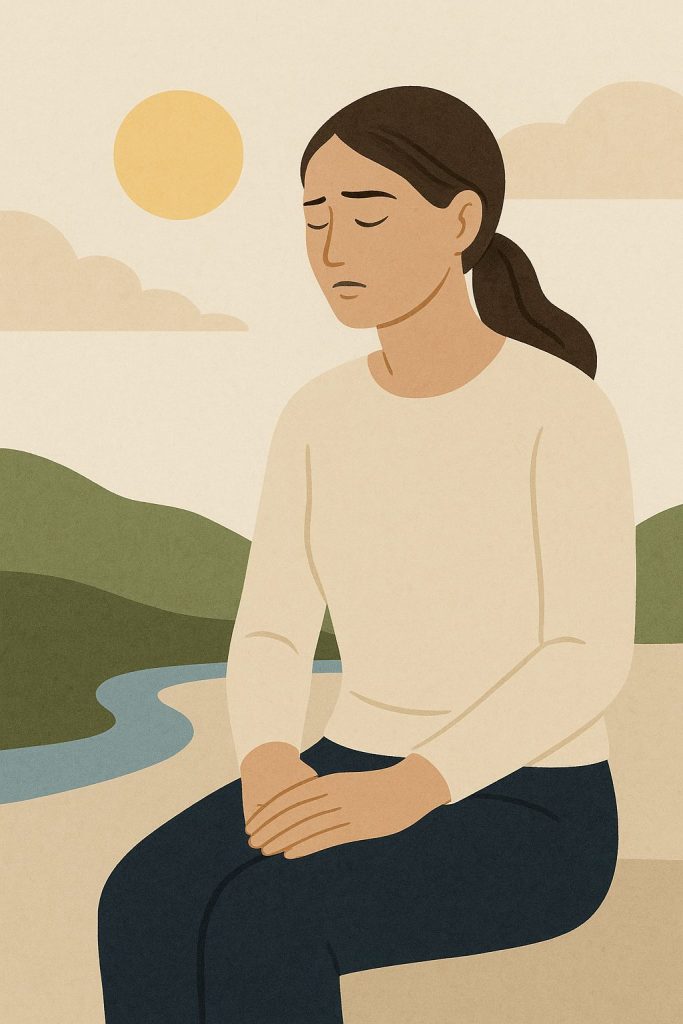
This does not mean becoming passive or indifferent. It means remembering that what is happening to you today is not permanent. A difficult situation, however heavy it feels, is not your whole life and it will not remain unchanged forever. Instead of collapsing inward at every blow, try to stand up, breathe and face what is there. That shift alone can soften the spiral of tension and discouragement.
- Expect that some things will go wrong
- Remind yourself that the moment will pass
- Respond steadily rather than dramatically
Turn the unexpected into a point of movement
There is an old idea that nothing is truly lost; things change form. In the same spirit, the unexpected does not have to remain a dead end. What first appears as an obstacle can, with time and perspective, become a turning point, a lesson or even the beginning of something more fitting. This is why dwelling endlessly on every setback only deepens the wound. What helps more is to ask: what can this experience become now?
Accepting the unforeseen is not the same as liking it. It is choosing not to let it break your inner balance. When life shifts course, you can still use that movement as a springboard rather than a sentence. Some events close one path, but they also force you to grow, adapt and see differently. If you learn to work with change instead of fighting it at all costs, stress begins to loosen its grip and life becomes lighter, steadier and more peaceful.
Living in the Present Without Being Trapped by the Past
Stop letting old regrets define today
Many people stay emotionally tied to what has already happened. You hear it in the way they speak to themselves: “If I had not done that back then, I would have succeeded today.” That habit of constantly looking backwards feeds regret and keeps stress alive. There comes a point when you have to pull yourself out of that mental loop. The present moment is not a waiting room between yesterday and tomorrow; it is the place where your future is quietly being shaped.

This does not mean pretending the past never happened. It means refusing to live under its authority. What is gone cannot be rewritten, but it can still teach you something. Use your past as experience, not as a prison. Notice what led to mistakes before, learn from them with honesty, and bring that clarity into the choices you make now.
- Recognise regret when it turns into self-blame
- Take the lesson from the past without reliving it endlessly
- Bring your attention back to what can still be done today
Turn past pain into strength for the present
Old wounds do not disappear simply because you decide to ignore them. But they do not have to keep weakening you either. The aim is to transform earlier pain into something useful for your current life. What hurt you can become a source of discernment, resilience and inner steadiness. In that sense, yesterday’s difficulties can become fuel rather than dead weight.

Related offer
Meditation - Relaxation set
All the Mental Waves® know-how in a single pack for quick and easy access to meditation and...
View productWhen you live more fully in the present, you stop asking only why something happened and start asking what you can do with it now. That shift changes everything. Instead of remaining stuck in remorse, you begin to move again. Little by little, stress loses some of its grip, because your energy is no longer swallowed by what cannot be changed. It is directed towards what can still be built, repaired or begun.
Listening to Yourself Instead of Forcing Everything
Reason cannot carry everything on its own
The great spiritual teachers return to this point again and again: there are moments in life when you have to stop forcing, loosen your grip and allow things to settle. Many of us try to solve every difficulty through analysis alone, as if enough thought could bring every answer into view. But not everything can be resolved by reason. When you insist on controlling every outcome with the mind, stress often tightens rather than fades.
Learning to let go does not mean becoming passive or careless. It means recognising that your intelligence is only one part of you. There is also a quieter, deeper form of understanding that does not shout, but often sees more clearly than panic or overthinking. When you stop swimming against the current at all costs, you create space for a calmer and more balanced response to what is happening.
- Pause before reacting.
- Notice when overthinking is making the tension worse.
- Allow yourself to step back instead of forcing an answer immediately.
Make room for your inner voice
One simple way to reconnect with that inner guidance is to meditate for a few minutes each day. The aim is not to perform perfectly, but to return to yourself and find your centre again. In that quiet, you begin to hear the small inner voice that is so often drowned out by fear, noise and mental agitation. The original text calls it the little “self” within you, and that image is helpful: this part of you is often more seasoned than you realise, because it is less reactive and more deeply rooted.
Listening to your inner voice can help you move through life with less friction. Instead of battling everything, you begin to sense when to act, when to wait and when to change direction. That is not weakness; it is a more peaceful form of strength. If you want to free yourself from stress, stop treating every challenge as something to overpower. Sometimes the wiser path is to listen inwardly, trust what emerges, and move with life rather than constantly against it.
Working With Life’s Natural Rhythm
Progress is rarely instant, and that is not a failure
Nature does not rush, yet everything finds its place in time. Seasons change gradually, growth happens in stages, and very little of value appears all at once. There is something deeply calming in remembering this when stress starts to build. We often suffer not only because life is difficult, but because we expect everything to be resolved immediately. A more peaceful life begins when you stop demanding instant results from yourself and accept that steady progress is still progress.
That does not mean giving up on ambition. It means approaching your goals with the same measured rhythm you see in the natural world. Set clear aims, but allow them to unfold step by step. When you stop fighting the pace of things, you waste less energy on frustration and keep more of it for what truly matters.
- Choose one clear objective
- Break it into smaller stages
- Complete each stage in turn
Build your life one completed step at a time
Trying to transform everything at once is one of the quickest ways to feed stress. A calmer approach is to divide what you want to achieve into manageable parts and deal with them progressively. Each small step completed gives you something solid to stand on. Not everything will become easy overnight, and not every phase will be pleasant, but there is real satisfaction in seeing something through properly instead of exhausting yourself in a constant rush.
Live at that pace: steady, grounded and realistic. Little by little, what once felt overwhelming becomes more workable, and your days begin to feel lighter. This is one of the quiet lessons nature offers us: growth does not need violence to be real. Move forward with patience, let each effort take its place, and do not let stress keep dictating the rhythm of your life.
The Mental Waves Stress-to-Space Framework
The Mental Waves frame does not pretend that stress disappears because you decide to be calm. It gives the nervous system a path: reduce input, name the pressure, reset the body and choose one next action.
- Reduce input: stop adding noise when the system is already overloaded.
- Name the pressure: ask whether the stress comes from action, uncertainty, regret or control.
- Reset the body: use breath, sound, walking or cardiac coherence.
- Choose one step: stress often shrinks when action becomes specific.
For breath-based support, read Everything You Need to Know About Cardiac Coherence. For sound rituals, see Mental Reset sound rituals.
Related offer
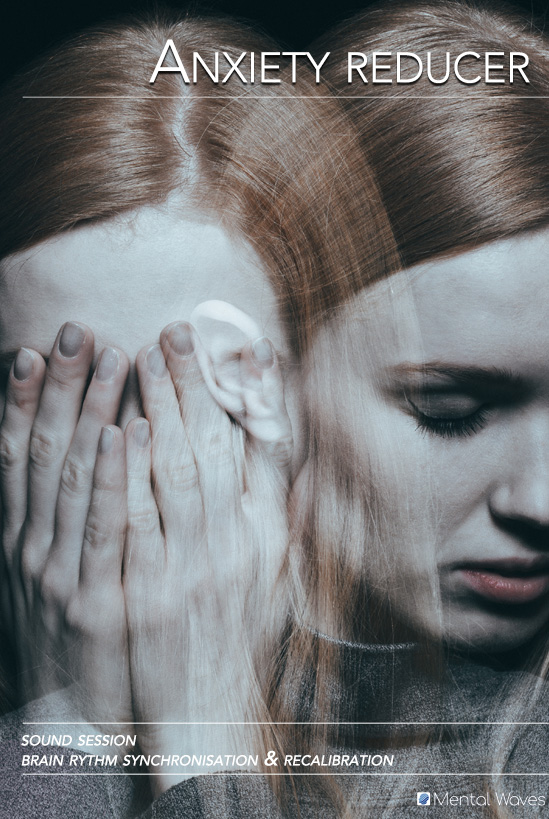
Anxiety reducer
This session uses Alpha and Beta wave stimulation to relax, alleviate...
View productA Simple Daily Reset When Stress Starts Building
Stress is easier to work with before it reaches its peak. A useful daily reset can be very short: stop what you are doing, place both feet on the floor, exhale slowly and name the pressure in one sentence. The goal is not to solve the entire situation in that moment. The goal is to stop the nervous system from carrying everything at once.
After that pause, choose one of three options: act, postpone or release. If there is a clear next step, do it. If the issue cannot be handled now, write down when you will return to it. If the thought is only replaying an old scene, practise letting it pass without adding more commentary. This small sorting process can make stress less vague and less total.
Repeated often, this kind of reset teaches the mind that pressure does not have to become panic. It becomes a cue to return to the body, clarify the next move and stop feeding the loop.
Editorial note from Mental Waves
This article is educational. Chronic stress, panic, trauma symptoms, depression or burnout deserve qualified support. Self-regulation tools can help, but they do not replace care when care is needed.
Conclusion
In the end, freeing yourself from stress is not about building a life with no friction, no uncertainty and no setbacks. It is more about changing your relationship with what happens: holding your plans a little more lightly, accepting that hard moments pass, and refusing to let yesterday dictate the whole meaning of today. Peace is rarely found in total control; more often, it grows from flexibility, perspective and a steadier way of meeting reality.
That also means trusting that life does not need to be forced at every turn. There is wisdom in listening inwardly, in moving at a more natural pace, and in allowing progress to be gradual rather than dramatic. A balanced life is not a perfect one, but one in which you stop fighting every current and begin to move with a little more clarity, patience and self-respect. Sometimes that quiet shift changes everything.
{
"@context": "https://schema.org",
"@type": "FAQPage",
"mainEntity": [
{
"@type": "Question",
"name": "How do you free yourself from stress?",
"acceptedAnswer": {
"@type": "Answer",
"text": "Start by identifying what is creating pressure, lowering physical intensity and choosing one practical next step instead of trying to control everything at once."
}
},
{
"@type": "Question",
"name": "Why does control create stress?",
"acceptedAnswer": {
"@type": "Answer",
"text": "Control becomes stressful when the mind reads uncertainty as failure. Flexibility helps you respond to reality instead of fighting it."
}
},
{
"@type": "Question",
"name": "Can acceptance reduce stress?",
"acceptedAnswer": {
"@type": "Answer",
"text": "Acceptance can reduce the extra struggle around a situation. It does not mean giving up; it means seeing clearly before acting."
}
},
{
"@type": "Question",
"name": "How does breath help stress?",
"acceptedAnswer": {
"@type": "Answer",
"text": "Steadier breathing can signal safety to the body and reduce the intensity of the stress response enough for clearer thinking."
}
},
{
"@type": "Question",
"name": "Why does regret add stress?",
"acceptedAnswer": {
"@type": "Answer",
"text": "Regret keeps attention locked on what cannot be changed. It becomes useful only when it leads to learning, repair or a better next choice."
}
},
{
"@type": "Question",
"name": "What is a mental reset for stress?",
"acceptedAnswer": {
"@type": "Answer",
"text": "A mental reset is a short transition ritual that helps interrupt overload and return attention to the present moment."
}
},
{
"@type": "Question",
"name": "When is stress serious?",
"acceptedAnswer": {
"@type": "Answer",
"text": "Stress is serious when it becomes persistent, affects sleep, work, relationships, health or safety, or feels impossible to manage alone."
}
},
{
"@type": "Question",
"name": "Can sound help stress?",
"acceptedAnswer": {
"@type": "Answer",
"text": "A simple sound cue can help attention settle and mark a shift from reaction to regulation. It works best as part of a wider routine."
}
},
{
"@type": "Question",
"name": "What is the main takeaway?",
"acceptedAnswer": {
"@type": "Answer",
"text": "Freedom from stress is less about controlling life and more about building space, flexibility and small practices that restore steadiness."
}
}
]
}
Frequently Asked Questions About Freeing Yourself from Stress
How do you free yourself from stress?
Start by identifying what is creating pressure, lowering physical intensity and choosing one practical next step instead of trying to control everything at once.
Why does control create stress?
Control becomes stressful when the mind reads uncertainty as failure. Flexibility helps you respond to reality instead of fighting it.
Can acceptance reduce stress?
Acceptance can reduce the extra struggle around a situation. It does not mean giving up; it means seeing clearly before acting.
How does breath help stress?
Steadier breathing can signal safety to the body and reduce the intensity of the stress response enough for clearer thinking.
Why does regret add stress?
Regret keeps attention locked on what cannot be changed. It becomes useful only when it leads to learning, repair or a better next choice.
What is a mental reset for stress?
A mental reset is a short transition ritual that helps interrupt overload and return attention to the present moment.
When is stress serious?
Stress is serious when it becomes persistent, affects sleep, work, relationships, health or safety, or feels impossible to manage alone.
Can sound help stress?
A simple sound cue can help attention settle and mark a shift from reaction to regulation. It works best as part of a wider routine.
What is the main takeaway?
Freedom from stress is less about controlling life and more about building space, flexibility and small practices that restore steadiness.