en
enVotre panier est vide.



Long regarded as a magical, even mystical object, the pendulum has stirred curiosity far beyond esoteric circles. It has fascinated observers for centuries, including scientists such as Galileo, who took a serious interest in its behaviour. That long history helps explain why the pendulum still holds such a strong pull today: it sits at the meeting point of mystery, observation and personal practice.
For many people, the real question is not simply what a pendulum is, but how to use it well. That is where a more grounded approach matters. Rather than treating it as an object of pure intrigue, it helps to understand the practice around it, its roots in radiesthesia, and the small but important habits that make its use clearer, steadier and more meaningful.
What the Pendulum Really Is and Where Radiesthesia Comes From
A tool long linked with divination
The pendulum is most often used in the art of divination, and it is closely associated with radiesthesia. The word itself comes from the Latin radius, meaning ray or radiation, and aesthesis, meaning sensitivity. In other words, radiesthesia refers to a form of sensitivity to subtle signals or vibrations, expressed through a tool such as the pendulum.
In short: how do you use a pendulum clearly?
Use a pendulum clearly by calming your body first, setting a simple yes-no convention and asking precise questions that do not replace judgement. These pendulum practical tips keep the object useful as a tool for attention and intuition, not as an authority that decides your life for you.
- Begin with a quiet body and a simple grip.
- Define yes, no and unclear before asking anything important.
- Ask one concrete question at a time.
- Treat the answer as a cue for reflection, not absolute proof.
For a related inner practice, read Creative Visualization. For a free contemplative sound cue, receive the Sacred Frequency Session.
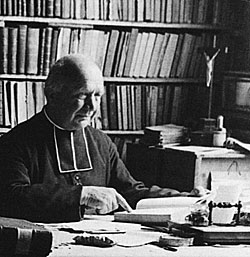
The term was introduced by Abbé Bouly towards the end of the 19th century. At first glance, that might make the practice seem relatively recent. Yet the name is newer than the practice itself. Long before the word radiesthesia existed, similar methods were already being used in Antiquity, notably by the Greeks and Romans. So if we want to understand where this tradition comes from, it makes more sense to look at the history of the practice rather than the date when its modern name appeared.
An old practice that still attracts curiosity
That long history also helps explain why radiesthesia has never really disappeared. Despite the passing of centuries, interest in the pendulum has remained remarkably steady. For some, it is a mysterious object; for others, a practical support for intuition. Either way, it continues to fascinate people who want to understand how it works and what it can reveal.
If you are one of those people, you are far from alone. The pendulum still draws in curious beginners as well as committed practitioners, precisely because it sits at the crossroads of sensitivity, symbolism and personal experience. And if you would like to try radiesthesia for yourself, a few clear foundations can make those first steps much easier.
- The word radiesthesia was coined by Abbé Bouly in the late 19th century.
- The practice itself goes back much further, to Antiquity.
- The pendulum remains popular because interest in radiesthesia has endured over time.
Getting Started with a Pendulum Without Overcomplicating It
Begin by settling yourself before you ask anything
Using a pendulum is something you learn with practice; it is not reserved for a gifted few. If you want to use one well, the first step is not technical at all, but mental. Before you begin, take a moment to clear your head properly. Put the day aside, let go of whatever has been occupying your mind, and bring your attention back to the present. A pendulum session tends to work best when you are calm, focused and not mentally scattered.
In practical terms, sit down with both feet flat on the floor and avoid crossing your legs. Then close your eyes for a moment, breathe slowly and allow your body to relax. This simple pause matters more than it may seem. It creates the concentration you need before asking any question at all, and it helps you approach the pendulum in a steadier, more receptive state.
- Sit comfortably with both feet on the ground
- Keep your legs uncrossed
- Close your eyes, breathe and relax before starting
Learn the grip and set your yes-or-no convention
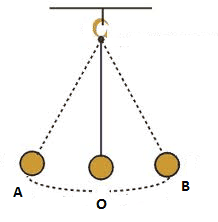
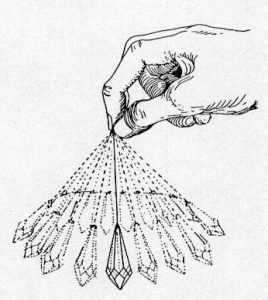
Once you feel centred, the next step is to programme the pendulum. People do not all handle a pendulum in exactly the same way: for some, the movement comes naturally, while for others it takes a little time to find the right feel. If you have never held one before, simply take it in your dominant hand, whether that is your left or your right. Hold the chain halfway between your thumb and index finger, keep your elbow unsupported, and make sure your wrist stays loose rather than rigid. That relaxed grip is important, because it allows the pendulum to move freely.
From there, you can establish what practitioners often call a convention — in other words, the movement that will correspond to “yes” and the one that will correspond to “no”. One common method is to assign a clockwise turn to “yes” and an anti-clockwise turn to “no”. Another is to use a circular movement for “yes” and a vertical back-and-forth swing for “no”, or the reverse if that feels more natural to you. The key point is to define this clearly. If you do not set a convention yourself, one will tend to impose itself anyway, which can make your early practice more confusing than it needs to be.
- Hold the pendulum in your dominant hand
- Grip the chain halfway between thumb and index finger
- Keep the wrist supple and the elbow unsupported
- Decide clearly which movement means “yes” and which means “no”
Teaching Your Pendulum How to Answer Clearly
Set your convention before you ask anything
As you hold the pendulum, keep your wrist loose and relaxed. Once you feel settled, the next step is to establish what many practitioners call its “convention”. In simple terms, this means deciding how the pendulum will show a yes and how it will show a no. This matters more than it may seem at first, because without a clear convention, the movements can feel confusing or inconsistent.
There are several ways to do this, but two are especially common. You might decide that a clockwise movement means “yes” and an anti-clockwise movement means “no”. Another option is to use a circular motion for “yes” and a vertical back-and-forth swing for “no” — or the reverse, if that feels more natural to you. The important thing is not which system you choose, but that you choose one consciously. If you do not set this convention yourself, it tends to establish itself on its own, which can make your early practice less clear.
- Clockwise circle = yes
- Anti-clockwise circle = no
- Or circular motion = yes and vertical swing = no
Ask at the right moment and keep the question simple
Once your pendulum is properly “programmed”, you can move on to shaping your question. Before doing that, it can be helpful to ask whether the moment is right to ask at all. This step may seem unusual, but many people find it useful, as the pendulum does not always respond well when the timing or your state of mind is off. Most of the time the answer will be positive, but if it is negative, it is better to leave the question for later rather than force it.
When you do ask, keep the wording simple, clear and relevant. If the question is vague or muddled, the pendulum may stay still or move in an erratic way, leaving you with no reliable sense of what it is saying. A gradual, funnel-like approach often works best: you might begin with, “Pendulum, may I ask you a question?” If the answer is yes, you can narrow it down with something like, “May I ask a question about myself?” and then move towards a more specific area, such as your work. You can ask silently in your mind or out loud; in either case, the response can still come through.
- Check first whether it is the right moment
- Use one clear question at a time
- Start broad, then narrow the subject
Asking Better Questions and Building Confidence with Practice
Use a simple question path
When you put a question to the pendulum, it helps to do it in a funnel-like way, moving from the most general point to something more precise. That gradual approach often makes the exchange clearer and avoids jumping straight into a question that is too broad or muddled. You might begin with something as simple as, “Pendulum, may I ask you a question?” If the answer is yes, you can narrow the focus: “May I ask a question about myself?” Then, if needed, continue towards a more specific area, such as your work.
The key is to keep each question clear, direct and easy to understand. You can ask it silently in your mind or say it out loud; in either case, the pendulum is still meant to respond. What matters most is not the volume of your words, but the quality of your attention. If you stay calm and precise, you give yourself a much better chance of reading the movement with confidence rather than second-guessing every response.
- Start broad, then narrow the subject
- Ask one clear question at a time
- Speak aloud or ask silently, as you prefer

Train with concrete exercises
If this is your first time using a pendulum and you are worried you will not manage it properly, try not to put too much pressure on yourself. Like any skill, it becomes easier with practice. A very simple way to begin is to ask a friend to help you. They can hide an object somewhere in your home, and you then try to locate it with the pendulum. They might also place two glasses under a towel, with only one filled with water, and you ask the pendulum to indicate which one it is.
Another useful exercise is to have your friend hide the queen of hearts in a pack of cards and see whether you can identify it.
If you prefer to practise alone, radiesthesia charts can also be useful, including the Bovis chart. This type of chart is used to indicate the vibrational rate of a body, a place or an object. In that sense, it gives you a more structured way to work and to observe how your pendulum responds. The important thing is not to get everything right immediately, but to become more familiar with the tool, your own reactions and the way answers begin to take shape over time.

Related offer
Developing extrasensory perception
Develop your extrasensory perceptions with our powerful method based on synchronization and rhythm training...
View product- Ask a friend to hide an object in the house
- Test two covered glasses and find the one containing water
- Use a pack of cards, such as locating the queen of hearts
- Practise alone with a Bovis radiesthesia chart
Progress Comes Through Practice, Not Giftedness
Give yourself time to learn
If you are using a pendulum for the first time, it helps to remember that this is not something most people master straight away. Like any skill, dowsing asks for patience, regular practice and a genuine willingness to learn. Early sessions can feel uncertain, and that is perfectly normal. What matters is not getting everything right immediately, but staying steady enough to let your movements, attention and confidence become more precise over time.
That is why it is worth resisting the urge to give up too quickly. In practice, it often takes several weeks before the results begin to feel truly reliable. The exercises you do, however simple they seem, gradually help you obtain clearer and more accurate answers. So if your first attempts feel awkward, do not read that as failure. Read it as part of the learning curve.
You do not need a special gift
One of the most discouraging ideas for beginners is the belief that pendulum work is reserved for people with a rare gift. The original advice here is reassuring for good reason: that simply is not the case. You do not need to see yourself as specially chosen or unusually intuitive to begin. What you do need is consistency, a little trust in your own ability, and enough perseverance to continue even when the process feels slow.
In other words, do not doubt your capacity before you have really given yourself the chance to learn. The pendulum is not only for a select few. Anyone can practise it, provided they are prepared to stay patient and keep going. With time, repetition and a calm mindset, what first seems difficult often becomes far more natural.
- Accept that progress may take several weeks.
- Keep practising even if the first results feel unclear.
- Do not assume you need a special gift to succeed.
How Radiesthesia Gives the Pendulum Its Meaning
A practice rooted in intuition, not just ritual
The pendulum and radiesthesia are closely connected. In simple terms, radiesthesia is the practice of creating a link between our intuitive sense and our analytical mind with the help of a tool such as a pendulum. The word itself was coined by Abbé Bouly towards the end of the 19th century, from the Latin radius, meaning “ray” or “radiation”, and aesthesis, meaning “sensitivity”. Yet the practice is far older than the name. Long before that, the Greeks and Romans were already using forms of radiesthesia in Antiquity.
In earlier times, the pendulum was mainly used to answer important questions about one’s life. Today, its uses are broader. Some people use it to search for lost objects or even missing people, while others turn to it in the hope of locating hidden treasure. Whatever the purpose, these uses are generally understood through the lens of radiesthesia. Even so, what actually happens during a session still feels mysterious to many people, because the movements of the pendulum and the answers it seems to provide are not always easy to explain in concrete terms.
- It links intuition with analysis
- Its name comes from Latin roots
- Its practice goes back to Antiquity
From dowsing rods to modern pendulums
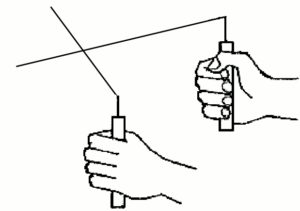
Before pendulums became widely used, dowsers and radiesthetists often worked with rods. Over time, the pendulum largely took their place and became the more familiar tool. That shift did not change the principle behind the practice: radiesthesia still rests on interpreting movement, whether that movement comes from a rod or from a pendulum.
Modern pendulums now come in many forms and materials, including metal and wood, with shapes to suit different preferences. The appearance may vary, but the underlying idea remains the same. In essence, radiesthesia is the interpretation of the movements made by the pendulum or the rod. That is what gives the tool its meaning, beyond its shape, style or material.
What Really Makes a Pendulum Move
More an extension of you than a magical object
One question comes up again and again: is the pendulum really magical? It is an understandable reaction, especially when you watch it move and seem to answer with surprising clarity. Yet its functioning is often less mysterious than it first appears. In practice, many people understand the pendulum as responding through the subconscious. When you ask a question, that deeper part of the mind reacts before your conscious thoughts have fully caught up, and the response can show itself through tiny movements in the hand.
The pendulum then amplifies those almost invisible motions, making them readable. In that sense, the pendulum can be seen as a prolongation of yourself rather than a power acting independently from you. It helps bring to the surface things your conscious mind struggles to express, but that your subconscious may already register. That is also why so many practitioners describe it less as an object with powers of its own, and more as a tool for revealing what is already moving within us.

Why its answers should still be treated with caution
That said, not everyone interprets the experience in the same way. Some people are convinced that the answers they receive come from a spiritual guide or a guardian angel. Whatever your personal view, it is worth remembering that a pendulum’s answers are not automatically exact. If the response is coming through the unconscious, then it can also be shaped by emotion, expectation and desire.
This is an important point to keep in mind when you use one. The unconscious is not neutral all the time; it can be highly suggestible. If you desperately want a particular outcome, your mind may quietly push the movement towards the answer you were hoping for. So while the pendulum can be a valuable support for intuition, it should not be treated as infallible. Used well, it can help you listen to yourself more clearly. Used uncritically, it can just as easily reflect what you wanted to hear in the first place.
Related offer
Contact your Spiritual Guide
Brain training program to enable you to contact your spirit guide... The spirit guide is a disembodied entity...
View product- It can reveal subtle inner responses.
- It can also mirror hopes, fears or expectations.
- Its answers are best approached with discernment.
Practical Advice for Choosing and Using Your Pendulum Well
You do not need a gift or elaborate tools
Pendulum work is not reserved for a chosen few. Anyone can learn it, provided they practise regularly and do not give up too quickly. That matters more than any supposed special gift. You also do not need sophisticated equipment to begin. A simple cord with a small weight at the end, whether in wood, metal or mineral, can be perfectly adequate. What matters most is not owning an impressive object, but having a tool that allows you to focus and seek an answer with clarity.
It also helps to remember what the pendulum really is. Before it is an instrument for detection or prediction, it is often experienced as an extension of yourself. As Julien, an experienced radiesthesist, explains, its first use is personal: a way of communicating with yourself and finding solutions that help you feel more at ease. In that sense, the answers given by the pendulum can be understood as messages from your intuition. The intuition sends a response to the brain, which then triggers a tiny electrical signal towards the shoulder, creating a micro-movement. That movement is invisible to the naked eye, yet it is enough to set the pendulum in motion in one direction or another.
- Practise matters more than talent
- A basic pendulum is enough to start
- Its first use is often personal rather than spectacular
Choose responsiveness over appearance
If you care about aesthetics in everyday life, that is perfectly natural, but it does not always help when choosing a pendulum. The one that works best with you may have no remarkable shape at all. It may not be the prettiest object in the shop, yet it could still be the one that feels most responsive in your hand. That is why it is worth testing several rather than choosing purely by appearance. In practice, the right pendulum is often the one that seems most in tune with you, not the one that looks the most mystical.
If you struggle to find that good match on your own, do not hesitate to ask people with real experience in radiesthesia for guidance. Some practitioners even create personalised pendulums that may suit you better. The important thing is to stay simple and attentive: look for comfort, responsiveness and a sense of ease in use. Very often, that will tell you more than style ever could.
The Mental Waves Clear Pendulum Framework
The Mental Waves frame keeps pendulum work grounded. Among the most important pendulum practical tips is this: the goal is not to make the object mysterious at all costs, but to use a simple ritual to slow attention, listen inwardly and avoid confused questioning.
- Settle: pause before the question so body tension does not dominate the movement.
- Define: agree on yes, no and unclear signals before interpretation.
- Simplify: ask one question with one meaning.
- Verify: compare the result with common sense, context and lived reality.
If you work with symbolic or subtle practices, also read 11 Elements That Can Lower Your Vibration. A sound ritual can help mark the shift from scattered attention to clearer perception.
Editorial note from Mental Waves
This article presents pendulum use as a reflective and intuitive practice. It should not be used to replace medical, legal, financial or safety decisions, and unclear answers should be treated as unclear.
Conclusion
The pendulum sits in an interesting place: part symbol, part tool, and for many people a very personal way of listening more closely to themselves. What matters here is not dressing it up as pure magic, nor stripping away the mystery so completely that the practice loses its meaning. Used well, it asks for calm, clarity and honesty — because the quality of the answer depends as much on the person holding it as on the object itself.
That is why the essentials remain simple: settle your mind, agree your conventions, ask clear questions, practise without rushing, and stay aware of how easily desire can colour what you hope to hear. In that sense, the pendulum is less a shortcut to certainty than a disciplined way of engaging intuition. And perhaps that is its real fascination: it does not just point outward, but quietly back towards you.
{
"@context": "https://schema.org",
"@type": "FAQPage",
"mainEntity": [
{
"@type": "Question",
"name": "What is a pendulum used for?",
"acceptedAnswer": {
"@type": "Answer",
"text": "A pendulum is often used as a simple intuitive tool for yes-no questions, inner listening or symbolic reflection."
}
},
{
"@type": "Question",
"name": "How should a beginner start?",
"acceptedAnswer": {
"@type": "Answer",
"text": "Start by settling your body, holding the pendulum comfortably and defining what yes, no and unclear look like for you."
}
},
{
"@type": "Question",
"name": "What questions work best with a pendulum?",
"acceptedAnswer": {
"@type": "Answer",
"text": "Clear, simple and specific questions work best. Avoid vague questions or questions with several meanings at once."
}
},
{
"@type": "Question",
"name": "Do you need a special gift?",
"acceptedAnswer": {
"@type": "Answer",
"text": "No. The article presents pendulum use as a skill of practice, attention and sensitivity rather than a rare gift."
}
},
{
"@type": "Question",
"name": "Can a pendulum be wrong?",
"acceptedAnswer": {
"@type": "Answer",
"text": "Yes. Its movement can be influenced by expectation, tension, ambiguity or emotion, so answers should stay in perspective."
}
},
{
"@type": "Question",
"name": "What is radiesthesia?",
"acceptedAnswer": {
"@type": "Answer",
"text": "Radiesthesia is the tradition of using sensitivity, often through tools such as pendulums or rods, to explore subtle responses."
}
},
{
"@type": "Question",
"name": "How can someone practise?",
"acceptedAnswer": {
"@type": "Answer",
"text": "Practise with simple exercises where the answer can later be checked. This builds familiarity without exaggerating certainty."
}
},
{
"@type": "Question",
"name": "Should a pendulum guide major decisions?",
"acceptedAnswer": {
"@type": "Answer",
"text": "It can support reflection, but major decisions should also use evidence, context, professional advice and personal responsibility."
}
},
{
"@type": "Question",
"name": "What is the main takeaway?",
"acceptedAnswer": {
"@type": "Answer",
"text": "Use a pendulum as a quiet tool for attention: settle, define, ask clearly and keep interpretation grounded."
}
}
]
}
Frequently Asked Questions About Pendulum Use
What is a pendulum used for?
A pendulum is often used as a simple intuitive tool for yes-no questions, inner listening or symbolic reflection.
How should a beginner start?
Start by settling your body, holding the pendulum comfortably and defining what yes, no and unclear look like for you.
What questions work best with a pendulum?
Clear, simple and specific questions work best. Avoid vague questions or questions with several meanings at once.
Do you need a special gift?
No. The article presents pendulum use as a skill of practice, attention and sensitivity rather than a rare gift.
Can a pendulum be wrong?
Yes. Its movement can be influenced by expectation, tension, ambiguity or emotion, so answers should stay in perspective.
What is radiesthesia?
Radiesthesia is the tradition of using sensitivity, often through tools such as pendulums or rods, to explore subtle responses.
How can someone practise?
Practise with simple exercises where the answer can later be checked. This builds familiarity without exaggerating certainty.
Should a pendulum guide major decisions?
It can support reflection, but major decisions should also use evidence, context, professional advice and personal responsibility.
What is the main takeaway?
Use a pendulum as a quiet tool for attention: settle, define, ask clearly and keep interpretation grounded.