en
enVotre panier est vide.


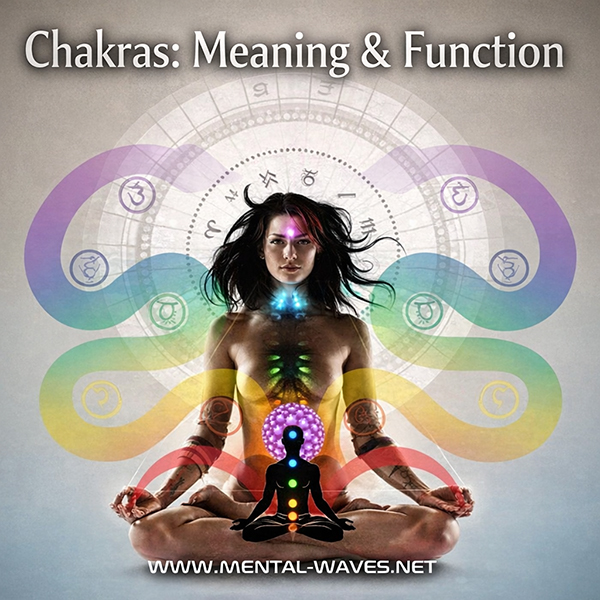
The chakras, though rooted in Asian traditions for millennia, are still too often treated in the West as vague or secondary. Yet in the classical view, they are central: seven main energy centres through which vital force is thought to move along the spine, from the coccyx to the crown of the head. Each is associated with a dominant colour, certain organs and particular sensations, and each is understood as having its own vibratory quality shaped by the energy circulating through it.
In short: main chakras and their functions
The seven main chakras can be read as a symbolic map for attention, body awareness and emotional balance, with clear practical limits.
Use this article as a practical map: keep what helps attention become steadier, question anything that sounds absolute, and connect the idea back to repeatable daily practice.
What gives this system its depth in meditation is the idea that these centres are not fixed. Their movement may expand or contract, and with it, influence both the body and the emotional life. In that sense, concentration, inner calm and meditative presence are closely tied to the way this energy is believed to circulate. To work with the chakras is not only to think in terms of energy, but in terms of balance: between body and mind, instinct and awareness, self and ego, and even between the individual and the wider world.
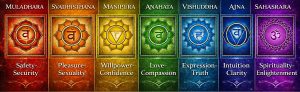
Muladhara: the chakra of grounding, safety and physical stability
The root chakra’s place and symbolism
Muladhara, the first chakra, is known as the root chakra. It is located in the pelvic plexus, at the perineum, and is traditionally associated with the colour red, the element of earth and the image of a lotus with four petals. In the usual chakra system, it is the energy centre that connects you most directly to the Earth, drawing energy from the outside world in order to support your inner balance.
It is linked to the adrenal glands, the bladder, the sexual organs and blood circulation in the lower limbs. In that sense, it is associated with some of the body’s most basic regulatory and protective functions: body temperature, overall vitality and the instinct for self-preservation through the adrenal response. Muladhara also governs your relationship with the material world, including practical security and, by extension, questions around money and stability.
- Position: pelvic plexus (perineum)
- Colour: red
- Element: earth
- Symbol: lotus with 4 petals
What Muladhara influences in everyday life
Because it is so closely tied to survival, Muladhara is also associated with deeply rooted feelings such as fear, insecurity and instability. When this chakra is unsettled, those emotions can become more present, as though the ground beneath you is less steady than it should be. It reflects, in a very direct way, your relationship with the physical world and your sense of having a place within it.
When it is well supported, however, the effect is very different. A balanced root chakra is said to strengthen your resilience, your physical energy and your ability to face obstacles without immediately feeling overwhelmed. In other words, Muladhara is not only about survival in the narrow sense; it is also about having enough inner steadiness to move through life with strength, practicality and a more secure footing.
Svadhisthana and the awakening of desire, pleasure and emotional flow
Where the sacral chakra sits and what it is believed to govern
Svadhisthana, the 2nd chakra or sacral chakra, is located between the pubic symphysis and the navel. It is traditionally associated with the colour orange, the element of water and the image of a lotus with six petals. Considered one of the body’s vital energy centres, it is linked to the sexual organs and the lower part of the body. In this tradition, deep breathing is often recommended to help activate it, precisely because it sits at the heart of the energies tied to movement, sensation and vitality.
Once the basic needs connected with the 1st chakra are more firmly established, Svadhisthana is thought to bring desire into awareness. That includes the forms of pleasure that shape everyday life: sensuality, appetite and the simple ability to feel drawn towards what nourishes you. If Muladhara is about survival and stability, Svadhisthana marks a shift towards experience, enjoyment and the emotional current that gives life colour.
- Position: between the pubic symphysis and the navel
- Colour: orange
- Element: water
- Symbol: lotus with 6 petals
When this energy is blocked, excessive or well balanced
In practical terms, this chakra is often associated with your relationship to pleasure, desire and meaning. When it is poorly regulated, the text links it to boredom and to a darker, more negative view of life’s deeper purpose. In other words, when this centre is not well supported, it can become harder to feel engaged, inspired or emotionally alive.
At the other extreme, overstimulation is said to push desire out of balance, particularly through disproportionate sexuality. But when Svadhisthana is well nourished and properly stimulated, the effect is very different: a steadier sense of joy, a healthier connection to pleasure, and a stronger feeling that what surrounds you has depth and meaning. This is why the sacral chakra is so often seen as the centre of emotional fluidity: it shapes not only what you want, but also how fully you feel able to enjoy being alive.
Manipura and the inner fire of personal strength
Where the solar plexus chakra sits and what it is believed to regulate
Manipura, the 3rd chakra or solar plexus chakra, is located at the solar plexus, in the hollow of the stomach. Its colour is yellow, its element is fire, and it is traditionally represented by a lotus with 10 petals. In chakra traditions, this centre is often described as a place where energy is sorted, directed and redistributed, which is why it is associated with a more developed level of consciousness and with the way we channel our inner resources.
It is linked to several important areas of the body, including the stomach, the liver and the nervous system. Because of that, it is thought to react strongly to periods of stress or intense emotion. In practical terms, Manipura is often seen as a key chakra for your relationship with inner peace: when it is unsettled, everything can feel more scattered; when it is steadier, you may feel more centred, more capable and less easily thrown off course.
- Position: solar plexus (hollow of the stomach)
- Colour and element: yellow and fire
- Symbol: lotus with 10 petals
Confidence, direction and the will to move forward
Manipura is also associated with a clear sense of what you want, what you can do and how far your own strength can carry you. It is the chakra linked to determination, courage and the ability to move forward with intention rather than hesitation. In that sense, it does not only concern confidence in the abstract: it also relates to your daily energy, your sense of organisation and your ability to orient yourself in life without constantly second-guessing your next step.
When this chakra is underdeveloped, the effects are said to be very concrete: you may feel weak, drained or mentally dispersed, as though your thoughts are pulling in too many directions at once. That loss of inner structure can leave you feeling confused or unable to act decisively. For that reason, working on Manipura is often presented as a way of becoming more masterful in your actions, breaking unhelpful habits and recovering a steadier, more reliable sense of personal direction.
Anahata and the delicate balance of the heart
Where the heart chakra sits and what it is believed to regulate
Anahata, the heart chakra, is traditionally located at the cardiac plexus, around the sternum and heart. It is associated with the colour green, the element of air, and the image of a lotus with 12 petals. In chakra traditions, it is linked to the circulatory system, the heart and the lungs, which is why it is often described as a vital centre rather than a secondary one. It is also said to work closely with Manipura, the solar plexus chakra, helping to sort and regulate emotional energy rather than letting it become stifled or, at the other extreme, overwhelm everything else.
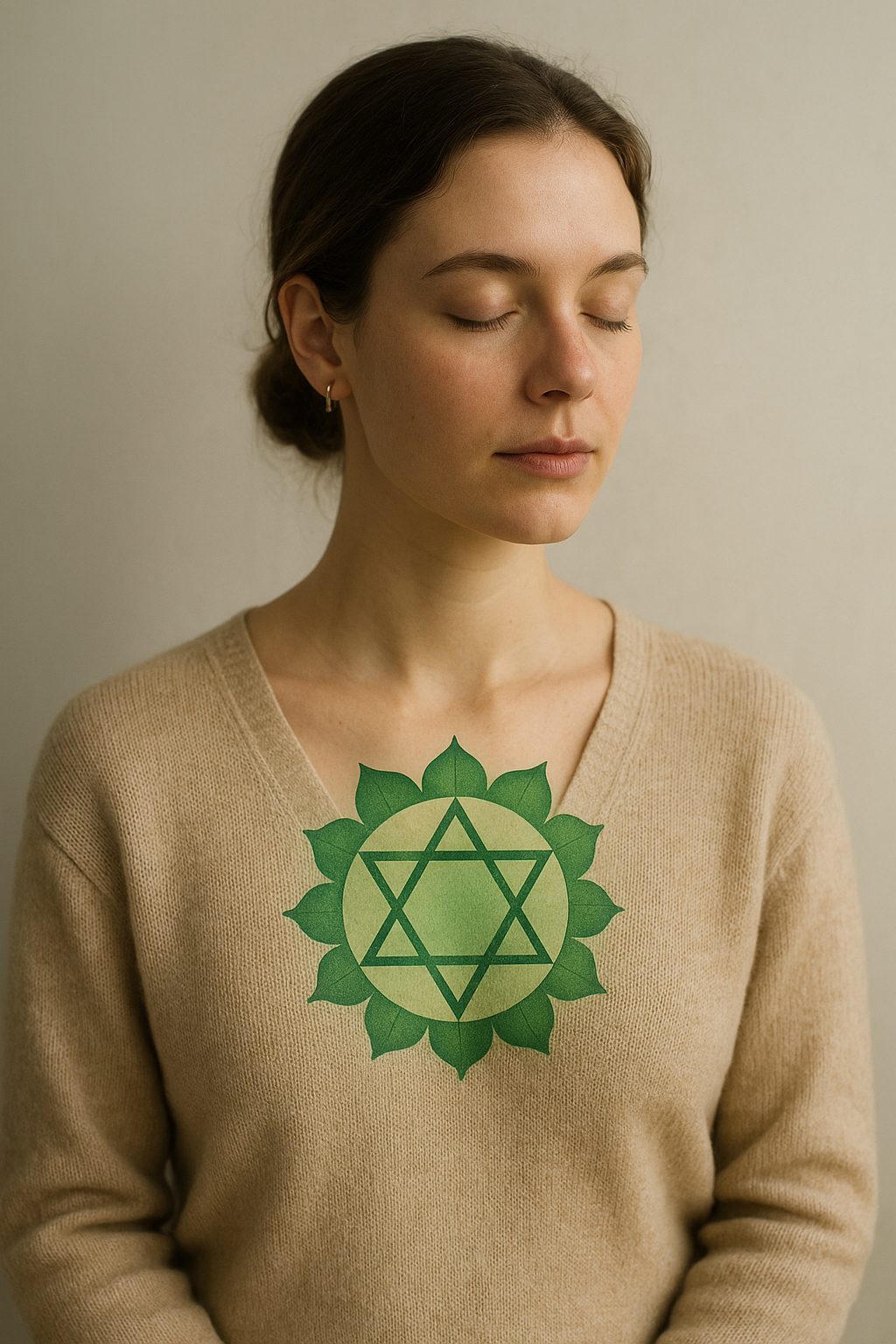
This is often considered one of the most demanding chakras to work with, precisely because it mirrors what it governs: sensitivity, vulnerability and openness. Anahata is thought to remain in constant contact with the emotions we understand least well, as well as with our ability to reach other people through words, gestures and presence. That makes it a risky centre in one sense, but also a deeply powerful one. When it is approached with care, it is believed to help you open yourself to the world around you and move beyond personal attachment towards something wider, often described as universal love.
Related offer
Align your Chakras
This therapeutic music uses two specific waves to balance the chakras, your body's energy centers.
View product- Position: cardiac plexus, around the sternum and heart
- Colour: green
- Element: air
- Symbol: lotus with 12 petals
What imbalance can look like in everyday life
Because Anahata is tied so closely to emotional life and relationships, an imbalance here is traditionally said to show up quite strongly in behaviour. If it is not sufficiently stimulated, it may lead to emotional withdrawal, difficulty connecting and serious communication problems. Yet excess is not seen as any healthier: when this energy becomes disproportionate, it can spill over into uncontrolled expressions of affection or emotional intensity, sometimes accompanied in the original tradition by the idea of unrestrained sexuality. In other words, the heart chakra is not simply about feeling more; it is about feeling in a way that remains grounded, clear and humane.
For that reason, maintaining a good relationship with this chakra is often presented as essential. When Anahata is well supported, it is believed to bring a sense of ease between body and mind, and a more peaceful feeling within your surroundings and relationships. It also encourages compassion, not as an abstract ideal but as a lived attitude that shapes how you act, think and respond to others. In that state, the heart chakra is said to set a wider cycle of wellbeing in motion: you do good, think good, and in turn become more open to receiving good.
Vishuddha and the challenge of expressing your true self
The throat chakra as a bridge between inner and outer life
The 5th Chakra (Vishuddha): the throat chakra is located at the carotid plexus, in the hollow of the throat. Its colour is blue, its element is ether, and it is traditionally represented by a lotus with 16 petals. Positioned at the level of the throat, it is often seen as a pivotal chakra: the one that links the lower centres with the higher ones. In that sense, Vishuddha occupies a special place, because it does not only concern speech in the narrow sense, but the passage between what you feel inwardly and what you are able to bring into the world. It is associated with the lungs, bronchi, vocal cords, lymphatic system and thyroid gland.
Vishuddha is therefore tied to your ability to communicate, create and assert yourself. It is also linked to the way you translate subtler perceptions, including the intuitions and presentiments that are not always easy to put into words. When this chakra is not well stimulated, expression can become blurred or constrained: you may struggle to show yourself as you really are, whether through speech, behaviour or artistic expression. In this tradition, the throat chakra is not just about talking to others; it is about giving form to your deeper self, your personality and your inner truth.
- Position: carotid plexus, at the hollow of the throat
- Colour: blue
- Element: ether
- Symbol: lotus with 16 petals
When expression loses its alignment
One of the clearest signs of imbalance, in the original sense given here, is a gap between who you are and what you express. If Vishuddha lacks balance or control, your words, actions or creative choices may no longer feel truly yours. You may say things that do not reflect what you think, adopt attitudes that feel out of step with your nature, or find that your voice simply does not carry what you mean. That same difficulty can also affect creativity, because the problem is not only external communication, but the inability to let your inner world take a clear and faithful shape.
When Vishuddha is well nourished, the opposite tends to happen: there is more coherence between what you are and what you project. Your expression becomes more natural, your presence more consistent, and your creativity more closely aligned with your deeper self. In that state, communication is not forced. It feels truer, steadier and more personal, as though your voice, your gestures and your ideas are finally moving in the same direction.
Ajna, intuition and clear-sighted awareness
The third eye as a centre of perception and discernment
The 6th chakra (Ajna), often called the third-eye chakra, is traditionally placed at the level of the pineal gland, between the eyebrows. Its colour is indigo, its element is spirit, and it is symbolised by a lotus with 96 petals. It is often described as the chakra that helps activate the other main energy centres, which is why some people treat it as the essential chakra. Even so, each chakra has its own role and particular qualities; without all seven, we would not be able to live, think or relate to others in a balanced way.
Ajna is linked to the nose, the ears, the higher nervous system and the front functions of the brain. In practical terms, it is associated with lucidity, creative insight and subtle perception, including a sense of contact with what cannot be seen directly. Where Vishuddha opens the door to imagination and inner sensitivity, Ajna is said to give that experience structure by adding judgement, perspective and a clearer reading of what is happening. In that sense, it does not simply expand perception; it helps you make sense of it.
- Position: between the eyebrows, at the pineal gland
- Colour: indigo
- Element: spirit
- Symbol: lotus with 96 petals
What balance in Ajna is believed to change
This chakra is also closely tied to intelligence in the broadest sense: physical, emotional, mental and spiritual. When Ajna is well centred, it is believed to support a more global vision of yourself and your surroundings. You may find it easier to stay alert to what is happening around you, respond with better judgement, and let intuition emerge without feeling overwhelmed by it. That is why Ajna is often associated not only with perception, but with orientation — the feeling that you know where you stand and how to move forward.
When its stimulation or regulation is poor, the opposite tendency appears. Perception can feel blocked, confused or fragmented, and it may become difficult to place yourself in relation to the outside world. Because Ajna is described as the point where different forms of information come together, imbalance here can leave you feeling disoriented, cut off from your own inner compass, or unsure how to interpret what you sense. In that light, working with this chakra is seen as a way of restoring clarity: not to escape reality, but to meet it with steadier awareness and allow intuition to support your personal evolution.
Sahasrara and the highest point of spiritual awareness
The crown chakra’s place, symbolism and role
Sahasrara, the seventh chakra or crown chakra, is traditionally located at the top of the head, at the cerebral plexus. It is associated with the colour violet, the element of vibration, and the image of a lotus with 1,000 petals. What makes it distinct is that it is often described as the only major chakra that extends beyond the physical body, even though it is still linked to the posterior part of the brain. In that sense, it stands at the threshold between embodied life and a wider field of consciousness.
Because it opens upwards, Sahasrara is seen as the chakra of spiritual awakening and meditation. It is the centre said to connect you with the Universe, with the infinite, and with the feeling that you are not separate from the whole. Rather than turning you away from yourself, it is believed to bring you closer to who you are at the deepest level, by helping you experience yourself as one part of something larger.
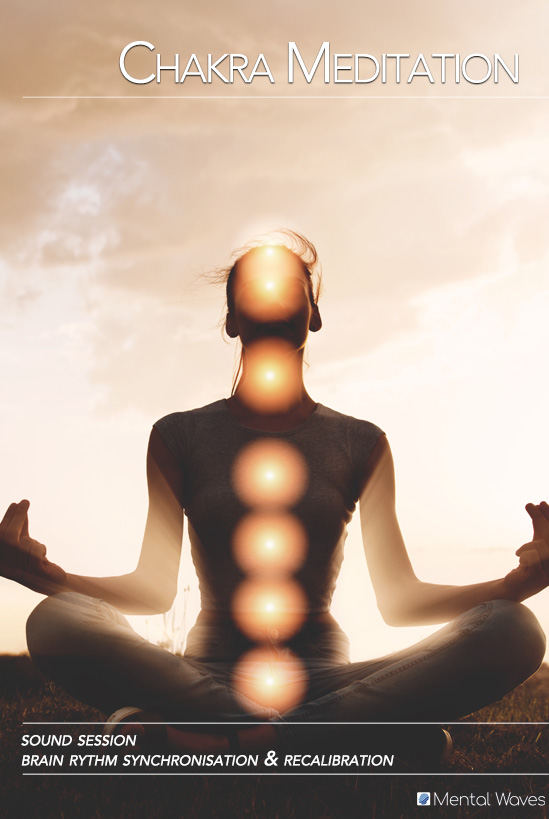
Related offer
Chakra meditation
This session is specially designed to harmonize the 7 main chakras and stimulate your energy centers....
View product- Position: top of the head
- Colour: violet
- Element: vibration
- Symbol: lotus with 1,000 petals
Meditation, fulfilment and the idea of a higher frequency
Sahasrara is also presented as the chakra most closely tied to mental wellbeing and to a sense of full realisation. In traditional chakra-based practice, meditation and yoga are often understood as ways of guiding the mind towards this centre, with the aim of opening it to a state of illumination. Whether or not you think of yourself as spiritual, the underlying idea remains the same: energy is believed to circulate through this chakra just as it does through the other six.
It is also said to carry the highest energetic frequency in the body. In that view, its intensity can grow with practice, inner work and a greater openness to spirituality. That does not mean it matters only to people on an overtly spiritual path. Rather, Sahasrara represents the part of the chakra system associated with perspective, elevation and the search for meaning, especially in moments when meditation helps you feel calmer, clearer and more deeply aligned.
The Mental Waves Chakra Awareness Framework
The Mental Waves frame is to use chakras as an attention map. Each centre becomes a way to notice posture, breath, emotion and intention without turning symbolic language into a fixed diagnosis.
A chakra practice is most useful when it stays embodied. Listen, breathe, observe the area of the body, and let the symbol guide reflection rather than force an interpretation.
For a gentle sound-based entry point, receive the free 128 Hz sacred frequency session and use it as a quiet support for body awareness.
Editorial note from Mental Waves
This article keeps the chakra framework symbolic and experiential. It does not present chakras as medical organs or as substitutes for professional care.
Conclusion
Taken together, the seven chakras are less a rigid ladder than a living map of balance: from grounding and survival, through desire, will, feeling and expression, to intuition and spiritual openness. What gives the system its depth is precisely that it does not separate the body from the inner life. In this view, fear, vitality, clarity, connection and meaning are not isolated experiences, but parts of the same circulation. To work with the chakras is therefore not simply to “open” them, but to notice where energy feels steady, excessive or diminished, and how that shapes the way you move through daily life.
That is also why meditation holds such an important place here. It is not presented as an escape from the world, but as a way of restoring coherence between the physical, emotional and spiritual dimensions of the self. Whether one approaches the chakras as a spiritual reality, a symbolic framework or a language for inner observation, their enduring appeal lies in this: they invite a more attentive relationship with oneself, with others and with life as a whole. Sometimes, that quiet realignment changes more than force ever could.
Frequently asked questions about the 7 main chakras
What are the seven main chakras and where are they located?
The seven main chakras are energy centres said to run along the spine from the coccyx to the crown of the head. They are Muladhara at the perineum, Svadhisthana between the pubic bone and navel, Manipura at the solar plexus, Anahata at the heart, Vishuddha at the throat, Ajna between the eyebrows, and Sahasrara at the top of the head.
Why are chakras considered important in meditation?
Meditation is closely linked to the circulation of energy through the chakras. When these centres function in a more balanced way, they are associated with concentration, inner peace and a better sense of harmony between body, mind, emotions and the wider world. Their movement is thought to affect both physical and emotional life.
What does the root chakra, Muladhara, influence?
Muladhara is linked to grounding, survival and physical stability. It is associated with the adrenal glands, bladder, sexual organs and blood circulation in the lower limbs, and it is said to influence body temperature, overall vitality and self-preservation. It also relates to security, fear, instability and your relationship with the material world, including money.
How does Svadhisthana affect pleasure and emotional life?
Svadhisthana is associated with desire, sensuality, appetite and the ability to feel pleasure. It comes into focus once more basic needs feel secure, and it is linked to joy and a sense of meaning in life. When poorly regulated, it is connected with boredom and a negative outlook; when overstimulated, it may push desire, especially sexuality, out of balance.
What is the role of Manipura, the solar plexus chakra?
Manipura is tied to personal strength, determination and the ability to move forward with clarity. Linked to the stomach, liver and nervous system, it is especially affected by stress and strong emotion. It also relates to daily energy, organisation and inner peace. When underdeveloped, it may leave you feeling weak, scattered or unsure of your direction.
Why is Anahata often seen as one of the most sensitive chakras?
Anahata is closely connected to emotional life, relationships and the ability to open yourself to others. Linked to the heart, lungs and circulatory system, it is described as both vital and delicate. If it is not well balanced, it may lead either to emotional withdrawal and communication problems or to excessive emotional intensity. When supported, it encourages compassion and a wider sense of love.
How does Vishuddha relate to communication and creativity?
Vishuddha is associated with speaking, creating and expressing your deeper self with coherence. It links the lower and higher chakras and is connected with the lungs, bronchi, vocal cords, lymphatic system and thyroid. When this chakra lacks balance, expression may feel blocked or untrue. When it is well supported, your words, actions and creativity tend to reflect who you really are.
What makes Ajna, the third-eye chakra, different from the others?
Ajna is often called the master chakra because it is said to help activate the other main chakras. It is linked to lucidity, judgement, creative insight and subtle perception, as well as to the nose, ears, higher nervous system and front brain functions. When centred, it supports intuition and orientation; when disturbed, it may leave you feeling confused or disoriented.
What is Sahasrara associated with, and why is it considered unique?
Sahasrara is associated with spiritual awakening, meditation and the sense of being connected to something greater than yourself. Located at the top of the head, it is considered unique because it is described as the only major chakra that extends beyond the physical body. It is also linked to mental wellbeing, fulfilment and the highest energetic frequency in the body.