en
enVotre panier est vide.


Our vocation at Mental Waves is to help people develop their potential by working with the organ that shapes every thought, feeling and decision: the brain. Rather than treating performance as a matter of willpower alone, this approach starts from a simple idea: the quality of our mental state influences how we learn, focus, recover and act. Through audio technology designed around brainwave activity, Mental Waves presents itself as a way of supporting that inner regulation in a more deliberate, structured way.
In short: brainwave synchronization
Brainwave synchronization can be useful when it is treated as a support for attention and state regulation, not as a promise of effortless performance.
Use this article as a practical map: keep what helps attention become steadier, question anything that sounds absolute, and connect the idea back to repeatable daily practice.
The underlying premise is rooted in a long-standing observation from neuroscience and EEG research: different states of consciousness are associated with different patterns of brain activity. When attention and deep relaxation are brought into balance, the brain may enter a more coherent state, often sought for clearer thinking, creativity and mental efficiency. In that sense, Mental Waves is framed not simply as a wellbeing tool, but as a form of “brain coaching” aimed at encouraging better synchronisation between mental calm, cognitive performance and overall self-development.
How Brainwave Synchronisation Is Meant to Support Performance
From mental balance to a more focused state
Mental Waves presents itself as an audio-based approach designed to support human potential by acting on the conditions in which the brain functions. The underlying idea is simple: because the brain remains the central command system of our lives, shaping how we think, feel, communicate and act, any method that helps regulate its activity may also influence our physical, intellectual and mental performance. In that sense, the aim is not only wellbeing, but a form of “more being” — a state associated with personal development, clearer engagement and stronger professional momentum.
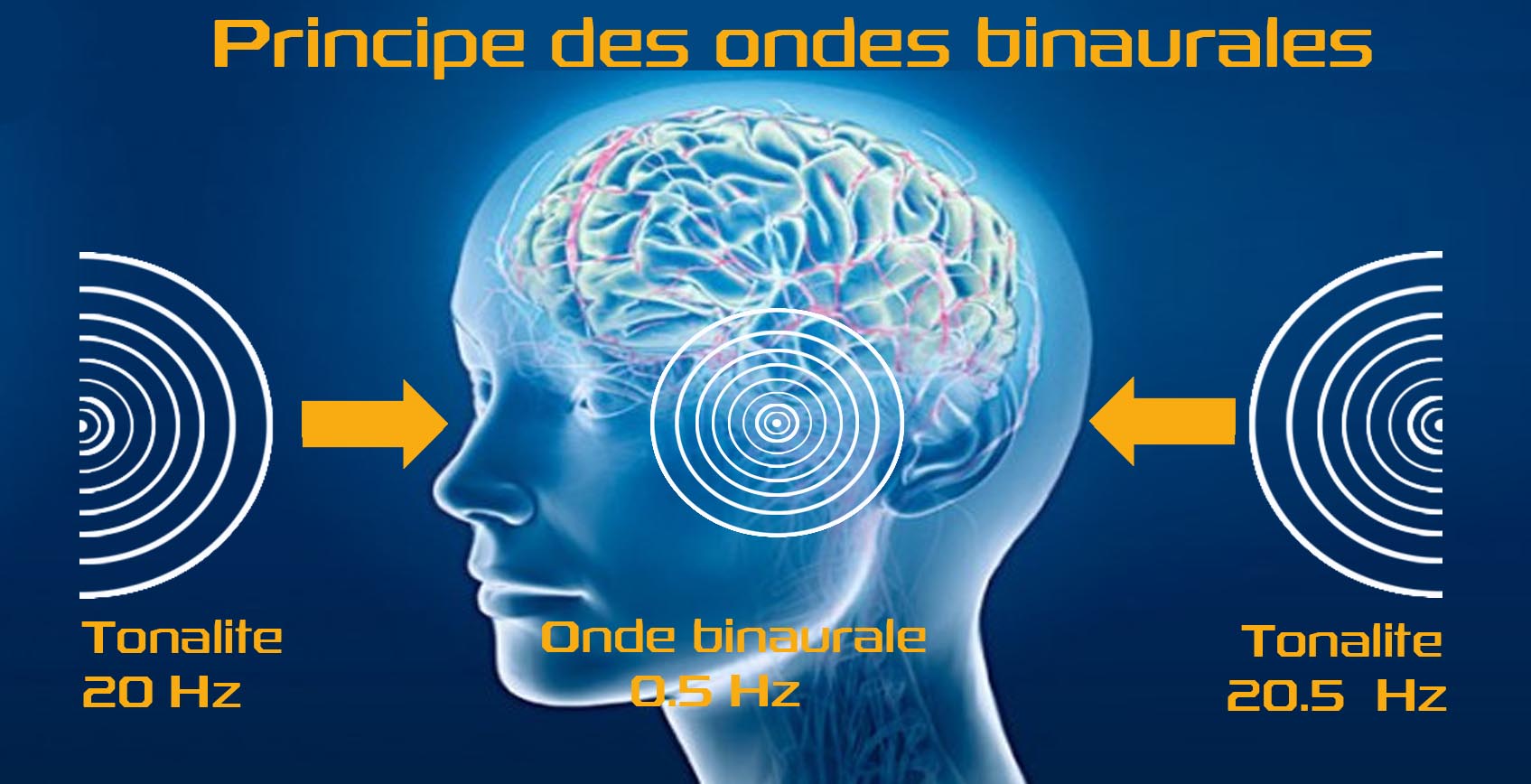
According to this model, optimal performance appears when the brain reaches a kind of concerted state, combining deep relaxation with very high attention. This balance is linked to the synchronisation of brain frequencies, understood here as a harmonisation between the two hemispheres of the brain. Because neuronal activity is electrochemical, the programme suggests that low-frequency audio stimulation may help modulate the brain’s electromagnetic environment and encourage this more coherent state of consciousness.
This framing is important because it shifts the discussion away from raw effort and towards regulation. Many people know the experience of being highly motivated yet mentally scattered, or physically tired while still unable to settle. A method centred on synchronisation is therefore presented as a way of improving the conditions for performance rather than forcing performance directly. In practical terms, that may mean supporting steadier attention, reducing internal noise and making demanding tasks feel more cognitively manageable.
From a scientific point of view, it is sensible to remain measured. Brain activity is dynamic, distributed and influenced by many factors, including sleep, stress, emotion, expectation and environment. Even so, the broader intuition behind this approach remains plausible: when the nervous system is less fragmented and more coherent, mental work often feels clearer, more stable and less effortful.
The three main benefits highlighted by the method
The first benefit put forward is hemispheric harmonisation. When the two hemispheres work in a more coordinated way, thinking is presented as becoming more fluid and better organised, which is why this type of synchronisation is often associated with learning and problem-solving. The second benefit concerns a shift towards lower-frequency brainwave ranges, described as favourable to creativity and efficiency. The comparison with young children is used here as an illustration: under the age of five, they spend much more time in these slower-frequency states and often learn with remarkable speed and ease.
The third benefit is more physiological. Lower-frequency zones — alpha, theta and delta — are described as supporting a natural process of physical and mental regeneration. In this framework, these states are not seen simply as passive rest, but as conditions in which recovery may be enhanced and inner resources more readily mobilised. Taken together, these three effects form the core promise of the method: better cognitive balance, improved creative functioning and deeper restoration.
These three benefits also correspond to three dimensions of everyday functioning that are often treated separately even though they interact constantly. The first concerns clarity: the ability to think in an ordered way, connect ideas and solve problems without excessive mental friction. The second concerns flexibility: the capacity to imagine, associate and generate new responses rather than repeating habitual ones. The third concerns recovery: the restoration without which neither clarity nor creativity can be sustained for long.
Seen in this way, the method is not only about feeling calmer. It is presented as a way of improving the background conditions that support sustained performance over time. For many people, the real obstacle is not a lack of intelligence or motivation, but a nervous system that remains too activated, too fatigued or too dispersed. Audio-based regulation is therefore positioned as a practical support for mental availability.
- Hemispheric synchronisation to support clearer thinking
- Lower-frequency regulation associated with creativity and learning
- Alpha, theta and delta states linked to physical and mental recovery
How Brain States Relate to Everyday Experience
From sleep to focused work, brain rhythms follow different states
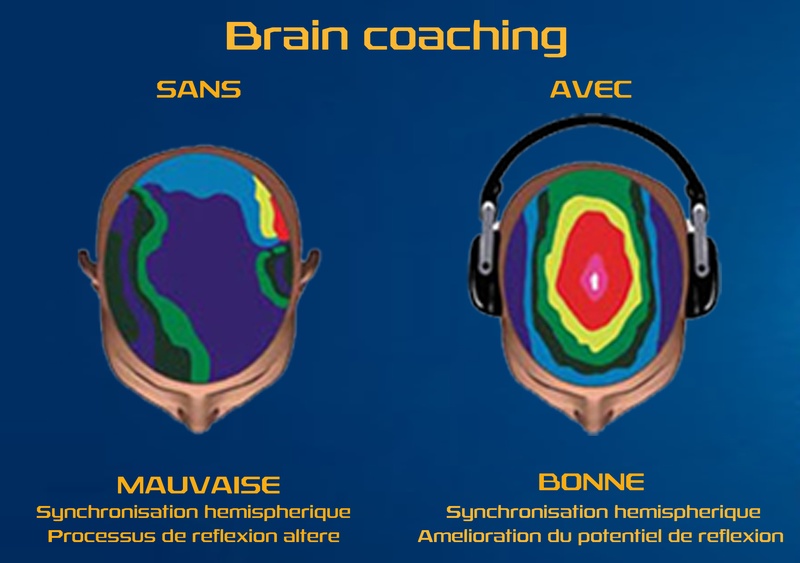
In everyday life, our mental state is not fixed. It shifts with our level of alertness, relaxation and inward attention, and these changes are commonly described through different ranges of brainwave activity. In this framework, delta is associated with deep sleep, theta with dreaming, alpha with relaxation, and beta with active work, concentration and outward engagement.
This does not mean the brain operates in a single rigid mode at any given moment. Rather, these categories offer a practical way to understand how different states of consciousness are linked to different dominant frequency patterns, often discussed in relation to EEG observation. The key idea remains simple: each state of consciousness corresponds to a particular level of brainwave activity, and recognising these patterns helps explain why rest, imagination, calm attention and task-focused effort can feel so different from one another.
It is also worth noting that these states are not merely abstract labels. Most people can recognise them directly in experience. Deep sleep has a density and absence of self-awareness that differs profoundly from the drifting imagery of dreams. Relaxation has its own texture: less effort, less muscular tension, often a wider and less defensive field of attention. Focused work, by contrast, tends to involve sharper selection, faster evaluation and stronger engagement with external demands.
Because these states are familiar, the language of brain rhythms can serve as a useful bridge between subjective experience and physiological description. It does not explain everything about consciousness, but it offers a disciplined vocabulary for discussing changes in alertness, attention and internal regulation without reducing them to vague impressions.
- Delta: deep sleep
- Theta: dreaming
- Alpha: relaxation
- Beta: active mental work
Why these distinctions matter in practice
Seen in this light, brainwave language is not just theoretical. It gives a clearer way to describe lived experience: the heaviness of deep sleep, the fluid imagery of dreams, the ease of a relaxed mind, or the sharper mobilisation required for work. These distinctions are often used to support a more concrete understanding of how attention, recovery and mental performance may vary across the day.
For Mental Waves, this mapping between subjective experience and brain activity forms part of the broader logic behind brainwave synchronisation. If different mental states are associated with different frequency ranges, then learning how to approach those states more deliberately may help support relaxation, focus or recovery more effectively. Used with care, this perspective offers a simple but useful bridge between what we feel and how brain activity is commonly described.
In practical terms, this matters because many difficulties arise from a mismatch between the state we are in and the state a situation requires. Someone may need concentrated attention but remain mentally foggy; another may need rest but stay locked in cognitive overactivation. A tool that aims to guide the brain towards a more suitable rhythm is therefore appealing not because it promises perfection, but because it addresses a common regulatory problem.
This is also why the approach can resonate with people who feel that conventional advice is too abstract. Telling someone to “relax”, “focus” or “sleep better” is often of limited use if the nervous system does not easily follow instruction. By contrast, an audio-based method attempts to work indirectly, through state induction rather than verbal command.
How Low-Frequency Brain States Are Linked to Recovery and Regulation
Why delta rhythms are often associated with restorative processes
The programme presents delta frequencies as a key part of its health-related benefits. In everyday terms, delta activity is most commonly associated with deep sleep and profound physical rest. Within that framework, these low-frequency states are often described as supporting the body’s natural restorative functions, including the production of substances linked in the original material to recovery and healthy ageing, such as growth hormone, DHEA and melatonin. Rather than treating these effects as automatic outcomes, it is more accurate to say that deep restorative states are widely associated with physiological repair, hormonal regulation and a more settled nervous system.

Related offer
8 States of Consciousness - Deep Infinity Pack
Deep Infinity - 8 States of Consciousness This rare audio pack invites you to plunge into the heart...
View productThis is also why delta-oriented listening is often sought for moments of exhaustion, overload or poor-quality sleep. When the brain shifts towards slower rhythms, the body may find it easier to move away from constant activation and into a mode that favours rest, repair and internal regulation. In that sense, the interest of these frequencies lies not only in relaxation itself, but in the possibility of creating conditions that may support deeper recovery over time.
The original claim that a short listening session could correspond to a full night of sleep should be read carefully. From a scientific perspective, sleep is a complex biological process involving multiple stages, memory consolidation, metabolic clearance and systemic regulation that cannot be reduced to a single sensation of rest. Even so, some people may experience a session of deep low-frequency listening as unusually restorative, particularly when they have been carrying sustained cognitive or emotional strain. The more cautious interpretation is that such listening may sometimes provide a meaningful sense of recuperation, even if it does not replace sleep itself.
This distinction matters because credibility depends on precision. A restorative mental state can be valuable in its own right. It may reduce perceived fatigue, support emotional settling and help the body shift out of chronic overactivation. Those effects are already significant, especially in lives marked by overstimulation and insufficient recovery.
- Deep sleep is commonly linked with delta activity
- Restorative states are associated with hormonal and physical recovery
- Low-frequency stimulation is often used to encourage down-regulation
Stress, mood and the body’s balance
The original section also links delta frequencies with several broader health effects: a reduction in blood pressure and cardiovascular strain, lower production of cortisol — the hormone commonly associated with stress — and increased release of endorphins, which are involved in pain modulation and emotional balance. These claims should be approached with appropriate caution, yet they reflect a coherent idea: when the nervous system is less dominated by stress and hypervigilance, the body may regulate itself more efficiently, and mood can feel steadier.
Seen in this light, the value of the programme is not that it replaces medical care, but that it may help some people access a calmer internal state that is often difficult to reach through willpower alone. That calmer state is frequently sought in relation to tension, low mood, discomfort and chronic mental fatigue. The underlying principle remains the same throughout this section: by encouraging slower brain rhythms associated with deep rest, the method aims to support a more favourable terrain for recovery, emotional regulation and relief from stress-related overload.
There is a broader regulatory logic here. Stress is not only a feeling; it is a pattern of activation involving attention, muscle tone, autonomic arousal, hormonal signalling and expectation. When that pattern becomes chronic, people often report irritability, shallow sleep, reduced concentration, emotional volatility and a diminished sense of resilience. Any practice that helps interrupt this cycle may therefore have effects that extend beyond the listening session itself.
That does not mean every listener will respond in the same way. Individual sensitivity, context, baseline stress levels and listening habits all matter. Yet the central proposition remains reasonable: if a person can repeatedly access a calmer and more coherent state, this may contribute over time to better self-regulation, improved mood stability and a greater capacity to recover from daily strain.
- May help reduce stress-related activation
- Is often associated with improved mood regulation
- May support recovery from tension and persistent fatigue
Where This Approach Is Most Commonly Sought
From attention and learning to emotional balance
In practice, this type of audio-based brainwave work is presented as having a wide range of applications. It is often sought for situations involving attention, learning and mental regulation, including attention deficit, hyperactivity, concentration difficulties, accelerated memorisation and creativity. The same logic is also extended to states such as anxiety, panic, insomnia, chronic fatigue, low motivation and the search for peak performance. In that sense, the method is not framed only as a tool for relaxation, but as a way of supporting a more stable and available mental state in everyday life.
The original programme also associates these uses with more specific contexts, such as autism, intellectual disability, Tourette syndrome, Angelman syndrome, hypnotherapy, therapeutic regression and self-healing practices. Here, a careful distinction matters: these examples reflect the areas in which the method is used or explored, not a ensure of outcome. The underlying idea remains consistent with the rest of the approach: by encouraging conditions linked to calmer, more coherent brain activity, the programme may help create a more favourable terrain for learning, focus, emotional settling and inner work.
For students, professionals and creatives, the appeal is easy to understand. Attention is rarely a simple on-off function; it depends on arousal, emotional load, sleep quality and the ability to inhibit distraction. Likewise, learning is not just a matter of exposure to information, but of receptivity, consolidation and mental availability. A method that aims to support these background conditions may therefore be experienced as useful even when its effects are subtle rather than dramatic.
In emotional terms, the same principle applies. Anxiety, panic and insomnia often involve a system that struggles to down-regulate. If listening practices help some individuals move more readily towards calm, they may become part of a broader routine of self-regulation. Their value lies less in spectacle than in repeatable support.
- Attention deficit and hyperactivity
- Learning, concentration and memorisation
- Anxiety, panic and insomnia
- Creativity, motivation and peak performance
Physical complaints, recovery and broader therapeutic use
The list of applications in the original text also extends to a number of physical or clinical concerns, including chronic pain, muscular relaxation, hypertension, low blood pressure, obesity, depression, bipolar depression, epilepsy, Parkinson’s disease, alcoholism and drug dependence. Presented in this way, the programme is positioned as a complementary support rather than a standalone solution. This is in keeping with the broader claim made throughout the article: certain low-frequency states are associated with recovery, regulation and reduced physiological tension, which is why they are often explored in contexts where stress, fatigue or dysregulation play a role.
Seen as a whole, these applications illustrate the ambition behind Mental Waves: not simply to promote wellbeing in a vague sense, but to support what the original text calls a movement towards “more being” rather than merely “wellbeing”. In concrete terms, that means using sound stimulation to encourage conditions that may support clearer thinking, better self-regulation and improved functional capacity across personal and professional life. Even so, the breadth of the list should be read with discernment. Such tools may contribute to comfort, recovery or mental readiness, but they do not replace appropriate medical assessment or treatment where needed.

Related offer
18 States of Consciousness - Integral Infinity Pack
Integral Infinity - The 18 States of Consciousness A unique sound box designed to explore all the...
View productThis complementary positioning is especially important in more serious conditions. Where neurological, psychiatric or addictive disorders are concerned, responsible use means integrating any audio-based practice within a wider framework of care, supervision and evidence-based support. The role of Mental Waves, in that context, is better understood as potentially helping with state regulation, stress reduction or subjective comfort rather than claiming to resolve complex disorders on its own.
That said, complementary tools can still matter. People living with chronic symptoms often benefit from methods that improve their sense of agency, reduce internal overload or make rest more accessible. Even modest gains in calm, sleep quality, concentration or emotional steadiness can have meaningful effects on daily life when accumulated over time.
- Chronic pain, fatigue and muscular relaxation
- Blood pressure regulation and sleep-related difficulties
- Depression, bipolar depression and stress-related strain
- Addiction support and broader therapeutic settings
The Mental Waves Brainwave Support Framework
The Mental Waves frame is to use sound as a structured support for attention. A session can guide the listening environment, but the real practice remains embodied: volume, timing, fatigue and intention all matter.
Think of brainwave synchronization as a way to create conditions, not as a certainty. Listen comfortably, observe your state, and return gradually to ordinary activity.
For a gentle entry into sound-based practice, receive the free 128 Hz sacred frequency session and use it with moderate volume and realistic expectations.
Editorial note from Mental Waves
This article is educational and does not present sound stimulation as clinical care or a shortcut to human potential. Neurological symptoms, psychological distress or medical concerns should be discussed with qualified professionals.
Conclusion
Seen in that light, Mental Waves is not simply presented as a tool for “doing more”, but as an attempt to work with the brain’s own rhythms so that attention, relaxation and recovery are less at odds with one another. The central idea is that a more coherent mental state may support clearer thinking, learning and regulation, while lower-frequency states are often sought for their association with rest, creativity and physiological recovery. That does not make every claim equally certain, nor does it turn a listening method into a universal solution; it does, however, explain why this approach continues to interest people looking for a more structured relationship with their own mental state.
What remains most compelling here is the shift from a narrow idea of wellbeing towards a fuller sense of human functioning: not just feeling better, but thinking more clearly, recovering more deeply and acting with greater steadiness. Used with discernment, this kind of audio-based practice may help some people create conditions that are more favourable to focus, calm and inner balance. Sometimes, the most meaningful performance begins with better regulation.
In that sense, the expression “coach for your brain” can be understood less as a slogan than as a metaphor for guided mental training. The aim is not to dominate the mind by force, but to cultivate states in which the brain can operate with less friction and greater coherence. For people seeking a disciplined yet accessible way to support attention, recovery and self-development, that promise remains both modern and intuitively compelling.
Frequently Asked Questions About Mental Waves Brain Coaching
What is Mental Waves meant to do?
Mental Waves is presented as an audio-based method designed to support the brain’s functioning by working with brainwave activity. Its aim is to encourage a mental state that combines deep relaxation with strong attention, so that thinking, learning, creativity and recovery can become more balanced and efficient.
How does Mental Waves describe optimal mental performance?
Optimal performance is described as a concerted state in which deep relaxation and very high attention occur together. This state is linked to better synchronisation between the brain’s two hemispheres, with the idea that a more harmonised brain may support clearer thinking, problem-solving and mental efficiency.
What does brainwave synchronisation mean in this context?
Brainwave synchronisation refers to the harmonisation of brain frequencies, especially between the two hemispheres. The method suggests that low-frequency audio stimulation may help modulate the brain’s electromagnetic environment, encouraging a more coherent state associated with learning, focus and cognitive balance.
Which brainwave states are linked to sleep, dreams, relaxation and work?
Delta is associated with deep sleep, theta with dreaming, alpha with relaxation and beta with active mental work. These distinctions are used to show that different states of consciousness correspond to different dominant brainwave patterns, helping explain why rest, imagination and concentration feel so different.
What are the main benefits claimed for lower-frequency brain states?
Lower-frequency states are linked here to three main effects: better coordination between the brain’s hemispheres, support for creativity and efficiency, and a natural process of physical and mental regeneration. Alpha, theta and delta are presented as especially important for recovery and calmer internal regulation.
Why does the method compare adults with children under five?
Children under five are used as an example because they are described as spending more time in lower-frequency brain states. Those states are associated here with easier and faster learning, which is why they are used to illustrate the possible link between slower brain rhythms, creativity and learning capacity.
What health-related effects are associated with delta frequencies?
Delta frequencies are linked with deep rest and restorative processes. They are also associated with the production of growth hormone, DHEA and melatonin, as well as reduced cortisol, lower blood pressure and the release of endorphins. These effects are presented as part of a broader restorative and stress-regulating state.
Does Mental Waves claim to replace clinical care?
No, it is better understood as a complementary approach rather than a substitute for medical care. The method is presented as a way to support calmer, more coherent brain states that may help with recovery, focus or emotional regulation, but it does not remove the need for proper assessment or treatment when required.
What kinds of situations or difficulties is Mental Waves used for?
It is presented for a wide range of uses, including attention deficit, hyperactivity, learning, concentration, memorisation, anxiety, panic, insomnia, chronic fatigue, creativity, motivation and peak performance. It is also mentioned in connection with chronic pain, depression, addiction support and certain therapeutic settings.