en
enVotre panier est vide.


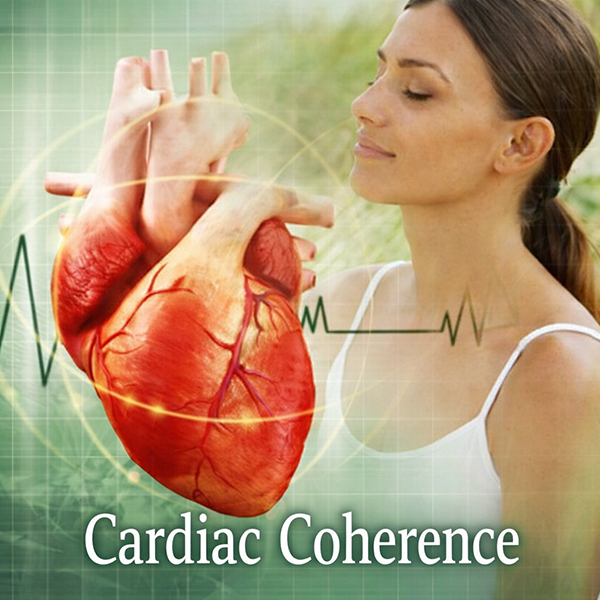
Cardiac coherence has moved well beyond specialist circles. Once discussed mainly in relation to cardiovascular prevention, it is now widely used as a practical tool for stress regulation and emotional steadiness. In France, its profile was notably raised by Dr David Servan-Schreiber, who presented it as a form of biofeedback accessible to ordinary life rather than reserved for long years of meditative discipline. That accessibility remains central to its appeal: a few minutes of paced breathing may help regulate the autonomic nervous system, soften the physiological impact of stress and support clearer, calmer decision-making.
In short: cardiac coherence
Cardiac coherence is a simple breathing rhythm used to support stress regulation, heart-rate variability and a calmer relationship with the body.
Use this article as a practical map: keep what helps attention become steadier, question anything that sounds absolute, and connect the idea back to repeatable daily practice.
The Mental Waves Cardiac Coherence Reset Framework
At Mental Waves, cardiac coherence is best understood as a small threshold practice: a way to mark the passage from tension to regulation, from scattered attention to a more coherent internal rhythm. The goal is not to force calm, but to give the body a repeatable signal of safety.
- Settle: choose a seated or standing position that lets the shoulders soften and the breath remain comfortable.
- Synchronise: breathe in for about five seconds and breathe out for about five seconds, without straining the chest or throat.
- Listen: notice the first change in bodily tone, such as a softer jaw, a slower internal pace or a wider field of attention.
- Anchor: repeat the exercise at predictable moments so the rhythm becomes familiar before stressful situations arrive.
- Integrate: after the session, take one clear action slowly, so the calmer state has somewhere practical to go.
This framework also links naturally with the Mental Waves view of sound and regulation: rhythm matters because the nervous system learns through repeated cues. A simple breathing rhythm can become one of those cues, especially when combined with a calm listening environment.
Its popularity also reflects a broader cultural shift. Many people are looking for methods that are concrete, brief and compatible with daily constraints, rather than approaches that require a retreat from ordinary life. Cardiac coherence fits that expectation particularly well because it relies on a function we already possess, breathing, yet invites us to use it with more precision and regularity. In that sense, it is both modest and sophisticated: modest in its means, sophisticated in the regulatory pathways it may influence.
What makes the method especially compelling is that it sits at the meeting point of lived experience and neuroscience. Fear, tension and panic are not abstract states; they are tied to rapid brain processes that can alter heart rhythm, attention and behaviour before we have fully thought things through.
Cardiac coherence is sought precisely because it offers a simple, low-burden way of acting on that loop through breathing, with effects that are often described on both the psychological and physiological levels. In a country still marked by heavy reliance on psychotropic medication, it is understandable that such an approach has gained credibility: not as a miracle promise, but as a serious, practical method that may help people regain a measure of inner regulation.
It is also worth stressing that the interest in cardiac coherence does not rest on a romantic opposition between body and mind. On the contrary, the practice is compelling because it reminds us that mental states are embodied. Attention, emotional reactivity, perceived safety and decision-making are all influenced by physiological signals. A breathing method that may stabilise those signals can therefore be relevant not only to relaxation, but also to the quality of presence with which a person meets everyday demands.
Why Cardiac Coherence Has Become a Mainstream Stress Tool
A simple practice that moved beyond specialist circles
Cardiac coherence is now widely discussed not only by health professionals, but also by the general public. In France, it was notably popularised by the late Dr David Servan-Schreiber, especially through his book Healing (Guérir), where he highlighted the value of this form of biofeedback. Its appeal is easy to understand: thanks to advances in neuroscience, emotional regulation is no longer seen as something reserved for people with years of meditation behind them. For many people dealing with everyday stress, anxiety, panic or fear, cardiac coherence offers a practical relaxation method that can be learned quickly and used in just a few minutes a day.
That point matters because many people abandon stress-management techniques not through lack of goodwill, but because the methods feel too abstract, too time-consuming or too difficult to integrate. Cardiac coherence has spread partly because it lowers that threshold of entry. It does not ask for a particular belief system, a special environment or a highly trained introspective capacity. It asks mainly for rhythm, repetition and a willingness to observe what changes when breathing becomes slower and more regular.
That accessibility is one of the main reasons for its growing legitimacy. Rhythmic breathing may help regulate the autonomic nervous system, often described as the body’s automatic pilot, and may reduce the intensity of stress responses in daily life. As noted on Florence Servan-Schreiber’s website, “five short minutes of rhythmic breathing can regulate the autonomic nervous system, reduce the impact of stress on the body, strengthen immune defences, help us make better decisions and develop intuition”.
This helps explain why breathing techniques, positive thinking, visualisation, self-hypnosis, mindfulness meditation and cardiac coherence are used not only in therapeutic settings, but also in some elite units and special forces, and even taught to civilians in contexts such as krav maga ADRV© survival combat training.
From a scientific point of view, the appeal of such methods lies in their plausibility rather than in spectacle. A systematic review in Frontiers in Human Neuroscience describes slow breathing as a practice associated with changes in heart rate variability, respiratory sinus arrhythmia and subjective states such as relaxation and reduced arousal.
Slow, regular breathing may influence vagal activity, heart rate variability and the balance between sympathetic activation and parasympathetic recovery. These are not esoteric notions; they refer to ordinary regulatory processes that shape how quickly the organism mobilises, how efficiently it recovers and how stable attention remains under pressure. That is one reason the method has been taken seriously in contexts where composure and rapid judgement matter.
- easy to learn
- brief enough to fit into daily life
- often seen as a useful complement or alternative to heavier approaches
Why it is increasingly used for emotional regulation
Although cardiac coherence was first adopted in the prevention of cardiovascular disease, it is now increasingly used to support emotional regulation as well. Its rise also reflects a broader need: even if antidepressant use has declined, France remains one of the countries most reliant on psychotropic medication. In that context, a simple, low-risk practice that acts through physiology naturally attracts attention. The medical world has good reason to take an interest in it, not as a miracle solution, but as a credible tool that may support stress management, mental clarity and self-regulation without the burden of side effects commonly associated with medication.
Emotional regulation is not simply a matter of suppressing feelings. More often, it involves being able to notice an internal surge without being entirely governed by it. When breathing becomes shallow and hurried, the body may reinforce a sense of urgency; when breathing slows and becomes more regular, the organism may receive a different signal, one associated with greater safety and reduced alarm. Cardiac coherence is therefore often valued not because it erases emotion, but because it may help prevent emotion from escalating into cognitive narrowing, impulsive speech or poorly judged action.
Its popularity also comes from the fact that it can be practised almost anywhere. As Frédéric Kochman, child psychiatrist and cardiac coherence specialist, points out, any moment can become an opportunity to pause, reconnect with bodily sensations and breathe more deeply: in a queue, at the office, on a plane, standing, sitting, lying down, or even while walking slowly.
Beginners are usually better off starting in a calm place, but the method adapts well to real life. Training courses exist in France, and free breathing guides are also easy to find online and on social media. For those who want to explore further, useful references include Dr David Servan-Schreiber’s Healing, Dr David O’Hare’s Cardiac Coherence 365.
This portability is not a trivial advantage. It also explains why cardiac coherence belongs beside other accessible Mental Waves practices such as sound and nervous-system regulation: both depend on repeatable cues that can be used before stress becomes overwhelming.
A method is far more likely to become useful when it can be applied before a difficult meeting, after upsetting news, during travel, or in the small intervals of the day when tension accumulates unnoticed. In that respect, cardiac coherence is less a separate activity than a transferable skill. The more easily it can be brought into ordinary situations, the more likely it is to support genuine self-regulation rather than remain a good intention confined to theory.
How Breathing Regulates the Brain, Heart Rate and Emotional Responses
Why the brain reacts so quickly to stress and fear
Before looking at cardiac coherence itself, it helps to understand the brain mechanisms that directly influence heart rhythm during stress, fear or panic. These states are not vague impressions: they involve a chain of sensory, cognitive and motor processes that can alter perception, judgement and behaviour. A stimulus may come from sight, sound, a thought, a smell or touch. From there, the signal first passes through the thalamus, the brain’s main relay station for sensory information, before being sent to the relevant sensory cortex for evaluation and decoding.
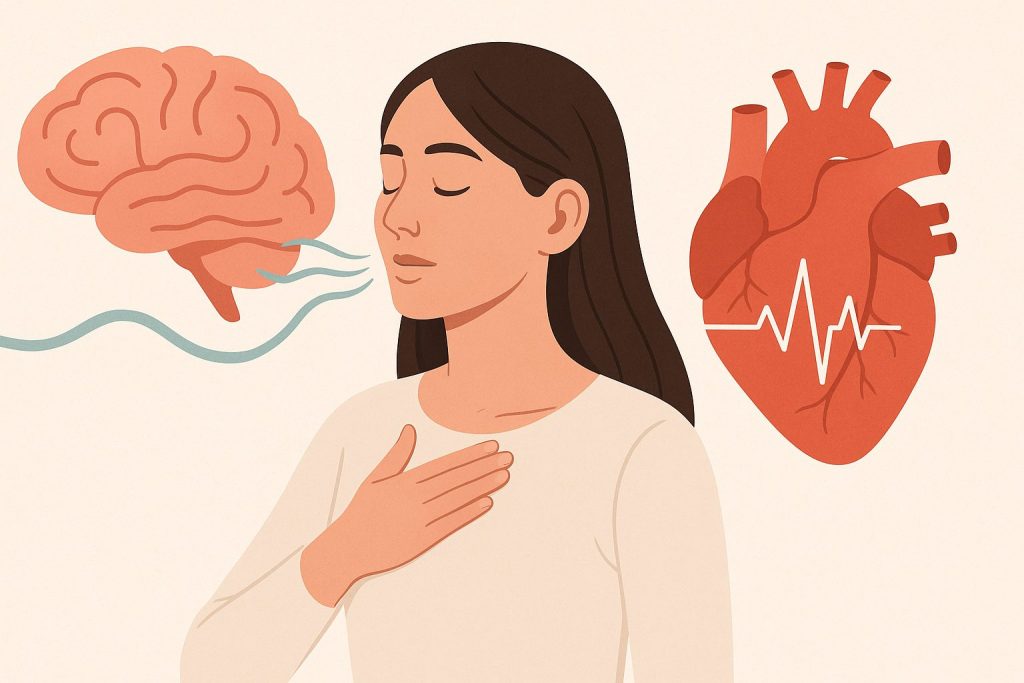
This sequence helps explain why stress can feel both immediate and strangely disproportionate. The organism is designed to privilege speed when a possible threat is detected. That bias is adaptive in dangerous situations, but in modern life it can also be triggered by social pressure, anticipation, memory or internal imagery. A difficult email, a crowded train, a bodily sensation or a catastrophic thought may all recruit similar alarm pathways, even when no objective danger is present. The body then prepares for action before reflective thought has fully caught up.
Related offer
Anxiety reducer
This session uses Alpha and Beta wave stimulation to relax, alleviate...
View productIf the message is interpreted as a threat to survival, the amygdala is alerted and triggers the appropriate emotional response. Neuroscientists have also shown that part of the message received by the thalamus can be sent directly to the amygdala without first passing through the cortex, which helps explain the speed of our natural alarm system. This is one reason fear can feel so immediate and overwhelming. In this context, cardiac coherence is often sought as a practical way to support regulation: by acting on breathing, it may help calm the body’s automatic responses before they drive us towards impulsive or irrational decisions.
That does not mean breathing overrides the brain in any simplistic sense. Rather, it may alter the conditions under which the brain interprets and responds. When physiological arousal decreases, attention may widen, interoceptive signals may feel less threatening and executive functions may become easier to recruit. In practical terms, this can mean a slightly greater pause before reacting, a little more discernment in the middle of pressure, and a reduced tendency to confuse activation with danger.
- Stimulus detected by the senses
- Relay through the thalamus
- Evaluation by the cortex and rapid alert to the amygdala
How cardiac coherence acts on heart rhythm
This is where the method becomes especially concrete. Cardiac coherence works by regulating variations in your BPM, or beats per minute, through adapted breathing. Even when the heart seems to beat steadily, the intervals between two beats are constantly changing. When these variations rise and fall in a regular rhythm, this is what is meant by cardiac coherence. In other words, the aim is not to force the heart into a rigid pattern, but to encourage a more stable and harmonious rhythm through voluntary breathing.
More precisely, the practice is often discussed in relation to heart rate variability, the natural variation in the time interval between successive heartbeats. A healthy organism does not function like a metronome. Variability reflects adaptability, and the pattern of that variability changes according to breathing, effort, recovery and emotional state. During slow, regular breathing, heart rhythm tends to synchronise more clearly with the respiratory cycle, often producing a smoother oscillation that is experienced subjectively as greater calm or internal order.
According to the sources cited in the original article, this regulation of heart rhythm may help the brain function more calmly, support both psychological and physical balance, conserve energy and reduce the likelihood of incoherent decisions driven by internal disturbance. One of the main strengths of the practice is precisely its simplicity: it acts on physiology through a straightforward, accessible technique and is generally presented as free from unwanted side effects. This helps explain why it has become so widely used not only in cardiovascular prevention, where it first gained attention, but also in emotional regulation more broadly.
It is important, however, to keep the claims proportionate. Cardiac coherence is not best understood as a way of controlling every mental state at will. Its value lies more in shifting the baseline of reactivity. By repeatedly practising a breathing rhythm associated with steadier autonomic balance, a person may become better able to recover from activation, less vulnerable to spirals of tension and more capable of maintaining coherent attention when circumstances become demanding.
The Benefits of Daily Practice and How to Build the 365 Habit
What regular practice may support, both mentally and physically
Many publications have highlighted the potential benefits of cardiac coherence on both psychological and physiological levels. On the mental side, it is often sought for its ability to help reduce stress, support emotional balance and create a greater sense of distance from immediate pressure. People also associate it with improved clarity of mind, steadier decision-making, better listening, stronger presence and, in some cases, a rise in energy, resilience and creative or intellectual capacity. In everyday life, that matters because stress does not only affect mood: it can also narrow attention, distort perception and push us towards rushed or irrational reactions.
For some people, the first noticeable change is not dramatic relaxation but a subtler shift in mental texture. Thoughts may feel less crowded, bodily sensations less intrusive and the sense of being cornered by urgency slightly reduced. That modest change can be highly significant. When attention is less captured by internal noise, it becomes easier to listen, to weigh options and to respond rather than merely react. In this sense, the practice may support not only comfort, but also cognitive quality.
On the physiological side, the practice is often presented as being associated with a reduction in cortisol, the body’s main stress hormone, and an increase in DHEA, sometimes referred to as a “youth” hormone. It has also been linked in various publications to support for blood pressure regulation, cholesterol balance, weight management, diabetes management and increased alpha brainwave activity, which is commonly associated with learning and memory. These effects should be approached with appropriate caution rather than as guarantees, but the appeal of the method lies precisely in this: it offers a simple, accessible and non-invasive way of acting on physiology through breathing, without the side effects usually associated with medication.
References to alpha activity should also be interpreted carefully. An increase in alpha rhythms on EEG is often associated with relaxed wakefulness, reduced sensory overload and a state in which attention is calm but not absent. That does not mean cardiac coherence automatically produces a special state of consciousness. Rather, it may help create conditions in which the brain is less dominated by hypervigilance and more available for learning, memory consolidation or reflective thought. This is one reason the method is sometimes appreciated before study, public speaking or tasks requiring composure.
- May help reduce stress and improve emotional regulation
- Is often associated with clearer thinking and better decision-making
- May support physiological balance through regular breathing practice
How to practise anywhere and establish the 365 rhythm
Another major strength of cardiac coherence is its flexibility. As Frédéric Kochman, child psychiatrist and specialist in the field, points out, almost any moment can become an opportunity to pause, reconnect with bodily sensations and breathe more deeply: in a queue, at the office, on a plane, standing, sitting, lying down and even while walking slowly, almost as if on a gentle stroll.
For beginners, however, a calm setting is usually preferable. There are now various training options in France, and it is also easy to find free downloadable breathing guides online and on social media. For those who want to explore the subject further, useful references include Healing by Dr David Servan-Schreiber, Cardiac Coherence 365 by Dr David O’Hare, as well as www.coherencecardiaque.org, www.guerir.org, www.thierrysouccar.com, www.coherenceinfo.com and www.ifemdr.fr.
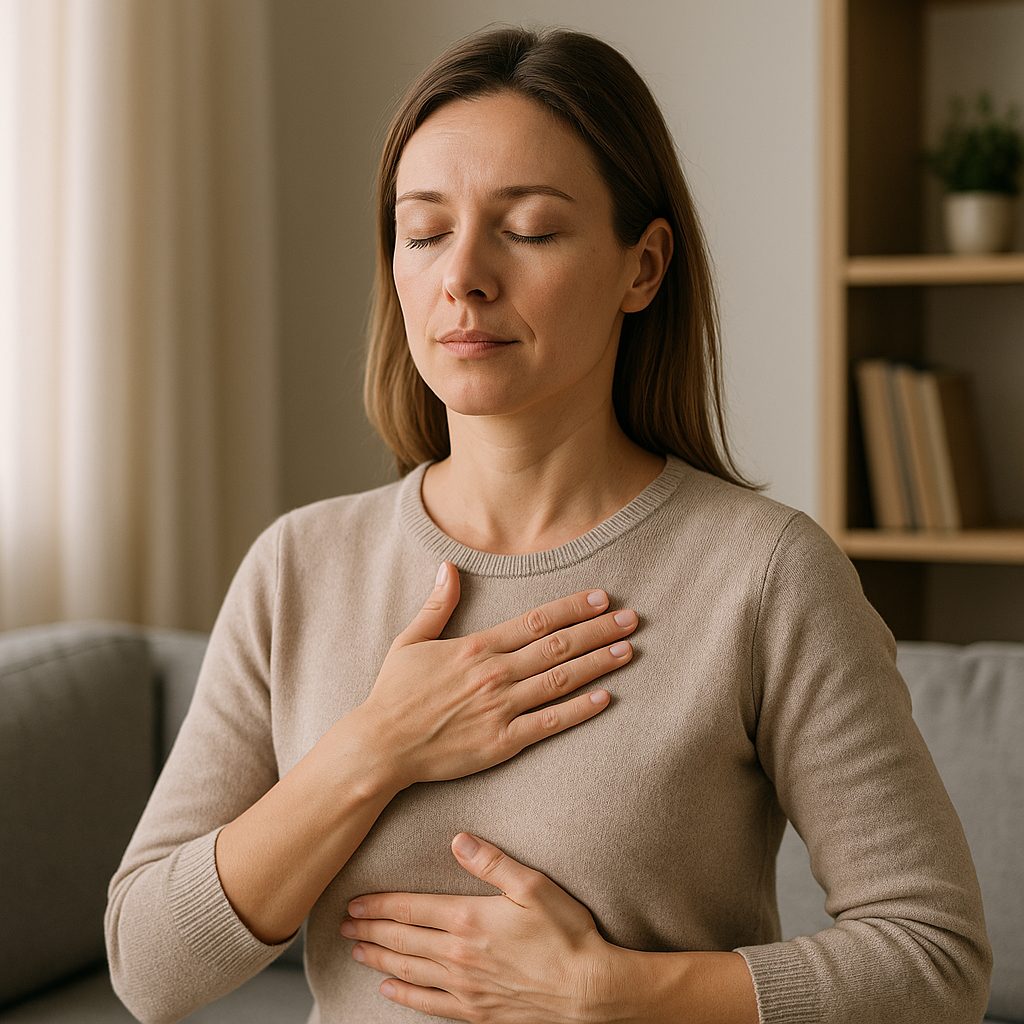
In practical terms, many people begin by inhaling for around five seconds and exhaling for around five seconds, which corresponds roughly to six breaths per minute. The exact rhythm does not need to be performed with mechanical perfection. What matters most is regularity, comfort and the absence of strain. Breathing should remain gentle rather than forced, with the chest, diaphragm and posture allowed to settle naturally. If dizziness or discomfort appears, it is usually a sign to reduce effort and return to a more comfortable pace.
- Start with posture: sit upright or stand comfortably, with the feet stable and the shoulders relaxed.
- Use a 5-second inhale: breathe in gently through the nose if that feels natural.
- Use a 5-second exhale: breathe out without forcing the abdomen or chest.
- Continue for 5 minutes: aim for about 30 complete breaths in one session.
- Repeat 3 times a day: morning, midday and late afternoon are often easier than waiting until stress peaks.
In practical terms, the ideal rhythm is often summarised by the 365 rule: 3 times a day, 6 breaths per minute, for 5 minutes.
Even so, shorter sessions can already produce noticeable effects. According to the guidance cited in the original sources, just 1 to 2 minutes may bring marked benefits, and even 3 or 4 breathing cycles can create perceptible changes. With around two weeks of regular practice, breathing at a frequency of six breaths per minute may begin to feel more natural and the results more tangible.
Related offer
Vibrational Cardiac Coherence
At last, an easy and enjoyable way to practice cardiac coherence without visual indicators, screens or stopwatches......
View productThe wider message is simple: since we cannot change the direction of the wind, we can still learn to adjust the sails. In that sense, cardiac coherence can become a practical route towards greater inner steadiness. As Christophe André puts it, “Happiness is possible, and it is better to go out and meet it than merely listen to its story.”
Practice with sound: to turn this into a guided listening ritual, explore Vibrational Heart Coherence. For a broader calming support when anxiety is the main entry point, the related Anxiety reducer session is also displayed below this article.
Consistency matters more than intensity. A person who practises briefly but regularly is often more likely to notice stable benefits than someone who practises for long periods only occasionally. Over time, the exercise may become less of an intervention and more of a familiar regulatory reflex, something the body recognises as a way back to equilibrium. That is perhaps the deepest promise of the method: not instant mastery, but a trainable capacity to return.
- 3 times a day
- 6 breaths per minute
- 5 minutes per session
Sources and further reading
- How Breath-Control Can Change Your Life, Frontiers in Human Neuroscience, 2018.
- Effect of breathwork on stress and mental health, Scientific Reports, 2023.
- David Servan-Schreiber, Healing (Guérir), and David O’Hare, Cardiac Coherence 365, as historical references often cited in French-language practice.
The Mental Waves Heart-Breath Regulation Framework
The Mental Waves frame is to use cardiac coherence as a repeatable regulation practice. The value lies in the rhythm: a short breathing window that helps the body receive a calmer signal.
Practise modestly and consistently. A few minutes can be enough to observe changes in breath, tension and attention, especially when the practice is paired with realistic expectations.
If you want a short audio cue before practising cardiac coherence, begin with the free Mental Reset session and then settle into the breathing rhythm.
Editorial note from Mental Waves
This article is educational and not a replacement for clinical care. Heart symptoms, blood pressure issues, panic symptoms or respiratory difficulty should be discussed with a qualified health professional.
Conclusion
Cardiac coherence stands out not because it promises a miraculous transformation, but because it offers something rarer: a simple, accessible way of working with the body’s own regulatory systems. By linking breathing, heart rhythm and emotional reactivity, it may help create a steadier internal state at moments when stress, fear or mental overload begin to narrow perception and drive impulsive responses. Its real strength lies in this meeting point between lived experience and physiological regulation.
Seen in that light, the method belongs to a broader family of practices that restore a degree of agency without pretending to abolish vulnerability. We cannot prevent every surge of stress, nor can we think our way out of every bodily reaction in real time. What we may be able to do is cultivate conditions in which recovery becomes easier, attention less fragmented and emotional life less tyrannical. Cardiac coherence is often valued precisely because it works at that practical level.
That is also why the practice continues to resonate so widely. It asks for very little, yet can become a meaningful daily anchor when approached with consistency rather than haste. Without replacing medical care where it is needed, cardiac coherence may support calmer attention, clearer decision-making and a more grounded relationship with one’s own sensations. Sometimes, a few minutes of well-paced breathing are not a small thing at all.
Frequently asked questions about cardiac coherence
What is cardiac coherence in simple terms?
Cardiac coherence is a breathing-based method that aims to bring heart rhythm variations into a more regular pattern. Even when the heart seems to beat steadily, the intervals between beats constantly change. When those variations rise and fall in a regular rhythm through adapted breathing, this is known as cardiac coherence.
Why is cardiac coherence used for stress and emotional regulation?
It is used because breathing can influence the autonomic nervous system, which plays a central part in stress responses. By calming physiological reactions, cardiac coherence may help reduce the intensity of stress, fear or panic and support clearer, steadier decisions when emotions begin to take over.
How does the brain’s fear response relate to cardiac coherence?
Fear can trigger a very rapid chain reaction in the brain. A sensory signal passes through the thalamus, is assessed by the cortex, and can also alert the amygdala very quickly. That helps explain why stress can feel immediate. Cardiac coherence is used to act on this loop through breathing and help settle the body’s automatic alarm response.
What benefits are linked to regular cardiac coherence practice?
Regular practice is associated with both psychological and physiological effects. On the mental side, it may help reduce stress, improve emotional balance, support mental clarity, listening and decision-making, and create a greater sense of distance from pressure. On the physical side, it has been linked to changes in cortisol, DHEA, blood pressure and other markers of regulation.
How often should you practise cardiac coherence?
A commonly recommended rhythm is the 365 rule: 3 times a day, 6 breaths per minute, for 5 minutes each time. That routine is presented as an ideal pace for building the habit. Shorter sessions can still have an effect, with 1 to 2 minutes already described as useful and even a few breathing cycles sometimes felt quickly.
How long does it take to notice results from cardiac coherence?
Noticeable effects may appear quite quickly, as even 3 or 4 breathing cycles can produce perceptible changes. For more tangible results and for breathing at six breaths per minute to start feeling more natural, around two weeks of regular practice is given as a useful timeframe.
Where can you practise cardiac coherence?
It can be practised in many everyday settings, which is one reason it is so accessible. You can do it in a queue, at the office, on a plane, standing, sitting, lying down or even while walking slowly. When starting out, a calm place is usually preferable so that the rhythm feels easier to follow.
Who helped popularise cardiac coherence in France?
Dr David Servan-Schreiber played a major role in bringing cardiac coherence to a wider French audience, especially through his book Healing, originally published as Guérir. The method is also closely associated with Dr David O’Hare, whose work on Cardiac Coherence 365 is cited as a useful reference for further reading.
Is cardiac coherence presented as a replacement for clinical care?
It is presented more as a practical, low-burden method that may support self-regulation than as a remedy-all. Its appeal lies in being simple, accessible and generally described as free from side effects. It may be seen as a useful complement or alternative in some situations, but not as a substitute for necessary medical care.