en
enVotre panier est vide.


In a culture that often prizes analysis over direct experience, it is easy to lose sight of something simple: the body is not merely a mechanism to be treated, but a living system of perception, rhythm and response. That is one reason therapeutic music is now being taken more seriously, not as a substitute for conventional care, but as part of a broader, more attentive view of the individual. As medical practice has gradually opened to certain complementary approaches, sound-based methods have begun to find a place in hospitals and care settings, provided they are used with discernment and in ways that genuinely support patients rather than promise too much.
This growing interest is not without context. In 2012, during a French Senate hearing, Professor Agnès Buzyn noted that 30% of patients surveyed said they had used alternative or complementary medicine, most often to cope better with treatment, while a smaller proportion hoped to treat the cancer itself — a distinction she presented as a clear warning. Since then, some hospitals have explored practices such as Qi Gong and therapeutic music, including work developed in partnership with healthcare institutions. From premature babies to older adults, music is often sought for its effects on relaxation, attention and overall regulation.
Within that field, certain instruments stand out for their acoustic character and resonant quality — among them Tibetan singing bowls and the kalimba, both long associated with the idea that sound may help restore a more settled relationship between body, mind and environment.
In short: what are therapeutic music instruments?
Therapeutic music instruments are instruments used intentionally to support relaxation, attention, emotional expression or body awareness through rhythm, tone and resonance. Their value depends on context, practitioner skill and listener response.
- Rhythm can organize attention and movement.
- Resonance can create a felt sense of vibration and space.
- Simple instruments can support participation and connection.
- Claims should stay grounded and adapted to the listener.
For wider listening context, read Music for Wellbeing. For a free contemplative sound cue, receive the Sacred Frequency Session.
Why therapeutic music is gaining ground in modern care
A more holistic view of care is slowly taking shape
In a society that often prizes appearances, speed and ready-made thinking, it is easy to lose sight of what is most essential: the resources already present in nature and in the human body itself. Whether we acknowledge it or not, our bodies are made of the same water, atoms and living cells that belong to the wider universe. That older intuition, often expressed by sages and traditional schools of thought, is now meeting a more contemporary shift in healthcare. Conventional medicine has gradually become more open to complementary approaches, supported in part by increasingly refined technologies and by a broader understanding of the individual as a whole person rather than a set of isolated symptoms.
Many clinicians now accept that soft or complementary therapies may, in some cases, be used alongside standard treatment when they are approached with care and discernment.
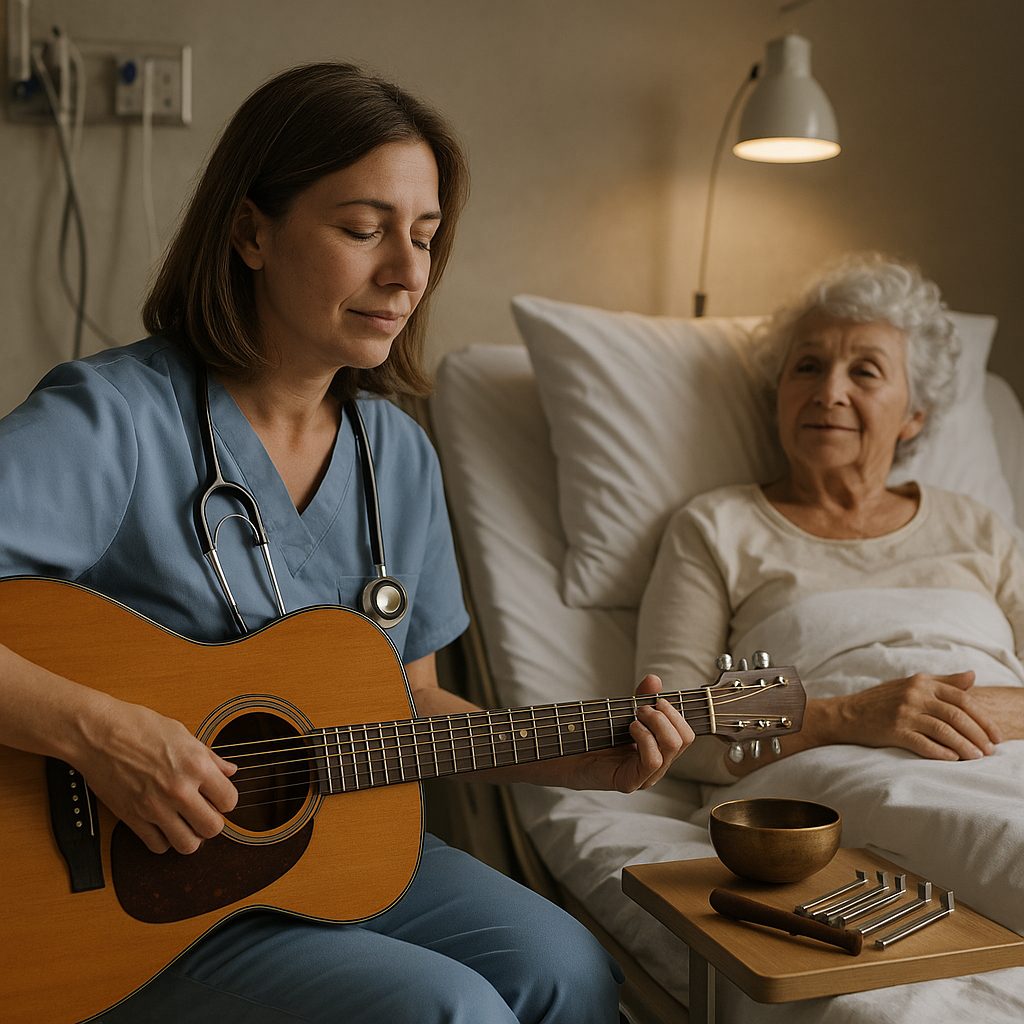
This growing openness is not purely theoretical. During a 2012 hearing before the French Senate, Professor Agnès Buzyn, then President of the Institut national du cancer, stated: “According to our surveys, 30% of patients admit having used alternative or complementary medicines. 85% of them did so in order to better tolerate their treatment, while 27.5% said their aim was to treat the cancer itself, which for us constitutes a warning signal...” That distinction remains crucial. Therapeutic music may be encouraged as a supportive practice, but not as a substitute for medical care.
Since then, some hospitals have experimented with Qi gong to help relieve certain side effects of cancer treatment, as well as therapeutic music programmes developed in close partnership with healthcare institutions through formal annual agreements. As one cited source notes, all age groups may be concerned, from premature babies to older adults, with the idea that sound frequencies can help restore a sense of harmony between body, mind and environment. Used under the right conditions, and with instruments suited to real needs, this is precisely where therapeutic music finds its place.
What matters in practice is not only the instrument itself, but the clinical frame around it: duration, volume, timing, the person’s sensory tolerance, and the intention of the session. In supportive care, music is often used to reduce anticipatory tension, improve comfort during treatment, or create a more stable attentional state in people who feel overwhelmed. These are modest but meaningful aims, and they help explain why therapeutic music is increasingly discussed in relation to regulation rather than remedy.
- It is increasingly used as a complement, not a replacement, for treatment.
- Its main aim is often to support comfort, regulation and overall wellbeing.
- Its value depends on context, supervision and the needs of the person involved.
Why certain instruments are especially valued
Among the instruments most often associated with therapeutic sound work, some are prized for their unusual acoustic qualities and strong vibratory resonance. These include the Spacedrum, the French version of the handpan, the shakuhachi bamboo flute, the kora and Koshi chimes, but above all Tibetan singing bowls and the kalimba. The ancestral design of Tibetan bowls is often described as unique because they are traditionally made from an alloy of seven metals, linked symbolically to seven celestial bodies, the seven days of the week and the seven chakras, with each metal said to carry its own vibratory signature. Their appeal lies in the depth and persistence of their resonance.
Given that the human body is composed of more than 65% water, these vibrations are often sought for the way they are felt physically as well as heard. As the Dutch psychotherapist Hans de Back puts it: “Just as a well-tuned instrument caresses the ear, singing bowl massage caresses the body, mind and soul.”
The kalimba, meanwhile, offers a different but equally compelling sound world. Known as the “thumb piano”, and also called sanza, senza or likembé in Africa, it dates back to around 1000 BC and was originally made with bamboo tines. Today it usually consists of a small metal keyboard mounted on a resonating body. In Bantu mythology, it is said that each tine of the kalimba represents a phase in the Creation of the world. From the group Genesis to village storytellers, this instrument has travelled across cultures while retaining its intimate, luminous tone.
It is often appreciated for the way its resonance may influence mental, emotional and physical states, as illustrated by Youn Sun Nah’s beautiful interpretation of “My Favourite Things”, widely shared online. For musicians, it also has a practical advantage: it is easy to tune, including to 432 Hz or with middle C at 528 Hz for those who seek out these so-called healing frequencies. Here too, caution is useful, but the instrument’s accessibility, softness and immediacy help explain why it holds such a special place in therapeutic music.
From an acoustic point of view, these instruments also differ in ways that may shape experience. Singing bowls tend to produce sustained tones rich in overtones, which can encourage prolonged listening and a gradual slowing of breathing. The kalimba, by contrast, offers short, clear notes with a gentle attack, often making it feel less intrusive and easier to integrate into one-to-one sessions, self-regulation practices or work with children and older adults. In both cases, the perceived benefit may arise less from any single frequency than from the interaction between timbre, repetition, expectation, attention and bodily state.
- Tibetan bowls are valued for deep, sustained resonance.
- The kalimba is appreciated for its gentle tone and simple tuning.
- Both are often chosen for sessions centred on relaxation and sensory regulation.
What science reveals about sound, memory and healing
From ancestral practices to modern therapeutic design
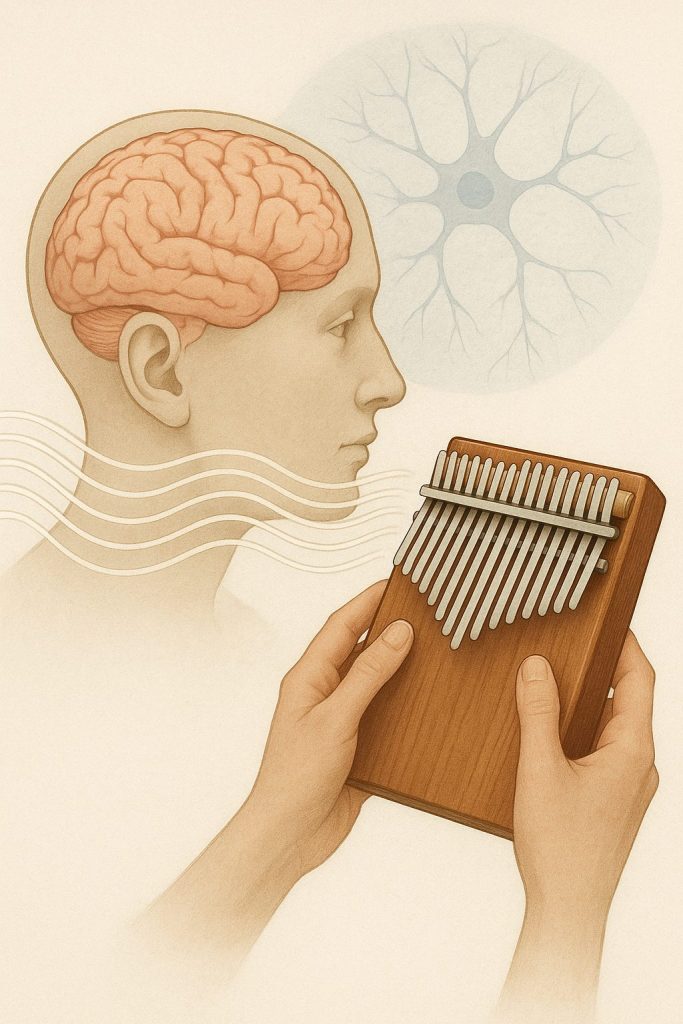
From the group Genesis to village storytellers, the kalimba has long been valued for its singular resonance and its effect on the mental, emotional and physical body, as illustrated by Youn Sun Nah’s beautiful interpretation of My Favorite Things. For musicians, it also has a practical advantage: it is easy to tune, including to 432 Hz or with middle C at 528 Hz, frequencies some practitioners associate with healing work. More broadly, growing scientific interest has helped bring music therapy into a more serious clinical conversation. Instrument makers now design ergo-therapeutic instruments for people with disabilities, including those with dyslexia, motor impairments, or age-related limitations.
This contemporary work sits within a much older history: many traditional cultures already treated sound as a means of easing blockages or restoring balance.
Examples appear across civilisations. Some Native American traditions used birch flutes to relieve rheumatic pain. In China, the head of the imperial orchestra, who was also a physician, composed therapeutic works for the emperor and his circle. Greek doctors referred to the Pythagorean scale when classifying different pulses. In France, Philippe Pinel, regarded as a founder of psychiatry, introduced music into asylums through choirs, brass bands and concerts. These references do not prove every historical claim in a modern medical sense, but they do show a remarkably persistent intuition: that sound may influence perception, regulation and wellbeing in ways that deserve careful study.
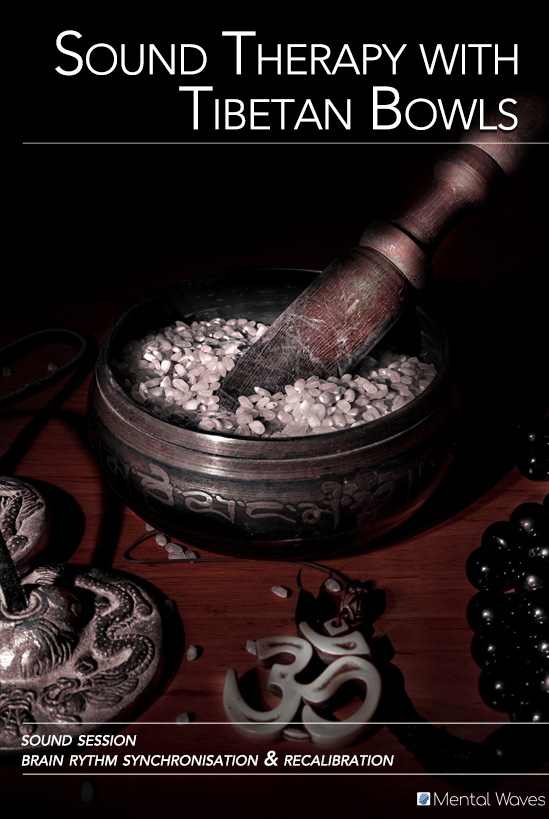
Related offer
Sound Therapy with Tibetan Bowls
Discover the ancestral power of Tibetan bowls. It's been proven that singing them helps regenerate and restore serenity and well-being...
View productThat continuity between older practice and modern design is especially visible in adapted instruments. Contemporary makers increasingly think in terms of ergonomics, motor accessibility, tactile feedback and ease of initiation. For a person with reduced mobility, cognitive fatigue or sensory fragility, an instrument that responds with minimal effort can make the difference between passive listening and active participation. In therapeutic settings, that distinction matters because agency itself may support confidence, attention and emotional engagement.
- Traditional use of sound in healing rituals
- Modern ergo-therapeutic instruments for adapted care
- Growing clinical interest in music as supportive therapy
How music may act on memory, stress and the developing brain
Recent research has explored these effects more closely. Work led by Professor Jacques Touchon, an Alzheimer’s specialist at Gui de Chauliac Hospital in Montpellier, found that sessions may stimulate cognitive functions by supporting memory encoding and the evocation of past experiences. Edith Lecourt, psychoanalyst and music therapist, reinforced this view by noting that certain pieces can revive whole areas of memory through emotion. Other studies, including research at Paris VI Jussieu with CNRS biologist Hélène Grimal, reported changes in human cells when exposed to sound. Such findings still call for careful interpretation, yet they reflect a broader scientific effort to understand how vibration, attention, emotion and physiology may interact.
Music therapy has also entered neonatology, particularly for premature babies. Researchers at Kaohsiung University in Taiwan suggested that it may help reduce psychological stress in pregnant women and contribute to a greater sense of wellbeing. Edith Lecourt also observed that it can foster a unique and privileged form of communication between mother and child. By around seven months of gestation, the foetus can hear noises and sounds, likely through bone conduction pathways. In that sense, the human body can be seen as a genuine resonating chamber. Sound reaches the eardrum, is converted into electrical signals, transmitted by nerve fibres to the cerebral cortex, then decoded by the brain.
This may help explain why therapeutic music can sometimes induce a state close to hypnosis, and why researchers continue to examine sound therapy and vibrational medicine for their possible effects on the brain, cells and metabolism. With these advances, the question no longer seems fanciful: could musicology one day become part of the medicine of the future?
Current neuroscience offers a useful framework here. Music does not act on a single isolated centre; it recruits distributed networks involved in auditory processing, prediction, motor timing, autobiographical memory, reward and emotional salience. That is one reason a familiar melody may suddenly bring back a scene, a face or a bodily feeling with unusual vividness. In some contexts, rhythmic regularity may also help stabilise attention and breathing, while slow, predictable sound patterns may contribute to down-regulation of arousal. None of this means that every sound is therapeutic for every person. Individual history, cultural meaning, hearing sensitivity and current mental state all shape the response.
For that reason, serious music therapy is usually less about imposing a supposedly universal frequency than about observing how a person actually reacts. Some people settle with drones and sustained resonance; others respond better to melody, pulse or voice. In clinical and supportive settings alike, the most credible approach remains the most attentive one: careful listening, gradual adjustment and clear therapeutic limits.
How to Think About Instruments, Resonance and Care
An instrument does not become therapeutic simply because it sounds beautiful. The context matters: who is listening, what state they are in, how loud the sound is, whether the rhythm is inviting or intrusive and whether the session is adapted to the person.
That is why therapeutic use of music asks for observation. A drum, singing bowl, voice, chime or string instrument can support attention in one setting and feel overwhelming in another. The response of the listener is more important than the reputation of the instrument.
Different instrument families invite different kinds of attention. Percussion can bring structure and a sense of pulse, which may help a group move together or make attention more concrete. Sustained tones from bowls, strings, voice or drones can create a wider field of listening, where the listener notices vibration, space and breath. Softer instruments such as chimes or small bells can mark transitions without taking over the whole room.
The practical question is not which instrument is the most powerful. It is which instrument fits the moment. A person who feels tired may need simplicity and low volume. Someone who feels mentally scattered may respond better to a steady rhythm. A group setting may need sounds that encourage participation, while a private listening practice may need sounds that leave more room for inward observation.
Duration matters as much as tone. A sound that feels supportive for two minutes can become tiring after twenty. Silence between sounds is part of the intervention because it gives the nervous system time to register what has changed. In careful sound work, restraint is often more respectful than intensity.
Good use of therapeutic music instruments also includes consent and choice. The listener should be able to say when a sound is too close, too loud, too emotional or simply not right. This is especially important for people who are sensitive to noise, easily overstimulated or carrying difficult associations with certain sounds.

Related offer
Magical whale song - therapeutic frequencies
Scientists as a whole report that auditory «contact» with whale song induces a...
View productA simple progression is often enough: begin with silence, introduce one clear sound, pause, then add rhythm or harmony only if the listener remains comfortable. This keeps the experience readable. Instead of overwhelming the senses, the instrument becomes a point of orientation, attention and gentle shared presence.
That humility is what makes sound work more trustworthy.
The Mental Waves Therapeutic Instruments Framework
The Mental Waves frame is to approach instruments as tools for rhythm, resonance and relationship. Sound should be used with care, not mystique alone.
- Set: clarify the purpose of the sound environment.
- Play: use rhythm, tone and silence with restraint.
- Observe: watch comfort, attention and body response.
- Adapt: change intensity, duration or instrument when needed.
For the psychology of listening, continue with Psychological Benefits of Music. For brainwave context, read Brainwave Frequencies and Meditation.
Editorial note from Mental Waves
This article is educational. Sound and music can support wellbeing, but they should be adapted to sensitivity, hearing comfort and any relevant medical or psychological context.
Conclusion
What emerges here is not a simple opposition between conventional medicine and complementary approaches, but a more careful idea: sound may have a meaningful place in care when it is used with discernment. Therapeutic music sits at the meeting point of perception, bodily resonance, attention and emotional regulation. That helps explain why it is now being explored in settings as varied as oncology, neonatology and cognitive support, while also requiring clear limits: it may help people tolerate treatment, relax, reconnect with memory or settle the nervous system, but it should not be confused with a substitute for medical care.
The deeper interest of these instruments, whether ancestral or newly adapted, lies in the way they bring together lived experience and observable effects without forcing certainty where certainty does not yet exist. Music can alter mental state, focus, breathing and felt bodily awareness; in some contexts, it is also associated with changes in stress, recall and wellbeing. Seen in that light, musicology is perhaps less a medicine of the future than a reminder of something older and more exacting: the human body does not merely hear sound, it responds to it.
If therapeutic instruments continue to attract attention, it is because they occupy a rare position between art, care and embodied experience. They invite neither blind belief nor dismissive scepticism, but a more disciplined curiosity. That may be the most promising perspective of all: not to romanticise sound, but to understand more precisely when, how and for whom it may genuinely help.
Frequently Asked Questions About Therapeutic Music Instruments
What are therapeutic music instruments?
They are instruments used intentionally to support relaxation, expression, attention or body awareness.
Which instruments are often used?
Drums, voice, chimes, singing bowls, strings and simple percussion are common examples.
Why does rhythm matter?
Rhythm can organize attention, movement and participation.
Why does resonance matter?
Resonance can create a felt sound environment that some listeners experience as calming or focusing.
Can therapeutic sound be overwhelming?
Yes. Volume, intensity or emotional association can be too much for some people.
Does a specific instrument always have the same effect?
No. The effect depends on the listener, setting, volume, duration and intention.
How can instruments be used safely?
Start gently, observe the response and adapt sound intensity to comfort.
Is this the same as music therapy?
Formal music therapy is a professional discipline; therapeutic listening can be supportive but is not the same thing.
What is the main takeaway?
Therapeutic instruments are most useful when sound is intentional, respectful and adapted to the listener.