en
enVotre panier est vide.


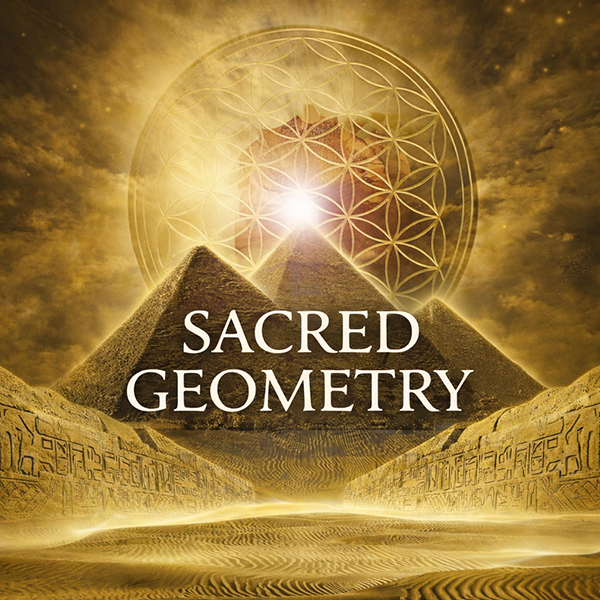
“Observe nature deeply and you will understand everything better.” Einstein’s line has lost none of its force, especially when you pause over the near-unreal symmetry of a snowflake, a flower or the fractal spirals of a Romanesco cauliflower. From that first sense of wonder, the question follows almost naturally: are these patterns simply beautiful, or do they point to a deeper order? Sacred geometry begins in that tension between observation and meaning — in the idea that nature’s forms may reveal proportions and structures human beings have long tried to understand, and sometimes to recreate.
In short: sacred geometry
Sacred geometry is most useful when it is approached as a symbolic language of pattern, proportion and attention rather than as an exaggerated proof system.
Use this article as a practical map: keep what helps attention become steadier, question anything that sounds absolute, and connect the idea back to repeatable daily practice.
According to architect Stéphane Cardinaux, whose work links sacred geometry with tellurism and traditional building principles, its documented use reaches back to the 5th millennium BC. In his definition, it is a body of proportions, geometric constructions and dimensions first recognised in the natural world — in crystals, plants, fruits and animals — then adapted by artists and builders in search of harmony and precision. That helps explain why the subject has endured across so many cultures and periods, from megalithic sites to temples, pyramids and cathedrals: not simply as a technical method, but as a way of aligning human creation with what has long been perceived as the underlying order of life.
How Sacred Geometry Shapes Nature, Architecture and Belief
A language of proportion inspired by nature
“Observe nature deeply, and you will understand everything better,” Albert Einstein is often quoted as saying. It is a fitting place to begin, because sacred geometry is usually approached first through wonder: the near-unreal symmetry of a snowflake, the spiral intelligence of a flower, or the fractal structure of a Romanesco cauliflower. Faced with such forms, it is natural to ask whether sacred geometry truly exists, what it actually means, who uses it, and how far back it goes.
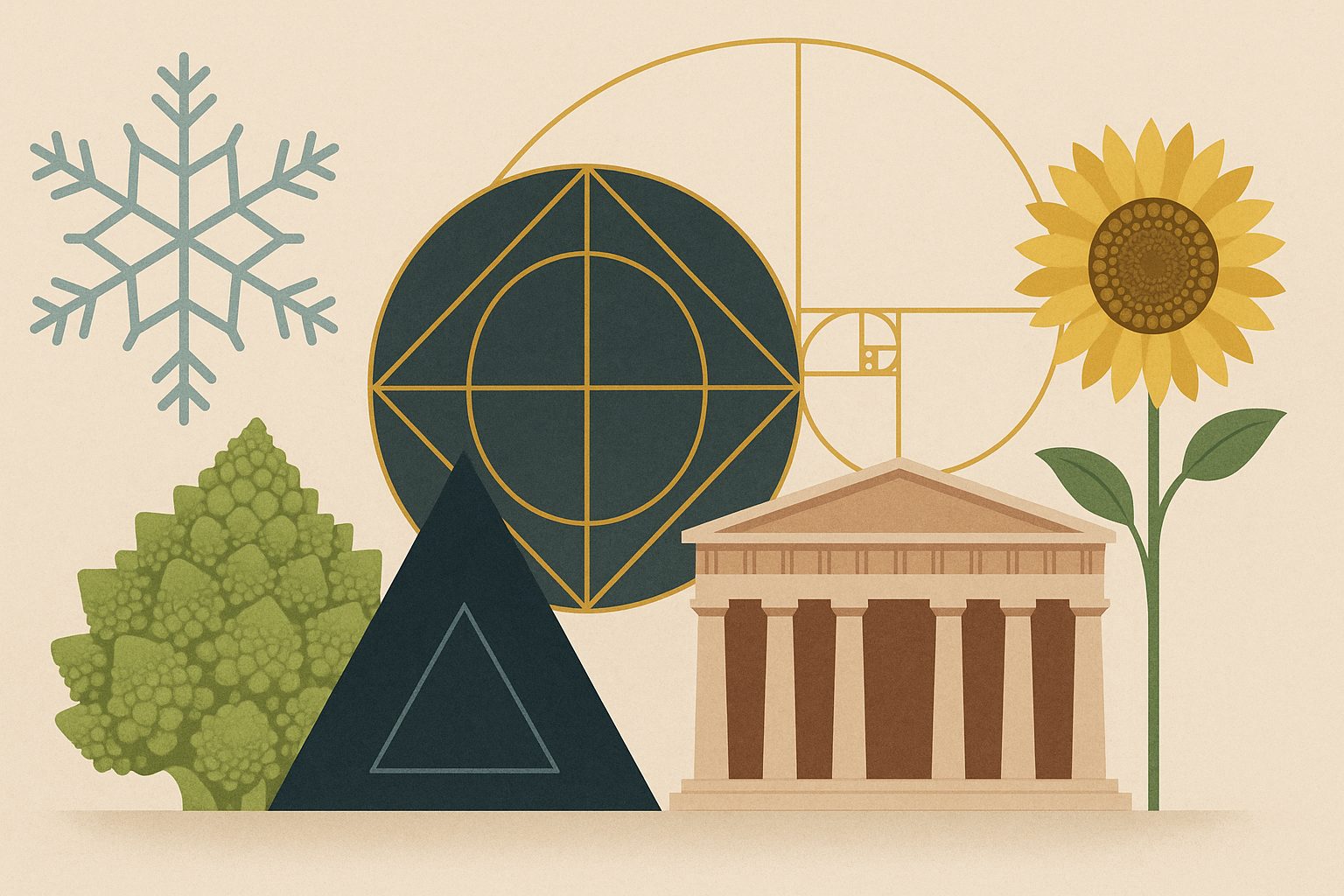
According to the architect Stéphane Cardinaux, author of several studies and two books on tellurism and sacred geometry, the earliest attested traces of its use date back to the 5th millennium BC. He defines sacred geometry as a set of proportions, geometric constructions and dimensions observed first in nature. Crystals, flowers, fruits and animals all served as models for this particular geometry. Because nature was regarded as a form of perfection, human beings sought to understand its organising laws and draw inspiration from them in their own creations. In that sense, sacred geometry is not simply decorative.
It is a way of translating natural order into human form, which is why architects and artists have continued to use it whenever they aim for balance, coherence and a certain idea of perfection.
- proportions drawn from natural forms
- geometric constructions based on observed order
- applications in art and architecture
More than technique: an idea of harmony and consciousness
On Cardinaux’s site, these principles are broken down with enough clarity that even a newcomer can grasp their practical use. Once you begin looking at cathedrals, sculptures, paintings or pyramids through this lens, the underlying logic becomes hard to ignore: proportions, dimensions and plans are not arbitrary, but part of a deliberate search for harmony. The same impulse begins with the observation of nature’s masterpieces, whether mineral, plant or animal. From there, human beings extracted the principles behind geometric organisation and used them to create works aligned with a broader sense of universality, the “law of One”, and a balanced relationship between elements that recalls the Taoist idea of Yin and Yang.
Cardinaux even describes sacred geometry as “a discipline of the mind” that encourages an expansion of consciousness. He goes further still, claiming that with quantum devices such as the GDV, it is now possible to show the impact of sacred geometry on the electro-photonic radiation emitted by the body: in his words, “more order, more energy, more potential for evolution, more consciousness”.
That helps explain why sacred geometry has never been understood in only one way. For some, it is “the art of communicating divine wisdom through geometric figures that function as symbols”, or even a language reserved for initiates. Others see in it a hidden code, a mirror of consciousness, a gateway to inner initiation, or a support for physical, emotional and mental healing. One interpretation stands out in particular: sacred geometry as the emblem of harmony, with the golden ratio governing the regulating lines of Egyptian and Greek temples as well as Gothic churches. It is no coincidence that astrologers, theosophists, mathematicians, kabbalists and architects have all taken an interest in it.
Seen in that light, sacred geometry becomes more than a technical system. It suggests a universal language of creation itself, visible not only in monuments and symbols, but also in planetary orbits, the mineral, plant and animal worlds, and even the human body.
From natural patterns to the work of master builders
Albert Einstein’s remark, “Observe nature deeply and you will understand everything better”, feels especially apt here. A snowflake, a cauliflower, the fractal spirals of Romanesco broccoli, the symmetry of flowers or crystals: these forms are often cited as visible clues that order in nature is not random. Drawing on the work of architect Stéphane Cardinaux, author of several studies and two books on tellurism and sacred geometry, sacred geometry is described as a set of proportions, geometric constructions and dimensions first observed in the natural world. Crystals, plants, fruits and animals became models. Because nature was seen as a form of perfection, human beings sought to understand its organising laws and apply them to their own creations.
Related offer
Sacred frequency 432 Hz
432Hz : COSMIC COHERENCE Enter into perfect resonance with the universe... COHERENCE - UNITY - ENERGY - BLISS
View productIn that sense, sacred geometry is not simply decorative: it is a way of translating natural harmony into architecture and art.
That helps explain why so many human works inspire the same kind of awe as natural forms. Cathedrals, sculptures, paintings, pyramids, menhirs, Gallo-Roman villas, castles, mausoleums, Egyptian, Japanese and Khmer temples, mosques: all are presented as traces of master builders working with highly refined geometric plans. What is striking is the continuity of this knowledge. According to Cardinaux, attested uses of sacred geometry go back to the 5th millennium BC, and the tradition appears to have been transmitted orally across cultures since the Neolithic period.
Even now, in an age of advanced software and digital modelling, it is hard not to marvel at the fact that many of these builders worked with little more than a ruler, compass and set square, yet achieved structures of extraordinary beauty, mathematical precision and carefully controlled proportions.
- patterns observed in minerals, plants and animals
- proportions used in art and architecture
- transmission of geometric knowledge across cultures
A symbolic language of harmony, consciousness and cosmic order
In this perspective, sacred geometry goes beyond technique. Cardinaux argues that it produces creations aligned with universality, the “law of One”, balance between elements and even the Taoist idea of Yin and Yang. He also describes it as “a discipline of the mind that encourages an expansion of consciousness”, and goes further still by claiming that devices such as the GDV can reveal an effect on the body’s electro-photonic radiation: more order, more energy, more potential for evolution, more consciousness. He identifies its main characteristics as the use of a limited number of precise proportions, often based on musical ratios, the golden ratio and square roots.
He also cites Avebury, the famous megalithic site in England, to underline the links sometimes drawn between sacred geometry, tellurism and astronomy, with stones positioned in relation to solstices, equinoxes and even the extreme risings and settings of the moon every 9.3 or 18.6 years.
It is hardly surprising, then, that sacred geometry has been interpreted in many different ways. For some, it is “the art of communicating divine wisdom through geometric figures that function as symbols”, or even a language reserved for initiates. Others see in it a hidden code, a mirror of consciousness, a gateway for inner initiation, or a means of physical, emotional or mental healing. One idea stands out in particular: sacred geometry as the emblem of harmony, with the golden ratio governing the regulating lines of Egyptian and Greek temples as well as Gothic churches. That is why it has long held a place in the teachings of astrologers, theosophists, mathematicians, Kabbalists and architects alike.
Whether one approaches it as symbolism, science, spirituality or all three at once, it continues to suggest the same intuition: that creation speaks a universal language. The structured orbits of the planets, the mineral, plant and animal worlds, and even the human body seem, for many observers, to echo that same underlying order. In that sense, Einstein’s words return with full force: to look closely at nature is, perhaps, to come a little closer to the mystery of creation itself.
The Mental Waves Pattern Contemplation Framework
The Mental Waves frame is to use geometry as a support for attention and symbolism. A pattern can invite contemplation, but it does not need to be turned into a universal proof.
Related offer
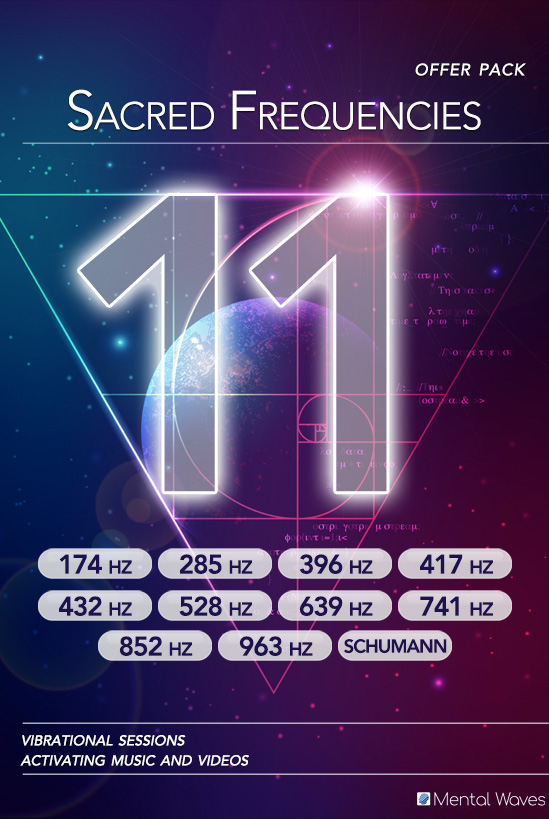
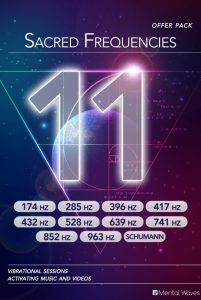
11 Sacred Frequencies + Climax Bundle
Sacred Frequencies Pack including 10 videos and 11x 20-minute tracks of activating music.
View productObserve how forms affect focus: symmetry, repetition, proportion and rhythm can quiet the mind and create a sense of order when used with humility.
If symbolic and vibrational practices interest you, receive the free 128 Hz sacred frequency session as a simple sound-based point of exploration.
Editorial note from Mental Waves
This article frames sacred geometry as symbolic and contemplative, not as scientific proof, medical care or a substitute for practical judgement.
Conclusion
Sacred geometry sits at an unusual crossroads: part observed proportion, part artistic method, part spiritual interpretation. That is precisely why it continues to fascinate. On one side, it draws from patterns we can recognise in crystals, plants, bodies and built forms; on the other, it carries meanings that different traditions have read into those patterns for centuries. Its enduring power may lie less in proving a single doctrine than in revealing a persistent human intuition: that order, beauty and proportion are not separate from our search for meaning.
Seen in that light, the subject asks for both wonder and restraint. It invites admiration for the intelligence of nature and for the precision of the builders, artists and thinkers who sought to work in harmony with it, without forcing every pattern into certainty. Perhaps that is the most balanced way to approach sacred geometry: not as a closed answer, but as a way of looking more carefully at the links between form, consciousness and creation. Sometimes, a pattern does not end the mystery; it deepens it.
Frequently Asked Questions About Sacred Geometry
What is sacred geometry in simple terms?
Sacred geometry is a system of proportions, geometric constructions and dimensions drawn from patterns observed in nature. Crystals, flowers, fruits and animals are treated as models of order, and those same organising principles are then applied to human creations such as buildings, artworks and symbolic forms.
Why is it called 'sacred' geometry?
It is called sacred because nature has long been regarded as a form of perfection, and these geometric patterns were seen as reflecting a deeper order in life. The term points not only to mathematics, but also to the idea that proportion and harmony can carry symbolic or spiritual meaning.
How far back does the use of sacred geometry go?
Its documented use is said to reach back to the 5th millennium BC. The tradition is also presented as having continued orally since the Neolithic period, spreading across different cultures and systems of thought rather than belonging to one place or one era alone.
Which natural forms are linked to sacred geometry?
Natural examples include crystals, flowers, fruits, animals, snowflakes and the fractal structure of Romanesco cauliflower. These forms are valued for their symmetry, repeating patterns and visible order, which are taken as clues to the geometric principles later used in art and architecture.
Who has used sacred geometry throughout history?
Architects, artists and master builders are closely associated with it, but interest in sacred geometry has also extended to astrologers, theosophists, mathematicians and Kabbalists. It appears in traditions concerned with both construction and symbolism, which helps explain its long cultural reach.
What kinds of buildings or works are associated with sacred geometry?
Examples include menhirs, Gallo-Roman villas, castles, mausoleums, pyramids, Egyptian, Japanese and Khmer temples, cathedrals, mosques, sculptures and paintings. These works are linked by a careful use of proportion, dimension and geometric planning rather than by a single style or civilisation.
What mathematical principles are mentioned in sacred geometry?
Its main characteristics include a limited set of precise proportions based on musical ratios, the golden ratio and square roots. These are presented as tools for creating balance and coherence, especially in architecture and design where exact relationships between forms matter.
How is sacred geometry connected to Avebury, tellurism and astronomy?
Avebury is used as an example of how sacred geometry can be linked with telluric networks and astronomical alignments. In this view, certain stones were positioned in relation to solstices, equinoxes and even the extreme risings and settings of the moon over cycles of 9.3 or 18.6 years.
Is sacred geometry seen only as a technical method?
No, it is also interpreted as a symbolic and spiritual language. Some see it as a way of expressing divine wisdom through geometric figures, while others treat it as a mirror of consciousness, a path of inner initiation, or an emblem of harmony linking nature, the cosmos and human creation.