en
Votre panier est vide.


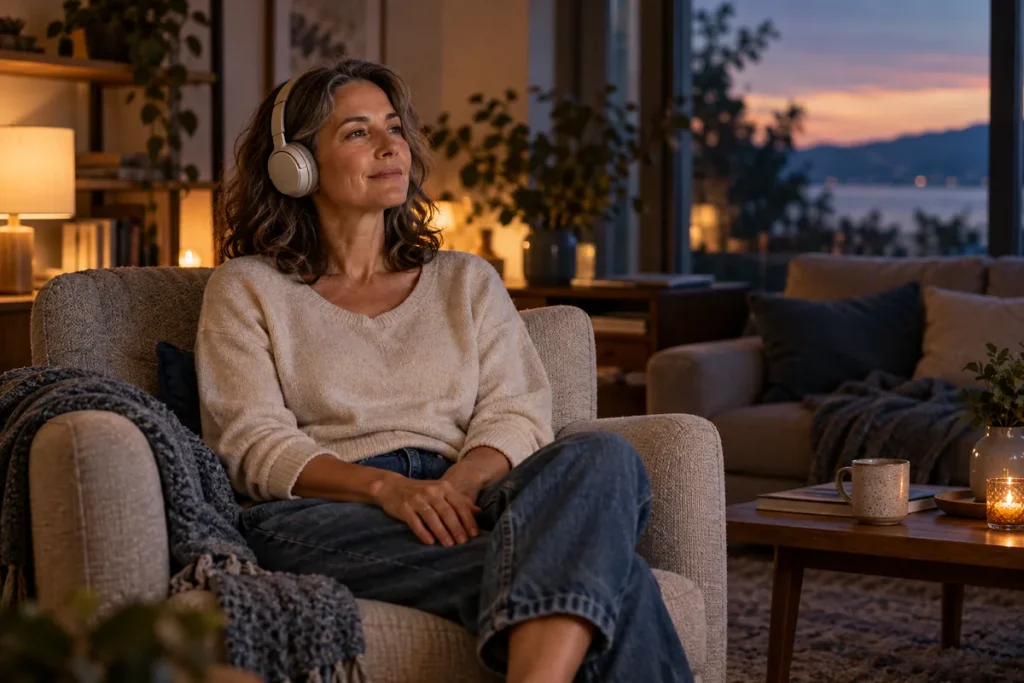
The house has grown quiet, but you are still living at the pace of the day. A conversation returns while you make tea. Your shoulders rise when the phone lights up. Even with an empty evening ahead, part of you seems to be waiting for the next demand.
You settle into a chair and put on your headphones. For once, there is no voice to follow, no breathing count to remember and no target to reach. You can listen, feel the support beneath you and allow this moment to ask a little less of you.
113 Hz frequency benefits, in the Mental Waves approach, center on deep relaxation, heart-centered calm, release of physical and emotional tension, and a more settled connection with your body. Cardio Frequency gives these intentions a dedicated listening space, designed to accompany the transition from activity into rest.
This guide explains what 113 Hz means, how the program approaches breath and heart awareness, and how to use its two audio versions. If you are ready to listen, the Cardio Frequency 113 Hz program includes the original audio, a version with heartbeat sounds and a PDF usage guide.
What is 113 Hz?
113 Hz means 113 sound vibrations per second. It describes a low audible frequency, one element of the sound you hear. It does not mean 113 heartbeats per minute, and it does not prescribe a breathing rate.
In Alex Michel's Cardio Frequency program, this low-frequency foundation becomes part of a listening experience centered on the chest, natural breathing and the feeling of returning to yourself. The composition, your comfort, the listening volume and the attention you bring all shape the experience.
The original session lasts about twenty minutes. There is no spoken guidance and no imposed breathing pace. You can approach it as a quiet interval in which to notice the body, soften effort and give your thoughts less to organize.
113 Hz frequency benefits: what the practice invites
These are the wellness intentions of the complete listening experience. They give you a direction for your practice; your response may vary from one listen to the next.
1. Find a calmer relationship with your breath
On a crowded day, breathing can become another thing you barely notice. Listening gives you a chance to feel the ordinary movement of air and the gentle rise and fall of your chest without turning them into a task.
The invitation is ease: a little less effort around each breath, a little more awareness of the body that has carried you through the day. You do not need to take especially deep breaths or make your breathing slow.
2. Release the tension you have been carrying
Sometimes the first thing you notice in a quiet room is how firmly you have been holding yourself together. Your jaw is set. Your hands are busy. Your shoulders have not quite understood that work has ended.
Cardio Frequency is designed as a setting for physical and emotional release. Let the chair support your weight. Let your hands rest. If a feeling comes into view, you can acknowledge it and return to the sound without needing to solve it during the session.
3. Make space for a quieter mind
A replayed conversation or tomorrow's list can fill every available silence. An unhurried listening ritual offers somewhere else to place your attention. When thoughts pull you away, the sound is still there to return to.
The aim is a more settled mind and a clearer relationship with the next moment. You might leave the session ready to make one simple choice: put the phone aside, enjoy dinner slowly or let an unfinished task wait until morning.
4. Support the transition into rest
Rest often needs a place in the day before it can become a habit. Twenty minutes of listening can mark that place: after work, after an emotionally demanding exchange or before your usual bedtime routine.
The sleep-related intention is to create conditions for winding down. You can dim the lights, reduce interruptions and finish with a few quiet moments. There is no need to leave the recording playing all night or to judge the session by whether you fall asleep.
5. Recover a sense of grounding and inner reassurance
The heart-centered theme invites a feeling of coming home to your body: noticing the surface beneath you, the warmth of the room and the fact that, for this interval, nothing needs an immediate response.
This is also the program's sense of coherence: a felt connection between breath, body, emotion and attention. You can explore it gently, without monitoring your pulse or trying to produce a particular sensation in your chest.
Breath, heart and vagus nerve: understanding the connection
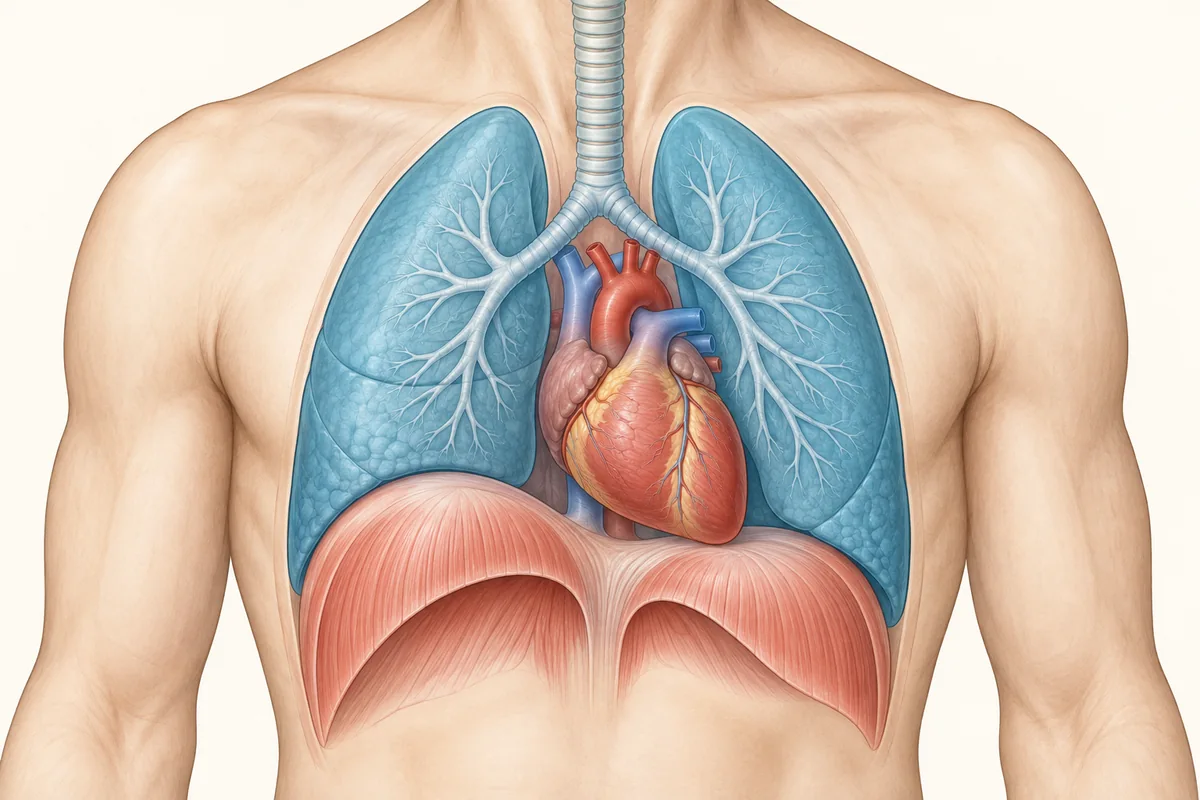
The heart and lungs share the chest, while the diaphragm forms a muscular boundary beneath the lungs. Breathing and heart rhythm interact through several mechanisms, including autonomic regulation. The vagus nerve participates in parasympathetic control of the heart, which is one reason it appears so often in discussions of rest and relaxation.
Studies of deliberate slow breathing have found changes in heart-rate variability and other measures of autonomic activity, alongside reports of greater comfort or relaxation. The 2018 systematic review by Zaccaro and colleagues describes these findings and the limits of the evidence. Those studies concern breathing techniques; they do not test this 113 Hz recording.
Research on music offers another useful piece of context. NCCIH's overview of music and health describes potential benefits for stress-related outcomes and subjective sleep quality, with results depending on the intervention and the people studied. This supports exploring music as part of a relaxation routine, without attributing every effect to one frequency.
The specific claim that 113 Hz directly stimulates the vagus nerve or is a unique healing resonance of the sternum has not been established by these sources. In this guide, thoracic resonance and heart-centered harmony describe the program's listening focus and intended experience. A pleasant sensation is something you can notice; it is not a measurement of nerve activation or cardiac coherence.
Is 113 Hz listening the same as cardiac coherence breathing?
They offer different ways to make space for calm. Cardiac coherence practices generally ask you to follow a steady breathing rhythm. Cardio Frequency 113 Hz asks you to listen, with your breath free to find its own comfortable pace.
| Practice | What you do | When it may appeal |
|---|---|---|
| 113 Hz listening | Listen without spoken guidance or imposed breathing timing. | When you want to rest without following a technique. |
| Cardiac coherence breathing | Follow a comfortable, regular breathing rhythm. | When a clear breathing structure helps you focus. |
Read our cardiac coherence benefits guide if you want to explore the breathing approach. You do not need to combine the two practices to begin listening to Cardio Frequency.
Original or heartbeat version: which should you choose?
The program includes two listening options, each supplied in MP3 and WAV. The original version is the simplest starting point if you want the sound experience without added heartbeat sounds.
The heartbeat version adds an audible heartbeat to the composition. Some listeners may enjoy that sense of presence when settling into a heart-centered practice. Others may prefer the original, especially if attending to heartbeat sounds feels distracting.
The recorded heartbeat is part of the audio. It does not measure your heart, and it gives you no target to match. Your breathing can remain ordinary throughout. Comfort is a useful way to choose between the versions.
How to listen to 113 Hz: a simple 20-minute ritual
- Choose a transition in your day. Try the interval after work or before your evening routine. Leave yourself enough time to avoid rushing straight into another task.
- Get comfortably supported. Sit or lie down in a quiet place. Read the PDF guide supplied with the program and silence interruptions.
- Select your audio version. The original is a straightforward first choice. Keep the volume low and comfortable, using headphones or speakers that reproduce the sound pleasantly.
- Listen without directing the breath. Allow normal inhalations and exhalations. If your attention wanders, return to the sound or the feeling of the surface beneath you.
- Finish with a little quiet. Before checking your phone, notice your shoulders, your mood and the pace at which you want to continue.
These steps help you prepare; they are not timed instructions within the recording. There is no requirement to feel a chest vibration, deepen your breathing or reach a particular state. A shorter first listen is fine if that feels more comfortable.
Follow the WHO's safe-listening guidance and keep sound exposure comfortable. Stop if you experience discomfort. Listen while resting, away from driving or tasks requiring full attention. Persistent heart or breathing symptoms need medical assessment; this audio is a wellness practice, not a treatment.
113 Hz, 157 Hz or 1618 Hz: choose your intention
A frequency number is not a ranking of strength. Begin with the experience you want to make room for.
- 113 Hz: heart-centered calm, natural breath awareness and a gentle transition into rest.
- 157 Hz: a bioenergetic practice focused on inner balance, vitality and feeling centered.
- 1618 Hz: a Golden Ratio-inspired ritual for inner alignment, creative flow and expansion.
If your immediate wish is to put the day down and feel more at home in your body, the unguided 113 Hz approach is a natural place to begin.
Bring the practice into your evening
Cardio Frequency 113 Hz brings together the original audio, the heartbeat version and a PDF usage guide. Both audio versions come in MP3 and WAV, giving you five downloadable files to use in the listening space you prefer.
You can begin with a comfortable seat and one uninterrupted interval. Let that be enough for the first session.
Explore the Cardio Frequency 113 Hz program
113 Hz frequency: frequently asked questions
What are the benefits of 113 Hz?
The Mental Waves 113 Hz practice is designed for deep relaxation, heart-centered calm, release of physical and emotional tension, mental quiet and a grounded transition into rest. These are wellness intentions for the complete listening experience; individual responses vary.
Does 113 Hz stimulate the vagus nerve?
Direct vagus nerve stimulation by listening to 113 Hz has not been established by the research cited in this guide. Studies of slow breathing and music provide context for relaxation, but do not demonstrate that specific mechanism for this recording.
Is 113 Hz the same as 113 beats per minute?
No. Hertz measures sound vibrations per second. Beats per minute describe a rhythm such as a musical tempo or heart rate. The 113 Hz audio frequency is not a target heart rate or breathing pace.
What is the difference between the original and heartbeat versions?
The heartbeat version adds audible heartbeat sounds to the listening experience. Both versions are included in MP3 and WAV. Choose the original if you prefer listening without the added heartbeat, and keep your breathing natural with either version.
How long should I listen to 113 Hz?
The original Cardio Frequency program is presented as a 20-minute session. You can begin with a shorter listen if you prefer. Follow the supplied usage guide, keep the volume comfortable and stop if the sound causes discomfort.
Do I need to follow a breathing exercise?
No. Cardio Frequency has no spoken guidance or imposed breathing pace. You do not need to count, hold your breath or synchronize your breathing with the recorded heartbeat.
Can I listen to 113 Hz before sleep?
You can make it part of a quiet wind-down routine before bed. Its purpose is relaxation and preparation for rest; falling asleep during the session is not required or guaranteed. You do not need to play it all night.
Do I need headphones, and what files are included?
Headphones can create a private listening space, while speakers are another option. Follow the included usage guide. The download contains the original audio in MP3 and WAV, the heartbeat version in MP3 and WAV, and one PDF guide: five files in total.