en
enVotre panier est vide.


2675 Hz is an audible sound frequency: a vibration repeating 2,675 times per second. In the Mental Waves sacred-frequency framework, it becomes a focused listening anchor for resilience, transmutation, aura amplification, subtle perception, energetic protection and personal radiance. Listeners may experience the complete soundscape as centering, clarifying, uplifting or deeply immersive. These are symbolic and personal-development intentions rather than clinically established effects of the number itself.
That distinction leaves room for curiosity without turning a sound into a medical promise. A frequency can be physically real, artistically meaningful and personally resonant at the same time. Those are different kinds of meaning, and understanding the difference is the best place to begin.
What is 2675 Hz?
Hertz, abbreviated Hz, is the standard unit of frequency. As the US National Institute of Standards and Technology explains, it describes the number of events or cycles occurring each second. A stable 2675 Hz tone therefore completes 2,675 cycles per second and is heard as a relatively high pitch by a listener whose hearing includes that part of the audible range.
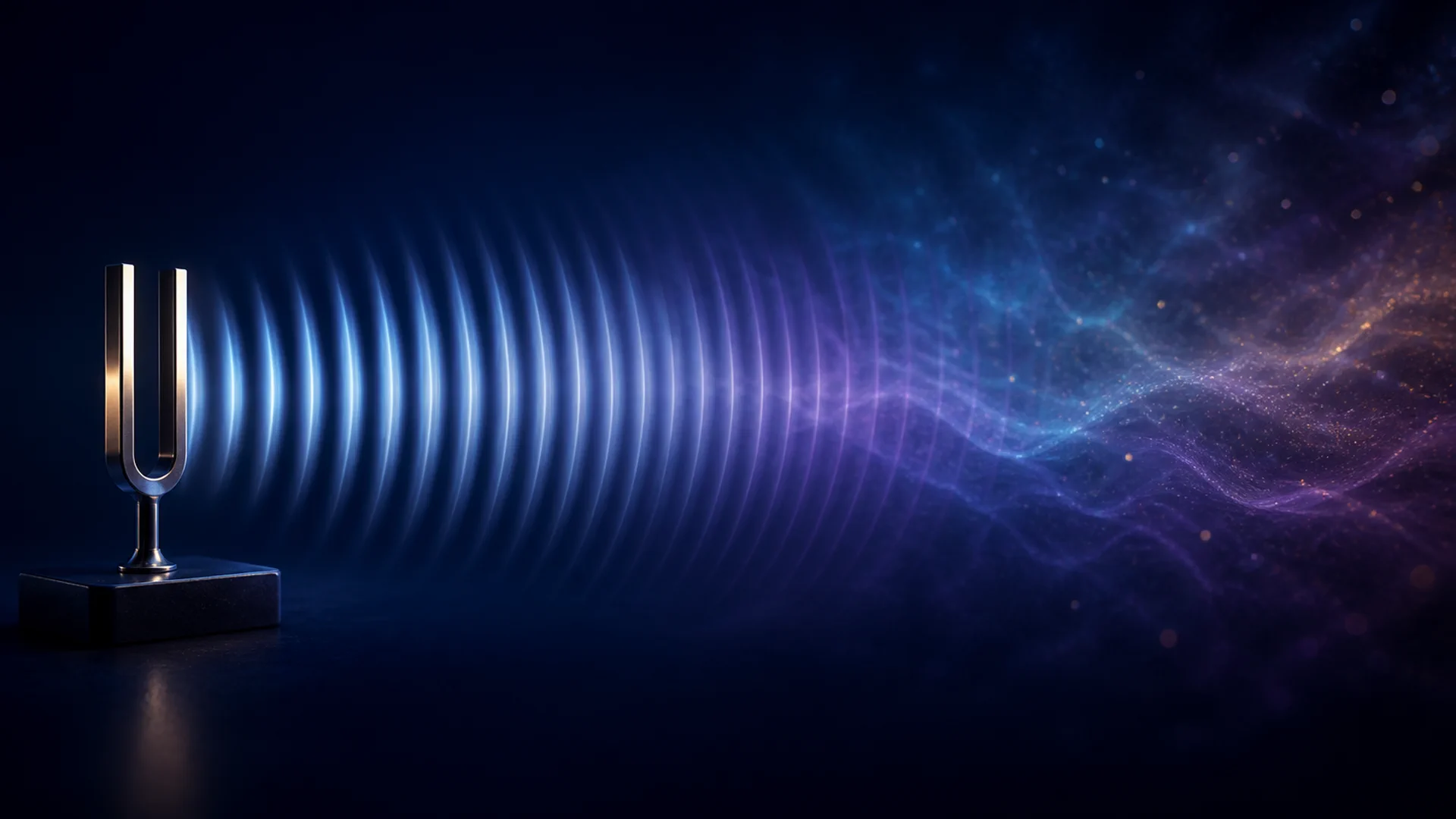
The frequency tells us about pitch, not loudness. A 2675 Hz sound can be quiet or loud, brief or sustained, pure or blended into music. Its effect as an experience also depends on everything around it: volume, harmony, rhythm, timbre, duration, the listening environment and the listener’s own expectations and sensitivities.
For that reason, the phrase “2675 Hz audio” does not describe one universal recording or one universal response. It describes an audio experience designed around that frequency reference.
Audio frequency versus symbolic or wellness claims
It helps to separate four layers that are often blended together online.
- Physical frequency. A measurable acoustic signal oscillates at 2,675 cycles per second.
- Sound design. A creator can place that tone inside music, ambience or a wider frequency-based composition.
- Symbolic meaning. A wellness tradition, creator or listener may associate the frequency with an intention such as resilience, clarity or inner alignment.
- Personal experience. A listener may find the result soothing, vivid, neutral or uncomfortable.
Only the first layer is defined by the number itself. Sound design is an artistic choice. Symbolic meaning belongs to a particular framework rather than to universal physics. Personal experience is real to the listener, but it is not proof that a specific biological mechanism has occurred.
This is the grounded way to approach sacred-frequency language. The symbolism can give a meditation direction or emotional texture, while the claim remains proportionate: 2675 Hz is not known to be a natural “body frequency,” a medical treatment or a clinically validated way to produce a fixed mental state.
Why do people listen to 2675 Hz audio?
People often come to frequency-based audio because they want to make a deliberate transition. The day has been noisy; attention feels scattered; meditation needs an anchor. Pressing play marks a boundary between the outer rush and a quieter inner interval.

Within that interval, 2675 Hz may serve several non-medical purposes:
- creating a consistent point of attention during meditation;
- giving a personal ritual a distinctive sonic identity;
- supporting a pause before journaling, breathwork or contemplation;
- providing an atmospheric background for quiet reflection;
- inviting curiosity about subtle differences in pitch, texture and sensation.
The ritual matters. Preparing a calm space, choosing an intention and listening without multitasking can change how an audio is experienced. That does not mean ritual proves a unique effect of 2675 Hz. It means context and attention are part of listening.
Reported 2675 Hz frequency benefits
Within the Mental Waves sacred-frequency framework, the intention goes beyond background relaxation. The session is positioned as a deliberate vibrational ritual for resilience, inner transformation, energetic alignment and a stronger sense of personal presence. The benefits below describe the experience the program is designed to support; each listener’s response remains personal.
Resilience and inner steadiness
The program is designed to support a felt sense of stability when attention is scattered or emotional energy feels depleted. Returning to the same frequency anchor can make the listening ritual feel dependable, helping some listeners reconnect with calm determination and a more grounded inner posture.
Transmutation and emotional renewal
In sacred-frequency language, transmutation means using the session as a passage from one inner state to another: from agitation toward composure, from heaviness toward movement or from mental noise toward a clearer intention. The audio does not force that change; it gives the listener a structured space in which to invite it.
Aura amplification and personal radiance
The product tradition associates 2675 Hz with aura amplification and personal radiance. Practically, listeners can approach this as an intention to feel more present, open and self-possessed—to occupy their space with greater confidence and to carry a clearer quality of attention into the rest of the day.
Subtle perception and contemplative depth
The layered sound design invites close listening. Following fine changes in tone, texture and spatial movement may deepen contemplative presence and make delicate sensations, emotions or images easier to notice. This is the sense in which the program speaks of subtle perception: attentive inner observation, not a guaranteed paranormal ability.
Energetic protection and clearer boundaries
Energetic protection can be used as a symbolic practice of returning to one’s center and reinforcing personal boundaries. A calm, intentional session may help some listeners feel less pulled by surrounding stimulation and more anchored in their own chosen direction.
Focused presence and inner harmony
A sustained tonal reference gives attention somewhere consistent to return. When the mind wanders, the listener can come back to the sound without forcing a blank state. Over the course of a session, this may support a steadier rhythm, emotional centering and a stronger feeling of coherence between intention, attention and atmosphere.
For a wider explanation of the pathways through which listening can become a bodily and emotional experience, read How Sound Affects the Body and Brain.
What science can—and cannot—support
Current evidence does not establish a unique clinical benefit, healing mechanism or therapeutic dose for 2675 Hz. Searches for the exact frequency surface uses of that number in acoustics and engineering, but not credible clinical validation of 2675 Hz wellness claims. It would therefore be misleading to present this frequency as scientifically proven to heal, detoxify, repair DNA, activate an organ or reliably change brain activity.
Science does, however, study music and auditory stimulation more broadly. A 2020 systematic review and two meta-analyses synthesized 104 randomized controlled trials and found that music interventions were associated with changes in psychological and physiological stress-related outcomes. Those findings concern varied music interventions—not 2675 Hz specifically—and they do not show that every recording affects every listener in the same way.
Research on attention is similarly contextual. A 2024 systematic review of music and auditory stimulation examined 31 studies connecting autonomic arousal with cognitive performance. The literature includes music, ambient noise, white noise and binaural beats, with effects shaped by the stimulus, task and listener. It does not justify attributing a predictable attention benefit to one high audio frequency.
The useful conclusion is modest but meaningful: sound can participate in relaxation, attention and emotional experience, while the response to a particular recording remains personal. Evidence about music in general cannot be quietly converted into evidence about 2675 Hz.
How to listen to 2675 Hz safely
There is no scientifically established listening dose for 2675 Hz. Comfort—not intensity—is the right guide.
- Begin quietly. Set the volume low, then raise it only enough to hear the details comfortably. Higher pitch does not require higher volume.
- Start with 5 to 10 minutes. If this is a new sound for you, a short first session makes it easier to notice how you respond. Continue longer only if the experience stays comfortable; there is no prize for enduring a sound you dislike.
- Choose a low-demand setting. Sit or lie down somewhere safe. Do not listen while driving, cycling in traffic, operating machinery or doing anything that requires full situational awareness.
- Take breaks. Rest your ears between sessions, especially if you have used headphones or listened to other audio during the day.
- Keep choice in the ritual. You can lower the volume, change from headphones to speakers or stop at any time.
The World Health Organization’s safe-listening guidance emphasizes both level and duration. It advises keeping personal devices at no more than 60% of maximum, monitoring exposure where possible and staying below an average of 80 dB; at 80 dB, its adult benchmark is up to 40 hours per week, while safe time falls sharply as volume rises. These are overall hearing-safety limits, not a target for meditation. A quiet session is preferable.
Who should be cautious—and when should you stop?
Listening should not be painful or disorienting. Stop the session if you notice ear pain, pressure, ringing, muffled hearing, dizziness, nausea, a headache, unusual agitation or any other troubling symptom. Persistent ringing or a change in hearing deserves advice from a qualified hearing professional or clinician.
People with tinnitus, hyperacusis, sound-triggered migraine, a recent ear problem or another known sensitivity may prefer speakers, a very low level or no frequency tone at all. If a healthcare or hearing professional has given you personalized listening restrictions, follow those rather than general online guidance.
A wellness audio should never be used to delay assessment of a symptom, and it does not replace medical or mental-health care. Mental Waves experiences are designed for wellness, relaxation and personal exploration; they are not intended to diagnose, treat, cure or prevent any medical condition.
Is 2675 Hz a binaural beat or a brainwave frequency?
No—not by itself.
A 2675 Hz audio tone is a physical acoustic frequency heard as pitch. A binaural beat is a percept created when slightly different tones are delivered separately to the left and right ears; the perceived beat corresponds to the difference between them. Headphones are normally needed to preserve that left-right separation.
An EEG brainwave band describes patterns in recorded electrical brain activity. Common labels such as delta, theta, alpha and beta refer mostly to ranges below about 30 Hz, although definitions vary between studies. A review of EEG conventions, for example, lists commonly used non-overlapping ranges below 40 Hz. That makes 2675 Hz an audio-frequency label, not an EEG-band label. See Brainwaves Explained for a fuller introduction to those categories.
Even for actual binaural beats, evidence for reliable brainwave entrainment is unsettled. A 2023 systematic review in PLOS ONE found inconsistent outcomes and substantial differences in methods across 14 included studies. A product should therefore specify its sound design before listeners assume that a frequency in its name is a binaural beat—or that it will produce a particular neural state.
Explore the Mental Waves 2675 Hz listening experience
If this framework calls to you, the Mental Waves 2675 Hz Sacred Frequency audio is a 20-minute immersive program created specifically for resilience, transmutation, aura amplification, subtle perception, energetic protection and personal radiance. Use it as a repeatable personal ritual: choose a calm setting, set a clear intention and let the layered soundscape support a more centered, focused and expansive inner state.
The most valuable question is not “What must this frequency do to me?” It is “What do I notice when I give sound, attention and silence a little space?”
Frequently Asked Questions about 2675 Hz
What is the meaning of 2675 Hz?
Physically, 2675 Hz means a sound vibration repeating 2,675 times per second. In a wellness or sacred-frequency context, creators and listeners may give it symbolic meanings such as resilience, clarity or inner alignment. Those associations are interpretive, not universal scientific properties of the frequency.
What are the claimed benefits of 2675 Hz?
Within the sacred-frequency framework, 2675 Hz is associated with resilience, transmutation, aura amplification, subtle perception, energetic protection and personal radiance. Listeners may also experience relaxation, emotional centering, steadier attention and a deeper meditation ritual. These are symbolic and subjective benefits of the complete listening experience, not guaranteed medical effects of the frequency itself.
Is 2675 Hz scientifically proven?
No specific clinical benefit of 2675 Hz has been scientifically established. Research suggests that music and sound more generally can influence stress-related, emotional and attentional experiences, but those findings cannot be treated as proof for this exact frequency.
How long should you listen to 2675 Hz?
There is no scientifically proven duration. For a first session, try 5 to 10 minutes at a low, comfortable volume. Continue only while the sound feels pleasant, take breaks and stop immediately if you notice pain, ringing, dizziness, headache or distress.
Can 2675 Hz be used for meditation?
Yes. It can be used as a sound anchor within a personal meditation or reflection ritual. Let attention return gently to the audio when the mind wanders, without expecting the frequency to force a particular state.
Should headphones be used?
Headphones are optional for ordinary 2675 Hz audio unless the recording’s creator says its stereo design requires them. Speakers may feel more comfortable. True binaural beats require separate signals at each ear, which is why headphones are generally used for that technique.