en
enVotre panier est vide.


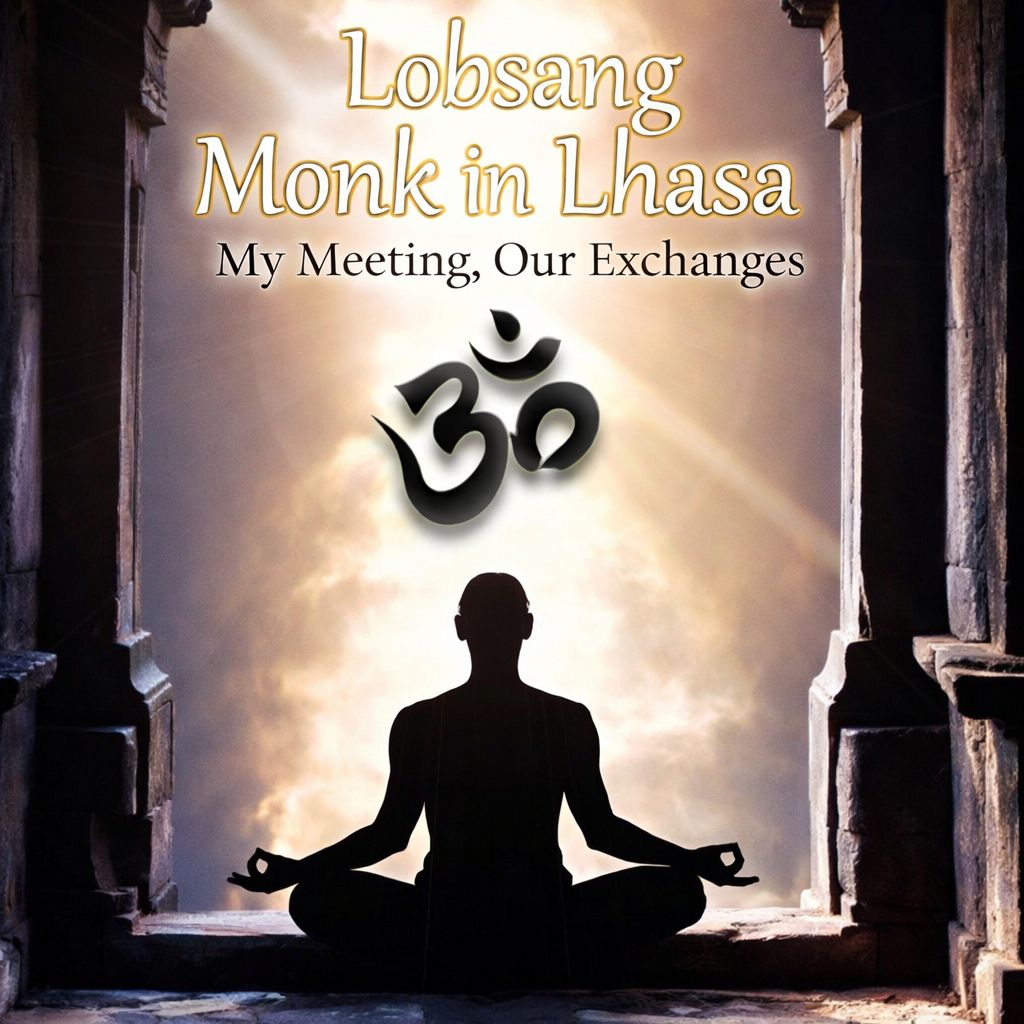
This journey began as a personal and professional enquiry into traditional meditation and inner development. Travelling gave me the chance not only to deepen my own understanding, but also to place my work in dialogue with people whose practice is lived, disciplined and rooted in long-standing traditions. Over the years, that search has taken me towards remarkable encounters; this travel journal starts in Lhasa, where questions of attention, consciousness and spiritual practice take on a particularly vivid form.
In short: Tibetan monk in Lhasa meditation
A meeting with a Tibetan monk in Lhasa becomes more than a travel memory when it opens a grounded reflection on meditation, discipline and attention.
Use this article as a practical map: keep what helps attention become steadier, question anything that sounds absolute, and connect the idea back to repeatable daily practice.
What drew me there was not simple curiosity or a taste for the exotic, but a serious wish to compare methods that are often spoken about separately. On one side stood ancient contemplative disciplines shaped by transmission, repetition and ethical training; on the other, a contemporary psychoacoustic approach designed to influence the conditions in which concentration and inner calm may emerge. Lhasa seemed the ideal place for such a meeting, because meditation there is not an abstract concept but part of a living culture of practice.
By way of introduction, it helps to understand the perspective I bring to that meeting. I have spent two decades exploring altered states of consciousness at the crossroads of mindfulness, deep meditation and lucid dreaming, while developing sound-based methods designed to support these states. As a musician, and through exchanges with brain specialists, I became increasingly interested in the role of brainwave regulation and psychoacoustic stimulation in shaping mental state, concentration and relaxation. Without reducing meditation to technique alone, this background is what led me to Lhasa: to see how a contemporary method centred on sound might resonate with the rigour of traditional Tibetan Buddhist practice.
Over time, I came to see that many people seek access to meditative depth while struggling with agitation, fatigue or scattered attention. That observation does not mean meditation can be engineered in a simplistic way, nor that inner development can be reduced to a set of acoustic triggers. It does suggest, however, that the nervous system and the quality of attention are not irrelevant to contemplative work. If sound can help the mind settle more readily, then it may serve as a practical support, especially when used with discernment and without grand claims.
Mental Waves technology within traditional Tibetan Buddhism
Arriving in Lhasa and meeting Lobsang
I spent my first few days in Lhasa simply absorbing the calm atmosphere of the great monasteries. After such a long journey, I truly felt as though I had reached the roof of the world. In this land, long associated with meditation across the globe, I was rediscovering a place that seemed both timeless and deeply alive. As on my first visit, I sensed that the experiences awaiting me here would be unlike any others.
There is a particular quality to attention in such places. The architecture, the rhythm of daily ritual, the silence between conversations and the visible discipline of monastic life all seem to shape perception. One becomes more aware of posture, breath and the subtle fluctuations of one’s own mental state. Even before any formal exchange, the environment itself encourages a slower, more deliberate mode of observation.
It was in this setting that I met Lobsang, a Bachogwa — a student monk of exoteric or esoteric Buddhism, and one of those preparing for the highest levels of training. We spoke at length about his path, his inner discipline and his understanding of Eastern meditation. What struck me immediately was how far his practice was from the idea of meditation as simple physical relaxation. For Lobsang, meditation is a demanding path of elevation: a way to strengthen the mind, refine attention and, perhaps one day, move closer to Nirvana. It is a daily practice that calls for rigour, consistency and a remarkable quality of concentration.
He spoke without theatricality and without any need to impress. That sobriety gave his words particular force. In him, meditation appeared not as a performance or a spiritual identity, but as a long apprenticeship in mental regulation, perception and self-observation. The seriousness of his commitment made me all the more attentive to what might happen if he were to test a method so different in form from his own training.
A rigorous practice of attention, posture and contemplation
As he described his spiritual life to me, not in abstract terms but as something lived each day, I began to understand the precision of traditional Buddhist meditation more clearly. In his view, it rests on a disciplined combination of postural and mental techniques. He explained that some forms of practice are based on calm, with attention stabilised on a visual point, while others are rooted in vision, with the aim of perceiving the true nature of reality more directly. The older masters, as he called them, also draw on other methods of attention and concentration, including breath work, introspection and contemplation.
What interested me most in his explanation was the way these methods were not treated as isolated exercises. Posture, breathing, gaze, intention and the quality of thought all formed part of a coherent discipline. From a contemporary perspective, one might say that such practices train attentional stability, reduce cognitive dispersion and cultivate a more refined awareness of internal experience. Yet for Lobsang, their purpose was not merely functional. They belonged to a wider path in which mental clarity and spiritual understanding were inseparable.
Lobsang was equally clear on one essential point: according to him, anyone may reach a contemplative state, provided two conditions are brought together — will and relaxation. He believed that the mental control required for meditation is not reserved for a select few, but develops gradually through time and training. He also insisted that the ego is one of the main obstacles to deeper practice. To go further, he said, it must be set aside, because sustained attention, inner quiet and genuine depth of perception depend as much on letting go as on effort.
That balance between effort and release seemed especially important. Many beginners imagine meditation as either total passivity or sheer force of concentration. Lobsang described something subtler: a disciplined softening of mental noise. In modern language, one could say that meditation often requires both top-down control of attention and a reduction in unnecessary internal reactivity. His formulation was simpler, but no less precise.
- postural discipline and mental discipline work together
- attention may be guided by calm, visual focus or contemplative insight
- breath, introspection and contemplation remain central supports
From Contemplative Discipline to Sound-Based Practice
What Lobsang believed meditation really requires
Lobsang then told me something very simple, but very important in his eyes: anyone can move towards a contemplative state, provided two conditions are present — will and relaxation. For him, meditation is not reserved for monks or specialists. It develops gradually, through time, repetition and training, until attention becomes steadier and the mind less scattered. He was equally clear about one obstacle: the ego. In his view, it is a genuine barrier to deeper practice, because it keeps us attached to effort, self-image and mental agitation when meditation asks for the opposite.

I found this especially striking because it echoed, in a different vocabulary, observations I had made in my own work. People often fail to enter meditation not because they lack intelligence or sincerity, but because their attention remains over-engaged, fragmented or tense. The body may be still while the mind continues to anticipate, evaluate and resist. In that sense, relaxation is not a secondary comfort; it may be one of the conditions that allows attention to become more stable and less defensive.
That exchange naturally led him to ask about my own way of working. After I explained my background and the discoveries that had shaped my approach, he became genuinely interested in this method based solely on sound stimulation. I described how different brainwave patterns — Alpha, Beta, Theta, Gamma and Delta — are associated with different states of attention, perception and consciousness, and how carefully designed psychoacoustic work may help create conditions that are more favourable for deeper meditation.
I was careful not to present these categories as magical keys. Brainwave language can be useful when it remains modest and descriptive. Certain patterns are associated with wakefulness, relaxed attention, drowsiness or deep sleep, and meditative states may involve complex combinations rather than a single signature. My point to Lobsang was simply that sound may help guide the listener towards a more settled internal rhythm, making concentration easier to establish for some individuals.
He listened with the curiosity of someone trained to observe rather than to react. What interested him was not novelty for its own sake, but whether such a method could genuinely support practice without weakening discipline. That distinction mattered to me as well. I have never seen psychoacoustic work as a substitute for intention, ethical grounding or regular training. At best, it may help prepare the terrain in which these qualities can operate more effectively.
- Will, to engage fully in the practice
- Relaxation, to allow attention to settle
- Training over time, because meditation deepens progressively
- Less ego involvement, to go further into the experience
Lobsang’s first experience with “Au-delà de l’Etre”
Seeing how curious he was — intellectually as much as almost boyishly — I offered to introduce him to my method, and he accepted immediately. For this first session, I chose my recording Beyond Being. Once he had put on the headphones, I asked him simply to lie down and relax. After around fifteen minutes of listening, I asked for his first impressions. He told me he had felt carried along by the sounds, as if by “a light wave”. The image was spontaneous, and it captured his experience with striking accuracy.
His description interested me because it suggested a shift in subjective perception without confusion or loss of awareness. People often struggle to describe early changes in meditative state, and they reach for metaphors of floating, widening or softening. Such language should not be overinterpreted, but it can indicate that the usual grip of bodily tension and verbal thought has begun to loosen. In practical terms, that may be enough to make the threshold of meditation feel more accessible.
What surprised him most was not only the sensation itself, but the ease with which it appeared. That was the first major point he identified in this psychoacoustic approach. For someone used to rigorous contemplative discipline, this immediate accessibility clearly stood out. It did not replace the depth of traditional practice in his eyes, but it seemed to offer another route into a more settled mental state — one that may support concentration and inner availability without demanding the same initial effort.
That first response mattered to me because experienced practitioners are often less impressed by novelty than beginners. They know the difference between a pleasant sensation and a meaningful support for practice. Lobsang did not confuse the two. His interest lay in the possibility that sound could reduce the friction of entry into meditation while leaving the deeper work of awareness entirely intact.
Related offer
Meditation - Relaxation set
All the Mental Waves® know-how in a single pack for quick and easy access to meditation and...
View productWhat Lobsang’s Second Session Revealed
A deeper test in real meditation conditions
Seeing Lobsang remain so curious and open after our first exchange, I asked whether he would be willing to use my recording during one of his regular meditation sessions. I felt that the most meaningful test would not be a brief demonstration, but a genuine practice period carried out in the conditions he knew best. He agreed straight away, and we arranged to meet again the following day.
This second step was essential. A first listening session can reveal immediate impressions, but it does not necessarily show how a method behaves within a serious contemplative routine. I wanted to know whether the recording would still seem useful once placed inside a disciplined practice shaped by habit, intention and prior training. In other words, the question was not whether the sound was pleasant, but whether it could integrate with a real meditative process.
When we saw each other again, I was eager to hear what had happened. With his usual calm, Lobsang described the experience as precisely as he could. In his view, my method, combined with his own disciplined practice, had produced a real catalysing effect. Although he was already accustomed to entering deep meditation relatively quickly, the recording appeared to make that transition easier, supporting both his sense of elevation and the depth of his spiritual immersion.
I found his choice of emphasis revealing. He did not say that the recording created meditation for him, nor that it replaced the years of training behind his practice. Rather, it seemed to reduce the effort required to cross from ordinary mental activity into a more unified state of attention. That distinction is crucial. A catalyst does not invent the process; it facilitates it.
Speed, clarity and less mental strain
Among the benefits he highlighted, three stood out immediately: speed, ease and a tangible sense of effectiveness within just a few minutes. Yet two effects seemed especially important to both of us. The first was a feeling of bodily detachment while remaining fully conscious, not as a loss of awareness, but as a clearer shift in perception during meditation. The second was the quality of the return: he felt able to come out of the session with energy intact and with his lucidity immediately available.
Both points deserve careful interpretation. The sensation of bodily detachment is not uncommon in deep relaxation or meditation, and it does not necessarily imply anything extraordinary. Often, it reflects a temporary reduction in the usual salience of bodily signals, combined with a more stable attentional field. Likewise, emerging from meditation with clarity rather than heaviness may indicate that the session supported regulation without tipping into drowsiness. For practitioners, this distinction is important: a method that calms the mind while preserving alertness is often more useful than one that merely sedates.
That point mattered because traditional meditation, especially at the level practised by someone like Lobsang, demands intense concentration and remarkable mental discipline. Even after years of training, that kind of sustained attentional effort can be taxing. In that context, a sound-based approach that may help the mind settle more efficiently can be valuable, not as a replacement for practice, but as a support for it. For me, this was a deeply encouraging result: seeing Beyond Being prove useful not only for beginners but also for an experienced meditator confirmed that years of development and testing had led to something genuinely promising.
There was also something quietly important in the fact that his feedback remained measured. He did not dramatise the experience, and neither did I. That restraint is often a sign that an observation deserves to be taken seriously. In fields related to consciousness and meditation, exaggeration is common; careful description is rarer. What encouraged me here was precisely the sobriety of the report.
- Faster entry into meditation
- A stronger sense of conscious detachment
- Greater clarity on emerging from the session
What This First Encounter Changed for Me
A validation that went beyond personal conviction
I already had confidence in my programmes, built over twenty years of development, testing and refinement. Even so, seeing that Beyond Being could support meditation not only for beginners but also for a practitioner as disciplined as Lobsang was deeply meaningful to me. It was not simply a satisfying result. It felt like a concrete confirmation that a sound-based approach, when used seriously and with the right intention, may help different profiles enter a more stable and accessible meditative state.
That validation mattered all the more because it came from lived experience rather than from theory alone. In work related to consciousness, one can easily become attached to one’s own models. Encounters like this force those models back into contact with reality. They do not provide definitive proof, but they do offer something valuable: informed feedback from a practitioner whose standards are high and whose inner observations are trained.
What struck me most was not the idea of replacing traditional practice, but of working alongside it. In Lobsang’s case, the recording seemed to act as a catalyst: it did not create his concentration for him, but it appeared to ease the transition into a deeper state of attention and inner distance. For someone who had already trained his mind through rigorous Buddhist discipline, that observation carried particular weight. For me, it was a genuine reward after years spent exploring the links between perception, sound stimulation and altered states of consciousness.
It also sharpened my sense of responsibility. If a method can influence the way people enter meditative states, then it should be presented with accuracy and restraint. The aim is not to promise enlightenment through headphones, but to offer a tool that may support regulation, concentration and access to contemplative practice under appropriate conditions. The more meaningful the results, the more careful one must be in describing them.
- useful for novices as well as experienced meditators
- supportive rather than substitutive
- grounded in lived observation rather than abstract theory

New directions for the rest of the journey
This experience, together with my many conversations with Lobsang, opened up new perspectives for me in the field of neuropsychological stimulation. His feedback gave me more than encouragement: it offered a fresh way of thinking about how psychoacoustic methods may interact with long-established contemplative disciplines. When a trained monk describes greater ease, quicker immersion and a clearer return to ordinary awareness, it invites further reflection on attention, mental regulation and the practical conditions that support deep meditation.
It also encouraged me to think more carefully about the meeting point between subjective report and plausible mechanism. A contemplative practitioner speaks from experience, often with great nuance, while a researcher or developer looks for patterns that may be repeatable across individuals. The challenge is to respect both levels without confusing them. Lobsang’s account did not become a universal law in my mind, but it did become a valuable case study in how sound may interact with trained attention.
Related offer
OM Meditation
This music is based on the particular frequency of the sacred chant OM. Listening to this program, the term...
View productIn that sense, my journey could hardly have begun in a better way. Lhasa was not just a symbolic first stop on the roof of the world; it became the setting for a meeting that sharpened both my curiosity and my sense of purpose. Many more encounters awaited me in other parts of the world, and I left this first stage with a strong feeling of anticipation. If the rest of the journey proved as rich as these first exchanges with Lobsang, then it promised to deepen both my research and my understanding of the many paths human beings use to explore consciousness.
I also left with a renewed respect for traditions that have spent centuries refining the training of attention without the language of neuroscience. Contemporary frameworks can help us describe certain processes more clearly, but they do not automatically surpass older forms of knowledge. Sometimes they simply illuminate, from another angle, what contemplative cultures have long observed through disciplined practice.
The Mental Waves Practice and Presence Framework
The Mental Waves frame is to respect tradition without imitating it superficially. A meaningful practice is not built from exotic imagery, but from attention, discipline and repeated return.
Sound-based methods can support calm and focus when they remain humble: one cue, one posture, one breath, one moment of presence at a time.
If you want a simple way to begin with presence rather than complexity, try the free Mental Reset session before your next meditation practice.
Editorial note from Mental Waves
This article is a personal and cultural reflection. It does not claim to represent all Tibetan Buddhist practice or replace direct teaching from qualified traditions.
Conclusion
What stays with me from Lhasa is not the idea that one approach replaces another, but that two very different paths to meditation can sometimes meet with real intelligence. Lobsang’s practice was rooted in discipline, attention and the gradual training of the mind; my own work explored how sound-based stimulation may help regulate mental state and ease access to deeper concentration. The value of the encounter lay precisely in that contrast: tradition was not diminished, and technology was not presented as a shortcut to everything, but as a possible support within an already serious contemplative framework.
That meeting also reminded me that meditation is never only a matter of technique. It involves intention, context, training, expectation and the subtle relationship a person has with his or her own mind. Sound may help, posture may help, breath may help, but none of these elements has much value if they are detached from sincerity and sustained practice. What impressed me in Lhasa was the possibility of complementarity without confusion.
That is what gave this first stage of the journey its weight. Beyond the personal satisfaction of seeing my method resonate with an experienced practitioner, the exchange opened a more nuanced question about meditation itself: how effort, relaxation, perception and brain state may interact without reducing inner practice to mechanics alone. In that sense, Lhasa offered more than a memorable meeting; it set the tone for a wider exploration of what can happen when lived spiritual discipline and careful observation are allowed to speak to one another.
Frequently Asked Questions About the Meeting with a Tibetan Monk in Lhasa
Who is Lobsang, and why is his role important in this encounter?
Lobsang is a Bachogwa, a student monk in exoteric or esoteric Buddhism who is preparing for the highest levels of training. His role matters because he represents a disciplined, lived form of Tibetan Buddhist practice, which gives real weight to his reflections on meditation and his response to the sound-based method.
How does Lobsang understand meditation in Tibetan Buddhist practice?
Lobsang sees meditation as a demanding path of inner elevation rather than simple bodily relaxation. For him, it is a way to strengthen the mind, refine attention and move, perhaps one day, towards Nirvana. That requires daily rigour, consistency and a high level of concentration.
What meditation methods does Lobsang describe during the conversation in Lhasa?
He describes a rigorous combination of postural and mental techniques. These include meditation through calm, where attention is fixed on a visual point, and meditation through vision, aimed at revealing the true nature of reality. He also mentions breath work, introspection and contemplation as important supports.
What does Lobsang believe is necessary to reach a contemplative state?
He believes two conditions are essential: will and relaxation. In his view, meditation is not reserved for a select few, because the necessary mental control develops gradually through time and training. He also stresses that the ego can block deeper practice and needs to be set aside.
What sound-based method is introduced to Lobsang in Lhasa?
He is introduced to a psychoacoustic method based entirely on sound stimulation and brainwave patterns such as Alpha, Beta, Theta, Gamma and Delta. The aim is to help create mental conditions that support concentration and deeper meditation through carefully designed auditory input.
What was Lobsang’s first reaction to listening to “Au-delà de l’Etre”?
He says he felt carried by the sounds, describing the sensation as being taken along by ‘a light wave’. What stood out most to him was the ease of the experience. For someone used to strict contemplative discipline, that immediate accessibility was one of the most striking aspects.
What happened when Lobsang used the recording during one of his own meditation sessions?
He reports that the method had a catalysing effect when combined with his usual practice. Although he was already able to enter deep meditation quickly, the recording seemed to make that transition easier and supported both his sense of elevation and the depth of his spiritual immersion.
Which effects of the second session seemed most important to both men?
Two effects stood out clearly. The first was a feeling of bodily detachment while remaining fully conscious during meditation. The second was the quality of the return from the session, with energy preserved and lucidity immediately available rather than a sense of mental depletion.
Does this encounter present sound technology as a replacement for traditional Tibetan meditation?
No, it is presented as a support rather than a substitute. The value of the meeting lies in the way a contemporary sound-based method appears to work alongside a serious contemplative discipline, helping ease entry into meditation without replacing the training, rigour and depth of traditional practice.