en
enVotre panier est vide.



Psychological blocks have a way of appearing at the worst possible moment: before an important conversation, in the middle of a high-pressure task, or when something deeply matters in love, family life, health or work. We do not all respond to these moments in the same way, yet the experience is often recognisable: stress rises, doubt creeps in, frustration builds, and suddenly even something we usually handle well can feel strangely out of reach.
In short: psychological barriers
Psychological barriers often become easier to work with when they are treated as protective patterns to understand, calm and retrain.
Use this article as a practical map: keep what helps attention become steadier, question anything that sounds absolute, and connect the idea back to repeatable daily practice.
What makes these moments so unsettling is not only the discomfort itself, but the sense of unfamiliarity they create. People often say, “I don’t know what came over me,” because a block can feel oddly out of character. You may know perfectly well what to do, and still find that your thoughts scatter, your body tightens, or your confidence seems to vanish just when you need it most. That gap between ability and access is often where the distress lies.
These reactions rarely disappear overnight. For some people, the shift is quicker than for others, but learning to move through a block usually asks for patience, self-awareness and a real piece of inner work. There is no single answer that fits everyone, although certain patterns do come up again and again. Some people are held back by harsh self-criticism, others by pressure, rumination, poor preparation or an excess of caution. What matters is this: once you understand the shape of the block in front of you, it becomes far easier to find a response that is practical, grounded and genuinely helpful.
It also helps to remember that a block is not a personal failing. More often, it is a signal. Something in you is over-alert, overloaded or pulled in the wrong direction. Seen that way, the aim is not to wage war against yourself, but to understand what is happening well enough to respond with a little more precision and a little less panic.
Common Mental Blocks and How They Show Up
When your own inner voice becomes the obstacle
Some mental blocks begin inside your own self-talk. You may be highly capable, yet still speak to yourself so harshly that you leave no room for mistakes, pauses or even simple acknowledgement when something goes well. In practice, that kind of inner criticism does not make you stronger; it makes you less constructive. If every error immediately turns into self-blame, it becomes much harder to learn from what happened and move on. A useful first step is to notice how you actually address yourself in tense moments. The more negative and unforgiving that inner dialogue becomes, the more likely you are to freeze rather than adjust.

Many people do not even realise how severe that inner voice has become, because they have lived with it for so long that it sounds normal. Yet if you spoke to a friend in the same tone, you would probably hear at once how discouraging it is. A mind that is constantly braced for self-attack does not stay flexible for very long. It becomes defensive, rigid and tired. That is often when hesitation appears.
There is a difference between honest self-evaluation and relentless self-punishment. The first helps you grow; the second drains your energy before you have even begun. If you tend to demand perfection from yourself, it may be worth asking whether your standards are truly helping you perform better, or whether they are quietly making you afraid to move at all.
That same pattern often feeds another common block: excessive pressure. Many people feel held back not because the situation is objectively impossible, but because of the meaning they attach to it: what others might think, what could go wrong, what this moment is supposed to prove. Pressure often builds when your attention drifts towards things you cannot control. The result is anxiety, and anxiety quickly narrows your ability to perform at your usual level. Bringing yourself back to the present helps. So does shifting your focus from the result you hope for to the process you can actually manage: how you prepare, what you do next, and the quality of your attention right now.
In moments of intense pressure, even something as simple as calm, deep breathing can make a real difference by easing anxiety and releasing physical tension.
Pressure has a way of disguising itself as motivation. At first, it can feel like seriousness, ambition or commitment. But there is a point at which useful activation turns into internal overload. You stop responding to the task itself and start responding to the fear wrapped around it. Once that happens, even familiar actions can begin to feel heavy and uncertain.
One of the most stabilising shifts is to stop treating the moment as a verdict on your worth. An important meeting is still only a meeting. A difficult conversation is still only a conversation. When the mind turns a single event into proof of who you are, the emotional stakes become inflated, and the block often tightens. Bringing the moment back down to its real size can be quietly transformative.
- Notice the tone you use with yourself.
- Focus on what is within your control, not on imagined judgement.
- Return to the present moment and steady your breathing.
These are simple practices, but simple does not mean superficial. Repeated consistently, they begin to change the climate in which you act. And often that is what matters most: not forcing yourself into confidence, but creating the conditions in which confidence can return.
How frustration, poor preparation and over-caution keep you stuck
Other blocks appear when your mind gets trapped in the past or tangled up in what might happen next. If you keep replaying failures, frustration can take hold very quickly. It often comes from dwelling on events that have already happened and cannot be changed. Once that frustration settles in, it has a kind of compartmentalising effect: your thinking becomes narrower, you lose sight of the strategy you had planned, and you may even repeat the same poor decisions. To move forward, there has to be a clear acceptance that the past cannot be rewritten. Better choices usually become possible only when your thoughts are anchored in the present, here and now, rather than in old disappointments.
Frustration is tiring because it gives the illusion of movement while keeping you stuck in place. You revisit the same scene, the same mistake, the same sentence you wish you had said differently, and none of it changes the reality in front of you. Meanwhile, your attention is no longer available for what the present moment is asking. That is why letting go of rumination is not denial; it is often the beginning of clearer judgement.
For some people, the difficulty is not dramatic failure but a slow accumulation of unresolved moments. A few disappointments, a few awkward experiences, a few times of not feeling at your best, and eventually the mind starts expecting trouble before anything has even happened. This is how a block can become anticipatory. You are no longer only reacting to the present; you are reacting to a private archive of remembered discomfort.
A different kind of block comes from lack of preparation, especially in planned situations, often at work. When an event is known in advance, preparation is not a luxury; it is what allows you to feel steady on the day. Building a routine can help enormously: set out the steps, write them down in a notebook, and follow them carefully until the sequence becomes familiar. Once it is well established, that routine becomes a reliable guide. And then there is the opposite problem: being talented, efficient and generally confident, yet becoming too cautious in front of certain situations or certain people.
Afterwards, this often leaves a feeling of anger, because that hyper-caution stopped things from unfolding as you wanted. In those moments, it helps to notice where your thoughts are going. If you become overly careful, it is often because your mind has rushed ahead into imagined future consequences. Try to step back, de-dramatise the event, and stop personalising every possibility. Put your energy back into the objective itself and the purpose behind it.
Preparation matters because it reduces unnecessary decision-making when you are already under strain. If you have to improvise every detail while also managing nerves, the mind can become crowded very quickly. A routine does not remove uncertainty altogether, but it gives you something solid to return to. That alone can lower the emotional temperature.
Over-caution, by contrast, often looks sensible from the outside. It can masquerade as thoughtfulness, diplomacy or prudence. Yet inwardly it may be driven by fear rather than discernment. You hold back not because restraint is truly wise in that moment, but because some part of you is trying to avoid discomfort, disapproval or risk at any cost. Afterwards, the anger comes because you recognise that you were not really choosing freely.
- Stop feeding frustration by replaying what cannot be changed.
- Create a clear routine for planned events.
- If you become over-cautious, refocus on the goal rather than the fear of what might happen.
These patterns can overlap more than people realise. Someone who is poorly prepared may then become over-cautious. Someone who is frustrated by the past may become harsher with themselves in the present. Once you begin to see the links, the whole experience becomes less mysterious and therefore easier to work with.

Related offer
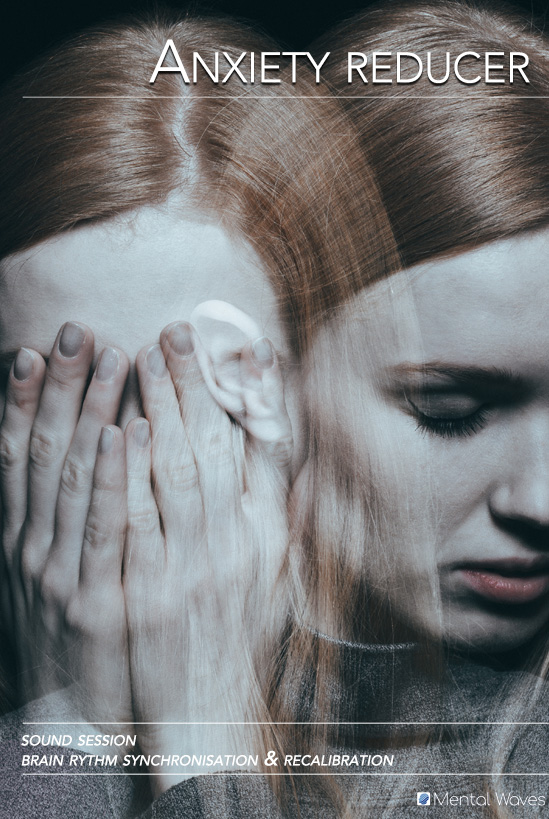
Anxiety reducer
This session uses Alpha and Beta wave stimulation to relax, alleviate...
View productPractical Ways to Regain Focus and Move Forward
Bring your attention back to what you can actually control
When a psychological block takes hold, the first useful shift is often a very simple one: stop feeding it with thoughts that pull you away from the present moment. If you are harsh with yourself, constantly replaying mistakes or focusing only on the result you want, you make it much harder to respond constructively. The same applies when pressure starts to build. In many cases, that pressure does not come only from the event itself, but from the meaning you attach to it, the environment around you, or what you imagine other people may think. The more your mind drifts towards what you cannot control, the more stress, anxiety and self-doubt tend to grow.

There is something quietly powerful about narrowing your field of attention. Not in a rigid way, but in a disciplined one. Instead of trying to manage every possible outcome, you ask a simpler question: what is mine to do now? Sometimes the answer is very modest. Send the message. Take the next breath. Read the first page. Say the first sentence. Psychological blocks often loosen not through grand insight, but through a return to the next manageable action.
A steadier approach is to return to the basics. Notice how you speak to yourself. If your inner voice is relentlessly negative, it will not help you learn from errors or move past them. Try to be more measured, more confident in your abilities, and more focused on the process than on the hoped-for outcome. If your thoughts are racing ahead into the future, bring them back to the present, because anxiety thrives on anticipation. If they are stuck in the past, recognise that you cannot change what has already happened. To make better decisions and turn a difficult moment into something more manageable, your attention needs to be rooted in the here and now.
This does not mean pretending that outcomes do not matter. Of course they matter. But when you are blocked, obsession with the outcome usually makes you less effective, not more. Process is where your influence lives. It is where preparation, attention, pacing and choice all become available again. In that sense, focusing on process is not lowering your standards; it is returning to the only place from which good standards can actually be met.
It can also help to name the block plainly. “I am under pressure.” “I am ruminating.” “I am trying to control too much.” This kind of language creates a little distance between you and the state you are in. You are no longer fused with it. You are observing it. And that small shift in position often opens the door to better decisions.
- Notice your self-talk and challenge needlessly harsh inner commentary.
- Focus on the process, not only the result you want.
- Separate what you control from what you do not, then set the rest aside.
- Return to the present moment whenever your mind runs to the past or future.
None of this is about becoming perfectly calm all the time. It is about becoming less easily pulled away from yourself. That is a more realistic aim, and in practice it is often far more useful.
Use preparation and physical calm to stop the spiral
Some blocks appear because the mind is overloaded; others because the body is already in a state of tension. That is why practical structure matters so much. In planned situations, especially at work, poor preparation can create avoidable stress long before the event itself begins. One of the most effective ways to feel calmer on the day is to build a routine in advance. Break the preparation down into clear stages, write them down in a notebook, and follow them carefully. Once that routine is established and tested, it becomes a reliable reference point rather than something you have to reinvent each time.
A good routine is not meant to imprison you. It is there to reduce friction. When nerves rise, even small decisions can feel disproportionately difficult. What shall I start with? Have I forgotten something? Am I ready enough? A written sequence answers some of those questions before anxiety has the chance to amplify them. It gives your mind fewer loose ends to chase.
It also helps to remember that regaining control is not only mental. If you feel overwhelmed by pressure, pay attention to your breathing. A calm, deep breath can reduce anxiety and release muscular tension, which makes it easier to think clearly again. The same principle applies when you become excessively cautious in front of certain situations or certain people. That kind of over-caution often comes from projecting yourself too far into the future and worrying about what might happen. Afterwards, it can leave you with a sense of anger because you know you held yourself back.
To avoid getting lost in doubt, try to de-dramatise the event, step back from it, and stop treating it as something that defines you personally. Put your energy back into the objective itself and the purpose behind it.
The body often tells the truth before the mind does. Tight shoulders, shallow breathing, a clenched jaw, a racing stomach: these are not minor details. They are part of the block. If you ignore them, you may keep trying to solve a physical state with thought alone. Sometimes the most intelligent intervention is also the most basic: slow down, breathe properly, unclench, sit back, put both feet on the floor. These gestures can seem almost too simple, yet they often interrupt the spiral at exactly the right point.
There is also value in rehearsal, especially if you tend to freeze in predictable situations. Quietly walking yourself through the opening minutes of an event, a conversation or a presentation can make the real moment feel less abrupt. You are not trying to script life perfectly. You are simply making the unfamiliar a little more familiar, which can be enough to reduce the shock that triggers the block.
- Create a repeatable preparation routine for known or planned events.
- Write the steps down and follow them consistently.
- Use slow, deep breathing to lower anxiety and physical tension.
- When doubt takes over, step back and refocus on the goal rather than the fear.
Over time, these practical habits do more than help in isolated moments. They build trust. You begin to learn, through experience rather than theory, that even when you feel yourself tightening, there are ways back. That knowledge matters. It softens the fear of the block itself, which is often half the battle.
The Mental Waves Psychological Barriers Framework
The Mental Waves frame is to approach a block without turning it into an identity. A barrier may be fear, memory, fatigue, conflict or overload, and each one becomes clearer when the body first feels safe enough to observe it.
Progress usually comes from small repeatable movement: name the block, reduce the pressure around it, choose one concrete action, then let experience update the old expectation.
When a block feels noisy or urgent, use the free Mental Reset session as a short pause before choosing the next practical step.
Editorial note from Mental Waves
This article offers personal-development guidance, not a clinical diagnosis. Deep trauma, panic, depression or disabling avoidance should be supported by a qualified professional.
Conclusion
Psychological blocks rarely come from a lack of ability alone. More often, they grow in the gap between what is happening and what the mind starts adding to it: self-criticism, pressure, frustration, anticipation, doubt. That is why the way forward is not to force yourself harder, but to return to something steadier and more workable: what you can control now. Sometimes that means softening your inner voice; sometimes it means breathing properly, preparing more carefully, or refusing to let the past and the imagined future run the whole scene.
There is no single fix, and that nuance matters. One person may need structure; another may need to loosen the grip of perfectionism; someone else may simply need to stop treating every important moment as a verdict on their worth. But across these different forms of blockage, the same principle keeps reappearing: when attention comes back to the present, to the body, and to the next useful action, movement becomes possible again. Not all at once, perhaps, but enough to begin.
It is worth being patient with that beginning. People often become discouraged because the block does not vanish immediately, as though anything short of total ease means failure. In reality, progress is often quieter than that. You notice that you recover more quickly. You catch the spiral earlier. You prepare with more care. You speak to yourself with a little less violence. These are not small things. They are often the real signs that change is taking root.
And often, that is how a block starts to lift: not with a breakthrough, but with a quieter kind of return to yourself.
Frequently Asked Questions About Psychological Blocks
What usually causes a psychological block in important situations?
Psychological blocks often grow out of stress, anxiety, doubt, frustration or anger during moments that feel important. They are commonly fuelled by harsh self-criticism, pressure, rumination about past failures, poor preparation or excessive caution. The block is not always about lack of ability; it is often about how the situation is being interpreted.
How can I stop being so critical of myself when I freeze up?
Start by noticing the way you speak to yourself in tense moments. An overly negative inner voice makes it harder to learn from mistakes and move on. A more useful approach is to be steadier and more constructive, focus on what you can control, and pay attention to the process rather than obsessing over the final result.
Why does pressure make me perform below my usual level?
Pressure often builds when your attention shifts towards things you cannot control, such as other people's opinions, the environment or imagined consequences. That creates anxiety, and anxiety can narrow your focus and interfere with tasks you would normally manage well. Bringing your thoughts back to the present can help reduce that effect.
What can I do in the moment when anxiety and pressure suddenly rise?
Calm, deep breathing is one of the most practical ways to lower immediate pressure. It helps reduce anxiety and release muscular tension, which makes it easier to think clearly again. It also helps to bring your attention back to the present moment instead of letting your mind run ahead to everything that might happen next.
How do I stop dwelling on past failures and the frustration they create?
Accepting that the past cannot be changed is an essential first step. Frustration tends to take hold when you keep replaying failures, and that can cloud your judgement and pull you away from your original strategy. Better decisions become more likely when your thoughts are anchored in the present, here and now.
Why does poor preparation make psychological blocks worse?
Poor preparation creates avoidable uncertainty, especially in planned situations such as work events. When you do not know exactly how you will approach the day, stress can build before anything has even happened. A clear routine helps by giving you a reliable structure to follow, which can make you feel steadier and more prepared.
What kind of routine can help before a planned event?
A useful routine is one that breaks preparation into clear, repeatable steps. Write those steps down in a notebook and follow them carefully until they become familiar. Once the routine is well established, it acts as a dependable guide and can help you feel calmer and more organised when the event arrives.
Why do I become too cautious around certain people or situations?
Excessive caution often appears when your thoughts move too far into the future and become fixed on what might go wrong. That can lead to hesitation, doubt and, afterwards, a sense of anger because you know you held yourself back. Stepping back, de-dramatising the event and refocusing on the objective can help loosen that pattern.
What is the first step when a psychological barrier appears?
Begin by lowering pressure and naming the barrier in simple words. Once the nervous system is calmer, choose one small action that tests the old fear without forcing a dramatic breakthrough.