en
enVotre panier est vide.


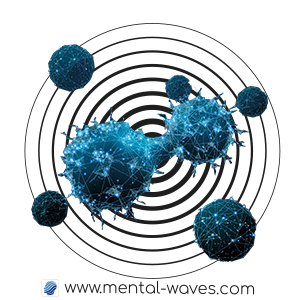
The idea that cancer cells might be disrupted through resonance once sat firmly at the margins of scientific thought. Around 80 years ago, researcher Royal Raymond Rife put forward a similar hypothesis and was largely dismissed. Yet the question has not disappeared. More recently, American researchers have returned to this line of enquiry, exploring whether carefully calibrated frequencies could act on malignant cells in a highly targeted way. What makes the subject compelling is not simply its originality, but the possibility of intervening without the toxic side effects associated with many conventional treatments.
This renewed interest does not rest on rhetoric alone, but on a familiar physical principle: every structure has its own natural frequency, and under the right conditions resonance can destabilise matter with striking precision. That is the scientific thread Anthony Holland chose to follow in a cancer research setting, asking whether a mechanism known to shatter glass or compromise larger structures might also affect living cells on a far smaller scale. The language has changed since Rife’s era, and caution remains essential, but the underlying ambition is much the same: to see whether resonance could one day offer a more selective way of confronting cancer.
In short: can resonance frequency be used in cancer research?
Resonance frequency can be studied as a research idea in cancer biology, but it is not an established cancer therapy. The concept asks whether frequency-specific stimulation could affect malignant cells in a selective way. That is an interesting biophysical question, yet clinical use would require reproducible evidence, safety data, clear mechanism and properly monitored human studies.
- Cell-culture findings are not the same as patient evidence.
- Frequency-based devices must be evaluated for mechanism, dose, safety and selectivity.
- Claims around cancer require stronger caution than ordinary wellness content.
- Readers should use official clinical-trial and oncology resources when making health decisions.
The Mental Waves Evidence-Safety Framework
For sensitive research topics, Mental Waves should separate curiosity from clinical advice. This framework keeps the article useful without overstating what is known.
- Identify the setting: cell culture, device prototype, animal model, clinical trial or approved care.
- Check the mechanism: ask whether the effect is acoustic, electromagnetic, thermal, mechanical or unknown.
- Look for replication: one striking report is not enough for medical relevance.
- Protect the reader: never imply that exploratory research replaces oncology care.
- Use official references: clinical-trial and cancer-care decisions belong with qualified professionals.
This is especially important because the word frequency can mean very different things across contexts. A laboratory device, an electromagnetic signal, a sound session and a symbolic listening practice are not interchangeable. Clear language protects the reader and makes the article more credible. Above all, it also helps separate public curiosity from decisions that require qualified care teams and official evidence.
It is important, however, to distinguish between a provocative laboratory hypothesis and a validated clinical care. In oncology, many ideas appear promising at an early stage because they show an effect in isolated cells or controlled experimental systems, yet only a small proportion ultimately prove safe, reproducible and clinically useful in patients. That distinction matters here. The interest of resonance-based approaches lies in their theoretical precision, but the standard of evidence required for adoption in medicine remains exceptionally high.
For that reason, the subject deserves neither dismissal nor credulous enthusiasm. It sits in a more demanding middle ground: an area of exploratory research where physics, biology and medical engineering intersect. If resonance can influence cellular structures under certain conditions, the next questions are necessarily technical and biological. Which structures are actually being affected? Are the effects mechanical, electrical or thermal? Can malignant cells be distinguished from healthy tissue with enough consistency to make the method meaningful in practice? These are the questions that determine whether an intriguing concept can mature into a credible therapeutic pathway.
Why Resonance Frequencies Have Drawn Interest in Cancer Research
From a once-dismissed idea to a serious line of inquiry
The idea of disrupting cancer cells in controlled laboratory settings through resonance once sounded far-fetched. Around 80 years ago, Royal Raymond Rife had already put forward a similar hypothesis, yet it was poorly received at the time. Today, however, American researchers have revisited this possibility and suggest that such an approach may indeed be feasible. They also argue that, if it can be properly controlled, it may avoid some of the harmful side effects associated with conventional treatments. Even if they do not use Rife’s original terminology, the underlying principle remains strikingly close.

This renewed interest echoes a much older intuition. The American medium Edgar Cayce famously said that “sound will be the medicine of the future”. That claim should not be taken as proof, but it does resonate with current attempts to treat cancer through sound, more specifically through resonance frequencies. The central question is simple: what link could exist between sound and a cancer cell? That is the question researchers such as Anthony Holland have tried to explore in a more concrete and experimental way.
Part of the renewed attention comes from a broader shift in biomedical research towards precision. Modern oncology increasingly seeks interventions that act on a defined target while limiting collateral damage to healthy tissue. In that context, any method claiming a degree of selectivity naturally attracts interest. Resonance is appealing because it suggests that biological structures may not all respond identically to external stimulation. If certain cellular components have distinct physical properties, then in principle they may also differ in how they respond to frequency, vibration or oscillating fields.
That said, biological systems are not passive objects in the way a glass or metal beam is. A living cell is dynamic, adaptive and embedded in a complex microenvironment. Its membrane, cytoskeleton, organelles, water content and electrical behaviour all interact continuously. This means that translating a simple resonance model into living tissue is far from straightforward. The scientific seriousness of the topic lies precisely in this complexity: the hypothesis is interesting not because it is simple, but because it forces researchers to test whether a physical principle can survive contact with biological reality.
Another reason the idea continues to circulate is that conventional cancer treatments, despite their life-saving value, remain difficult for many patients to endure. Chemotherapy, radiotherapy and some targeted therapies can be highly effective, yet they may also affect healthy cells, alter energy levels, impair attention and place a heavy burden on the body and mind. This does not diminish their importance. It simply explains why researchers remain attentive to approaches that might one day support a more refined therapeutic balance between efficacy and tolerability.
Anthony Holland’s reasoning: if resonance can break matter, could it affect cells?
During a TEDx talk, Anthony Holland, a music professor, presented research built on his understanding of resonance frequencies. The basic idea comes from a well-known physical phenomenon: when the exact natural frequency of an object is produced, the object can begin to vibrate intensely enough to break apart. This is the same principle often used to explain how a glass may shatter or, in more extreme examples, how structures such as bridges can be destabilised under specific resonant conditions. In other words, the effect does not come from sound in a vague sense, but from the precise matching of a frequency to the object’s own natural vibration.
From there, Holland asked a logical question. If resonance can act on large physical structures, and even on something as delicate as a wine glass, might it also act on much smaller biological targets? To investigate that possibility, he began working in a cancer research laboratory. The aim was not simply to make a dramatic claim, but to test whether carefully selected frequencies could interact with living matter in a way that might one day help target diseased cells more selectively.
The reasoning is intuitively attractive because it starts from an observable physical effect and extends it by analogy. Yet the scientific challenge lies in determining whether the analogy remains valid at microscopic scale. Cells are not rigid, uniform objects. They are soft, heterogeneous systems whose behaviour depends on membrane tension, intracellular organisation, ionic gradients and the surrounding medium. A frequency that appears active in one experimental setup may behave differently in another because the biological context changes the way energy is transmitted and absorbed.
There is also an important distinction between audible sound and broader frequency-based stimulation. Public discussion often collapses these ideas into the single word “sound”, but laboratory devices may involve acoustic energy, electromagnetic effects, pulsed fields or combinations of these. That distinction matters because the mechanism of action determines both plausibility and safety. If a reported effect depends less on hearing and more on oscillating electrical or plasma-mediated delivery, then the discussion belongs as much to biophysics as to acoustics.
In practical terms, the question is not whether cells can respond to external frequencies at all. They clearly can respond to many forms of physical input, including pressure, heat, electrical fields and mechanical stress. The more demanding question is whether cancer cells can be disrupted in a way that is both selective and reproducible, without producing unacceptable effects in neighbouring tissue. That is the threshold any serious therapeutic concept must cross.
- Resonance depends on matching an object’s natural frequency.
- The concept is drawn from observable physical effects, such as shattered glass.
- Holland’s research asked whether the same principle could be applied at the cellular level.
Seen in this light, Holland’s proposal is best understood as a testable biophysical hypothesis rather than a finished medical doctrine. Its value lies in prompting careful experiments: measuring frequency response, documenting cell viability, comparing malignant and non-malignant tissue, and clarifying whether the observed effects can be independently reproduced. That is how an arresting idea becomes scientifically meaningful.
A Plasma Antenna Designed to Target Cancer Cells More Precisely
Testing resonance frequencies on living cells
Anthony Holland and his team began by testing frequencies thought to act on cells. After around fifteen months of research, they reported finding a combination capable of breaking apart a living micro-organism within minutes. Their method relied on two input frequencies, with one set at eleven times the other. From there, the central question became more specific: could the same principle be used to act on cancer cells rather than on living matter in general?
Related offer
Sacred frequency 432 Hz
432Hz : COSMIC COHERENCE Enter into perfect resonance with the universe... COHERENCE - UNITY - ENERGY - BLISS
View productThat question matters because one of the major difficulties in cancer treatment is selectivity. Conventional approaches aim to destroy diseased cells, yet healthy cells can also be affected in the process, which is one reason treatment may bring severe and sometimes toxic side effects. In that context, the appeal of resonance-based research is clear: if a frequency could be tuned to the characteristics of a particular target, it might help researchers act more narrowly on abnormal cells while leaving surrounding healthy tissue intact. At this stage, however, this remains a line of investigation rather than an established clinical solution.
The reported use of two input frequencies is especially notable because it suggests that the effect may depend on interaction rather than on a single isolated tone. In biophysical systems, combined frequencies can create interference patterns, harmonics or modulation effects that alter how energy is delivered to tissue. Whether that is the relevant mechanism here would require careful measurement, but it underlines an important point: the method is not simply about exposing cells to a random sound. It is about attempting to identify a patterned frequency relationship that produces a measurable biological response.
Even so, early laboratory findings must be interpreted with restraint. A micro-organism in a controlled environment is not equivalent to a tumour inside a living body. Human tissue introduces blood flow, immune activity, structural barriers, metabolic variation and countless other variables that can change the effect of any intervention. What appears highly selective in vitro may become less precise in vivo. This is why translational research is often slow: each step from cell culture to animal model to human trial tests whether the original signal remains robust under more realistic conditions.
There is also the question of what “destroying” a cell actually means in experimental terms. Researchers may observe membrane rupture, structural fragmentation, loss of viability or changes in metabolic activity, but these are not identical outcomes. In cancer research, mechanism matters. A treatment that induces controlled cell death may behave very differently from one that causes indiscriminate physical damage. Understanding the mode of action is essential not only for efficacy, but also for anticipating inflammation, tissue response and possible downstream effects.
- 15 months of testing to identify an active frequency pairing
- Two input frequencies, with one eleven times higher than the other
- The main goal: target cancer cells while limiting damage to healthy ones
For patients and readers alike, the most responsible interpretation is that this phase of work belongs to exploratory science. It may help refine hypotheses about how living systems respond to oscillatory stimulation, and it may contribute to future technologies. But exploratory science is not yet treatment. The distance between the two is measured by replication, mechanism, safety testing and clinical evidence.
What the plasma antenna is claimed to do
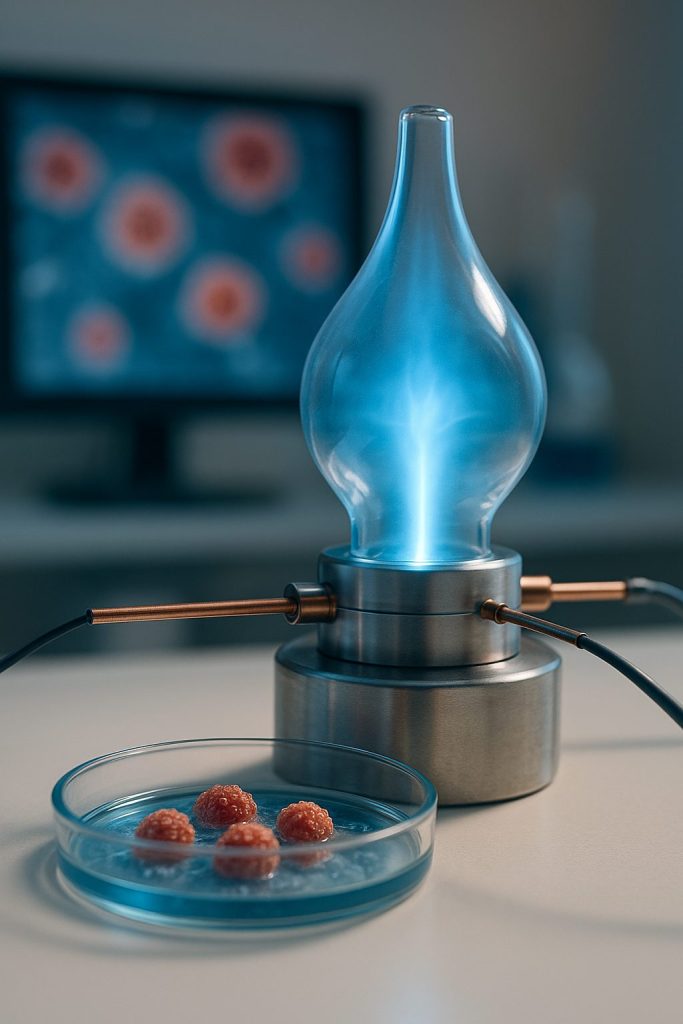
To address that challenge, the researchers developed a special device described as a plasma antenna, using ionised gas to generate a frequency intended for a given organism. According to the results presented, this system made it possible to produce frequencies that were reported to affect cancer cells while sparing healthy cells in that setting. After four months of testing, the team stated that cancer cells appeared to disintegrate at frequencies between 100,000 and 300,000 Hertz. They also reported another striking result: a reduction in antibiotic resistance in MRSA, suggesting that the approach might have implications beyond oncology.
This work also echoes much older research. Royal Raymond Rife had already explored the effects of oscillating pulsed electric fields on cancer cells, even if Anthony Holland did not explicitly refer to him. In that sense, the idea is not entirely new, but rather a modern reworking of an older hypothesis with different language and tools. Even so, recognition of a research direction is not the same as medical validation. If this technique were eventually shown to be effective and safe in rigorous clinical settings, its wider adoption would still take time, and any suggestion that it could simply replace chemotherapy or radiotherapy would need to be treated with caution.
The plasma antenna itself deserves careful attention because it shifts the discussion away from simplistic images of “healing sound”. Plasma is an ionised gas capable of conducting energy in distinctive ways, and devices based on plasma can generate complex electromagnetic behaviour. If such a system is being used to deliver frequency-specific stimulation, then the relevant mechanism may involve more than acoustic resonance alone. This does not weaken the idea, but it does mean that the scientific description should remain precise. The more accurately the device is characterised, the easier it becomes to assess what is genuinely being tested.
The reported frequency range of 100,000 to 300,000 Hertz is also notable because it lies well above ordinary human hearing. That fact alone reminds us that the subject is not about listening to a therapeutic tone in the everyday sense. It concerns the interaction between high-frequency stimulation and biological material. In research terms, the crucial issue is whether the observed response is specific to malignant cells, reproducible across experiments and explainable through a coherent mechanism rather than through incidental heating or experimental artefact.
The mention of MRSA broadens the scope of the claim, but it also raises the evidential bar. When a single approach is said to affect both cancer cells and antibiotic-resistant bacteria, the result may indicate a versatile physical mechanism, or it may reflect findings that still require substantial clarification. Broad applicability is possible in science, but it must be demonstrated carefully. The more ambitious the claim, the more rigorous the supporting evidence must be.
Historically, this is one reason the legacy of Royal Raymond Rife remains controversial. He occupies a space where scientific curiosity, alternative health culture and disputed interpretation often overlap. Referencing him can attract attention, but it can also blur the distinction between historical inspiration and validated evidence. A mature discussion therefore benefits from separating the two. Earlier ideas may have anticipated a useful direction, yet only contemporary methods, transparent data and independent replication can determine whether that direction has real medical value.
If resonance-based technologies were ever to enter mainstream oncology, they would almost certainly do so gradually. They might first appear as adjunctive tools, niche interventions or highly specific applications rather than as wholesale replacements for established care. That is how most serious innovations progress. They earn trust through limited, well-defined success before being considered more broadly. In that sense, the future of this approach, if it has one, will depend less on dramatic claims than on disciplined evidence.
- Plasma antenna designed to generate target-specific frequencies
- Reported activity between 100,000 and 300,000 Hz
- Additional claim involving MRSA antibiotic resistance
- Historical link to Royal Raymond Rife’s earlier work
What remains most interesting is the possibility that physical targeting could complement biochemical targeting in future cancer care. Oncology has long relied on drugs, radiation and surgery. A frequency-based modality, if ever validated, would represent a different therapeutic logic: not changing cellular chemistry directly, but influencing structural or electrical vulnerability. That prospect is still speculative, yet it is scientifically meaningful enough to justify careful observation.

Related offer
11 Sacred Frequencies + Climax Bundle
Sacred Frequencies Pack including 10 videos and 11x 20-minute tracks of activating music.
View productWhat would need to be proven before clinical relevance?
The path from an intriguing laboratory result to a credible medical tool is long. A resonance-based approach would need to show more than a visible effect on cells. It would need to show that the effect is selective, repeatable and safe under conditions that resemble real human biology.
| Question | Why it matters | Evidence needed |
|---|---|---|
| What is the mechanism? | Without mechanism, the result is hard to reproduce or improve. | Clear physical and biological measurements. |
| Is the effect selective? | Cancer care must consider healthy tissue as well as malignant cells. | Comparisons across malignant and non-malignant cell types. |
| Does it scale beyond cell culture? | Human tissue is more complex than an isolated lab setting. | Progressive preclinical and clinical evaluation. |
| Is it safe? | Any device-based intervention can have unintended effects. | Safety monitoring, dosing rules and independent review. |
Official resources for context
The National Cancer Institute explains how cancer clinical trials are structured and monitored. It also distinguishes complementary approaches from standard cancer care in its overview of complementary and alternative medicine. Those distinctions are essential whenever an experimental idea is discussed in public.
Editorial note from Mental Waves
This article is an evidence-safety discussion of a research hypothesis. It is not oncology advice, not a product recommendation and not a reason to delay or replace standard cancer care. Anyone affected by cancer should discuss decisions with qualified clinicians.
Conclusion
What makes this line of research compelling is not the promise of a miracle solution, but the possibility of a more selective way of acting on diseased tissue. The article’s central idea is therefore worth holding with both interest and restraint: resonance-based approaches may open a new therapeutic direction, especially if they can target cancer cells while limiting harm to healthy ones. That prospect matters because one of the hardest realities of oncology remains the balance between effectiveness and toxicity.
At the same time, the history surrounding figures such as Royal Raymond Rife reminds us that scientific ideas often move through long periods of doubt, reinterpretation and renewed testing. What matters now is not the mythology around sound, but the quality of the evidence, the reproducibility of the results and the time needed before any clinical use could be taken seriously. If this work progresses, it will do so not through spectacle, but through careful proof. That is where real hope becomes credible.
For readers encountering this subject for the first time, the most balanced position is one of informed openness. The concept is neither established enough to justify therapeutic certainty nor implausible enough to ignore outright. It belongs to a category of research that may eventually prove useful, but only if it withstands the ordinary disciplines of science: replication, peer scrutiny, mechanistic clarity and clinical testing. In medicine, credibility is not built by novelty alone, but by consistency.
There is also a human reason this topic continues to resonate. Cancer treatment is not only a biological challenge; it is also an experience of uncertainty, vigilance, fatigue and sustained psychological strain. Any approach that hints at greater precision naturally attracts attention because it speaks to a deeply felt need for treatments that are not only effective, but more tolerable. That emotional appeal is understandable. Yet the most respectful response to that hope is honesty: promising ideas should be explored seriously, but never presented as settled before the evidence warrants it.
If resonance-based oncology has a future, it will emerge through careful collaboration between physicists, engineers, cell biologists and clinicians. It will require not just striking demonstrations, but standardised protocols, transparent reporting and a clear understanding of where the method helps, where it does not, and for whom it may be appropriate. Until then, this remains a fascinating and potentially important field of enquiry whose real value lies in disciplined investigation rather than premature certainty.
Frequently asked questions about resonance frequency and cancer research
Can resonance frequency be used against cancer?
At present, resonance frequency is best understood as an exploratory research idea, not as established cancer care. The concept may be studied in laboratory settings, but clinical relevance requires much stronger evidence.
What is the basic resonance idea?
The basic idea is that structures can respond strongly to specific frequencies. Cancer research asks whether any frequency-specific effect could act selectively on malignant cells, but living biology is far more complex than simple physical examples.
Why is cell-culture evidence not enough?
Cells in a controlled dish do not behave like a tumour inside the body. Human tissue includes blood flow, immune activity, structure, metabolism and many variables that can change whether an effect remains useful.
What would make this clinically relevant?
Clinical relevance would require a clear mechanism, independent replication, safety data, selectivity, appropriate dosing and monitored human studies. Without those steps, the idea remains investigational.
Is a plasma antenna the same as sound therapy?
No. A plasma antenna involves ionised gas and high-frequency stimulation, so it should not be confused with ordinary listening, sound baths or wellness audio. The mechanism may be biophysical rather than audible.
Why mention Rife and Holland?
They are part of the history and public discussion around frequency-based cancer ideas. Mentioning them does not validate every claim; it helps place the topic in context and show why evidence standards matter.
Can this replace standard cancer care?
No. This article should not present resonance frequency research as a replacement for standard oncology care. Cancer decisions should be made with qualified clinicians and reliable medical resources.
Can sound still help someone coping with cancer-related stress?
Gentle music or relaxation practices may help some people cope with stress or discomfort, but that is different from acting on cancer itself. Supportive listening should be discussed with care teams when relevant.
Why avoid a lead magnet on this topic?
Because cancer is a sensitive medical topic. A sales or free-session CTA can accidentally imply a therapeutic claim. The best editorial choice is neutral education and official resources rather than a wellness conversion push.