en
enVotre panier est vide.


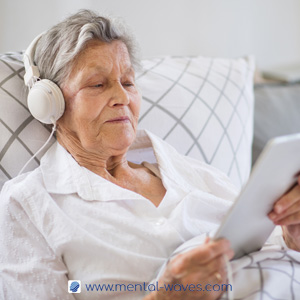
Neurologic Music Therapy (NMT) is a specialised form of music therapy developed for people living with cognitive, sensory or motor difficulties linked to neurological conditions. It is used in the context of stroke, traumatic brain injury, Parkinson’s disease, Huntington’s disease, cerebral palsy, Alzheimer’s disease and autism spectrum disorder, as well as other disorders that affect cognition, movement and communication. Far from treating music as a simple source of comfort, this approach draws on observed links between the brain, perception and structured sound to support rehabilitation in a more targeted way.
In short: neuromusicotherapy
Neuromusicotherapy uses rhythm, melody and structured sound in clinical contexts, but its promise is strongest when its limits are kept clear.
Use this article as a practical map: keep what helps attention become steadier, question anything that sounds absolute, and connect the idea back to repeatable daily practice.
What makes NMT distinctive is its clinical grounding. Drawing in particular on the work of Michael H. Thaut, it brings together techniques designed to support sensorimotor function, cognitive rehabilitation, and speech and language recovery. Rhythm may help organise movement through external timing cues; melody and musical structure may support attention, memory and orientation; and vocal or sung patterns may assist certain forms of verbal expression when speech has been disrupted. In that sense, neuromusic therapy sits at the meeting point of lived experience and neuroscience: a therapeutic use of music shaped by the way the nervous system responds to rhythm, sound and pattern.
How neuromusic therapy supports sensorimotor rehabilitation
Why rhythm can help organise movement
Research has highlighted a meaningful link between bodily movement and rhythm. In neuromusic therapy, rhythm may act as an external timing cue that helps the brain organise, coordinate and refine movement more effectively. In practice, this approach is often used in neurological rehabilitation when movement has become less fluid, less stable or harder to plan. Rather than treating music as simple background sound, NMT uses structured auditory input to support the timing, sequencing and regulation of action.
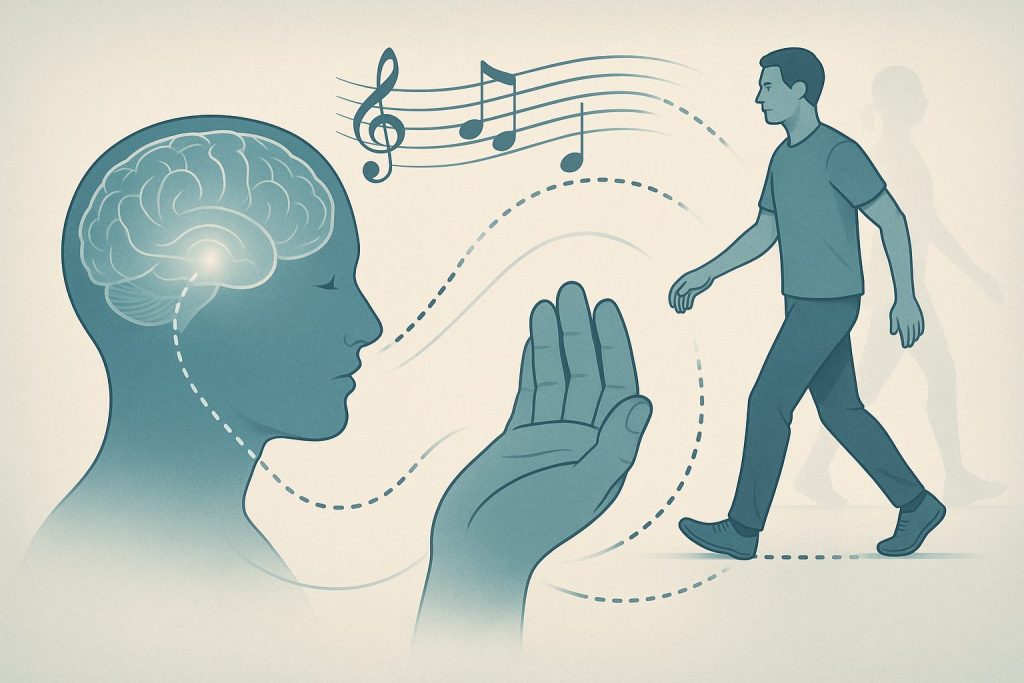
Within sensorimotor rehabilitation, these methods may be used to work on a wide range of therapeutic goals, including fine motor skills, gross motor skills, motor planning, motor coordination, range of motion, gait training, body awareness, strength and endurance, as well as pain management and relief. This breadth matters, because neurological disorders do not affect movement in just one way: they can alter posture, timing, effort, precision and the person’s sense of their own body in space.
- fine and gross motor skills
- motor planning, coordination and range of motion
- gait, body awareness, strength and endurance
- pain management and relief
Three core techniques used in motor rehabilitation
Rhythmic Auditory Stimulation (RAS) is used to support the rehabilitation of movements that are intrinsically and biologically rhythmic, especially walking. It draws on the physiological effects of auditory rhythm on the motor system to improve movement control and to help rebuild functional, stable and adaptive gait patterns in patients with significant walking deficits linked to neurological disorders. As Thaut (2005) explains, RAS may be used in two ways: first, as an immediate training stimulus that provides rhythmic cues during movement; and second, as a facilitative training stimulus that helps the person carry out a greater number of functional gait patterns.
Patterned Sensory Enhancement (PSE) uses rhythmic, melodic and harmonic elements, together with the acoustic dynamics of music, to provide cues for timing, space and force. This makes it possible to shape functional exercises and everyday activities through music. PSE has a broader field of application than RAS because it can be used for movements that are not naturally rhythmic, such as many arm and hand movements, functional movement sequences like dressing, or transfers from sitting to standing. It also offers more than rhythmic cueing alone, using musical patterns to link isolated actions, such as reaching with the hand and arm, into functional movement sequences, while also providing temporal, dynamic and spatial information during exercise (Thaut et al., 1991).
Therapeutic Instrumental Music Performance (TIMP) involves playing musical instruments in order to practise and stimulate functional movement patterns. The instruments are chosen for a therapeutic purpose, with attention to range of motion, endurance, strength, functional hand use, finger dexterity and limb coordination (Elliot, 1982; Clark & Chadwick, 1980). In TIMP, instruments are not usually played in the conventional way; instead, they are positioned strategically to encourage the specific functional movements being trained (Thaut, 2005).
- RAS: rhythmic cueing mainly for gait rehabilitation
- PSE: musical cues for time, space and force in broader functional movements
- TIMP: instrument-based practice to train targeted movement patterns
How Neurologic Music Therapy Can Support Cognitive Recovery
Using music to restore orientation, perception and attention
In neurologic music therapy, several techniques are designed to support core cognitive functions that may be disrupted after neurological injury or in developmental conditions. Musical Sensory Orientation Training (MSOT) uses live or recorded music to stimulate arousal and support the recovery of states of consciousness, while also helping the person orient themselves more meaningfully in time and in their surroundings. At later stages of recovery or development, simple active musical exercises may help strengthen alertness and sustained attention, with the emphasis placed first on the quantity of responses rather than their quality (Ogata, 1995).
In a related but more targeted way, Musical Neglect Training (MNT) uses structured instrumental playing with adapted metre, tempo and rhythm, with instruments positioned specifically to draw attention towards the neglected visual field. It may also be used receptively, through listening, alongside exercises aimed at visual neglect or inattention, with the goal of stimulating the relevant cerebral hemisphere (Hommel et al., 1990; Frasinetti et al., 2001; Anderson & Phelps, 2001, 305–309).

Auditory Perception Training (APT) focuses on helping the person discriminate and identify different components of sound, including metre, tempo, duration, pitch, timbre, rhythmic patterns and even speech sounds. In practice, this may involve playing music from symbolic or graphic notation, using audio-tactile transmission, or combining movement with music, so that perception is reinforced through more than one sensory channel (Bettison, 1996; Gfeller et al., 1997; Heaton et al., 1988). Musical Attention Control Training (MACT) works more directly on attentional processes through structured active or receptive exercises, including performance and improvisation tasks in which musical elements are used to prompt different responses and train attentional flexibility (Thaut, 2005).
- orientation in time and environment
- visual attention and neglect
- auditory discrimination
- sustained and selective attention
Supporting memory, executive function and psychosocial adjustment
Other NMT techniques are aimed at higher-order cognitive functions, especially memory and executive organisation. Musical Mnemonic Training (MMT) uses music to sequence and organise information, which may make targeted material easier to learn and recall by adding meaning, pleasure, emotion and motivation to the task (Thaut, 2005). Associative Mood and Memory Training (AMMT) builds on the link between emotional state and recall. It uses musical mood induction either to create a mood-congruent state that may facilitate remembering, or to support associative memory by inducing a positive emotional state during both encoding and retrieval (Bower, 1981; Dolan, 2002, 2000; Cahill et al., 1996).
These approaches do not treat memory as a purely mechanical function; they recognise that attention, affect and motivation are often deeply involved in whether information is retained and accessed.
Related offer
Magical whale song - therapeutic frequencies
Scientists as a whole report that auditory «contact» with whale song induces a...
View productMusical Executive Function Training (MEFT) uses improvisation and composition, individually or in groups, to work on executive functions such as organisation, problem-solving, decision-making, reasoning and comprehension. Its therapeutic value lies not only in the task itself, but also in the wider context: real-time musical production requires temporal and sensory structuring, creative adaptation, emotional engagement and social interaction, all of which may support cognitive rehabilitation (Dolan, 2002; Damasio, 1995; Bechara et al., 2000). Finally, Music Psychosocial Counselling (MPC) uses musical performance to address mood management and regulation, emotional expression, cognitive coherence rather than cognitive dissonance, orientation to reality and appropriate social interaction.
In that sense, it extends cognitive work into everyday psychosocial functioning, where regulation, communication and social behaviour are often closely intertwined.
How Neurologic Music Therapy Can Support Speech, Voice and Communication
Using melody and rhythm to unlock verbal expression
Melodic Intonation Therapy (MIT) was developed as a rehabilitation approach for expressive aphasia. It draws on a person’s preserved ability to sing in order to support more automatic and voluntary speech, using sung melodic patterns that remain close to the natural intonation of language (Sparks et al. 1974). In this approach, the emphasis is placed on strengthening the linguistic and semantic aspects of verbal expression rather than on singing for its own sake (Thaut, 2005).
Musical Speech Stimulation (MUSTIM) uses familiar auditory material such as songs, poems, nursery rhymes and short musical phrases that mirror speech prosody to stimulate non-propositional semantics. In practice, this may involve initiating or completing the words of well-known songs, linking words to familiar tunes, or using simple melodic phrases to prompt functional verbal responses (Basso et al., 1979). Thaut (2005) gives clear examples: spontaneous completion of familiar phrases may be encouraged through recognisable melodic cues such as “Au clair de la…” or “Une souris verte, qui courrait…”. Rhythmic Speech Cueing (RSC) uses rhythm to support speech initiation and regulate verbal rate through entrainment and synchronisation.
The therapist may tap the patient’s hand, strike a drum or use a metronome to help trigger speech patterns or steady the flow of speech. This technique may be useful as a motor-planning aid in apraxia, as a cue for muscular coordination in dysarthria, or as support for regulating rate in disorders of verbal fluency (Thaut, 2005).
- MIT: supports expressive language through sung intonation patterns
- MUSTIM: uses familiar songs and phrases to prompt functional speech
- RSC: uses external rhythm to initiate and pace verbal output
Working on voice control, breathing and social communication
Vocal Intonation Therapy (VIT) uses vocal exercises to stimulate prosody, inflection and speech rate. It addresses several dimensions of vocal control, including intonation, modulation, pitch, breath control, timbre and dynamics. One example given by Thaut (2005) is to sing a five-note scale while gradually shifting the pitch of the first note up or down by semitones with a child whose vocal range is limited; the exercise can then be made more functional by adding a short phrase such as “Allons jouer dehors”. Therapeutic Singing (TS) brings together a range of activities designed to support the initiation, development and articulation of speech and language, while also helping to strengthen respiratory function.
It may be used across many speech and language disorders, whether neurological or developmental (Glover et al., 1996; Jackson et al., 1997). In a related way, Oral Motor and Respiratory Exercises (OMREX) use musical material, especially vocalisations and wind instruments, to improve articulation control, respiratory endurance and the functioning of the phonatory system. This approach may be relevant for people with developmental disorders, dysarthria or muscular dystrophies (Hass & Distenfeld, 1986).
Developmental Speech and Language Training through Music (DSLM) uses carefully chosen musical experiences to support speech and language development through singing, chanting and instrument playing. Because it combines music, speech and movement, it can target speech production, including articulation and intelligibility, language development such as vocabulary, grammar and syntax, or both at the same time (Thaut, 2005). Symbolic Communication Training through Music (SYCOM) extends this work into the wider field of communication. Through structured vocal or instrumental improvisation, it helps patients practise appropriate communicative behaviours, linguistic pragmatics, body language and emotional expression within a non-verbal communication system.
In this sense, SYCOM is not only about producing sounds; it is about rehearsing the rules of interaction themselves through musical exchange (Thaut, 2005). Source: Rhythm, Music and the Brain by M. H. Thaut (2005). New York and London: Taylor and Francis Group.
- VIT: works on prosody, pitch and breath-supported voice control
- TS and OMREX: support articulation and respiratory function
- DSLM and SYCOM: develop language skills and broader communication behaviours
The Mental Waves Clinical-Safe Sound Framework
The Mental Waves reading frame for neuromusicotherapy is simple: sound can be powerful, but the safer question is always which sound, for which function, in which context, and with which professional support. This keeps the article useful without turning a clinical discipline into a general wellness promise.
Related offer
Ancestral Sacred Songs
Free your Senses and Vibrate to the Magical Rhythms of Sacred Harmonic Chants. Welcome to an extraordinary Spiritual Journey...
View product- Start with the clinical goal: movement, speech, attention and memory are different targets.
- Use sound as structure: rhythm and melody matter because they organise timing, sequence and attention.
- Protect the human relationship: music works best here as guided interaction, not as an isolated trick.
- Respect limits: neurological symptoms and rehabilitation choices belong with qualified care teams.
The Mental Waves Clinical Sound Discernment Framework
The Mental Waves frame is to respect both the power and the limits of sound. Structured music can support attention, movement and communication, but clinical context, training and assessment matter.
A grounded approach asks what the sound is meant to support, who is guiding the practice, how progress is observed and what medical or therapeutic care remains necessary.
For a non-clinical introduction to attentive listening, receive the free 128 Hz sacred frequency session and observe your state without turning sound into a medical promise.
Editorial note from Mental Waves
This article is educational. Neuromusicotherapy belongs in qualified clinical or therapeutic contexts and should not replace neurological, medical, speech or rehabilitation care.
Conclusion
What emerges most clearly is that neurologic music therapy is not simply about using music because it feels pleasant or motivating. Its therapeutic value lies in the way rhythm, melody and structured sound can be used with clinical precision to support movement, attention, memory, speech and communication in people living with neurological conditions. That matters, because it places music not at the margins of rehabilitation, but within a more rigorous understanding of how the brain organises time, action, perception and response.
At the same time, the nuance is essential: this is not a universal remedy, nor a substitute for broader neurological care. Its relevance depends on the person, the goal and the technique being used. Yet when applied thoughtfully, neurologic music therapy may help create something rehabilitation often needs but struggles to sustain on its own: a structured, engaging and emotionally meaningful framework in which the brain and body can practise recovery. Sometimes, that combination of precision and humanity is exactly what makes progress possible.
Frequently Asked Questions About Neuromusicotherapy
What is neuromusicotherapy?
Neuromusicotherapy is a specialised use of music in neurological rehabilitation. It uses rhythm, melody, instruments and vocal patterns to support specific functions such as movement, attention, memory, speech and communication.
Is neuromusicotherapy the same as listening to relaxing music?
No. Relaxing music may feel pleasant, but neuromusicotherapy is goal-based and clinically structured. The therapist chooses musical elements to support a defined rehabilitation task, such as gait timing or speech initiation.
Which neurological conditions may involve neuromusicotherapy?
It may be considered in contexts such as stroke, traumatic brain injury, Parkinson disease, Huntington disease, cerebral palsy, Alzheimer disease, autism spectrum disorder and other conditions affecting movement, cognition or communication.
How can rhythm support movement in rehabilitation?
Rhythm can provide an external timing cue. For some movement goals, especially walking, that cue may help the brain organise pace, sequence and coordination more clearly during guided practice.
What is Rhythmic Auditory Stimulation?
Rhythmic Auditory Stimulation, often shortened to RAS, uses steady auditory rhythm to support movements that are naturally rhythmic, especially gait. It is one of the best-known neurologic music therapy techniques.
Can music support speech and voice recovery?
In some rehabilitation settings, melody, rhythm and vocal exercises are used to support speech initiation, prosody, breathing, articulation and broader communication. The exact technique depends on the person and the clinical goal.
Does neuromusicotherapy work only with movement?
No. The article also describes cognitive and communication approaches, including work with attention, auditory perception, memory, executive function, mood regulation and social communication.
Who should guide neuromusicotherapy?
Because this is a clinical rehabilitation field, it should be guided by appropriately trained professionals and coordinated with the person's wider care plan.
What is the main takeaway about neuromusicotherapy?
The key idea is that music can become structured neurological practice when rhythm, melody and interaction are used with a clear rehabilitation purpose. The nuance is that this belongs alongside professional care.